
RV Inverter Guide: Sizing, Pure Sine Wave, and Safe Installation

An RV inverter lets you use household outlets when you are not plugged in. It converts 12-volt battery power into 120-volt AC, so you can run a laptop charger, a coffee maker or a TV while boondocking. However, choosing an inverter is not only about the wattage on the box. The right RV inverter also depends on your battery bank, your cables and fuses, and the kind of power your devices need. This guide explains each piece, including why a pure sine wave inverter is usually worth it.
Last reviewed and updated: September 30, 2026. Written by Jeremy Jarvis.
Key takeaways
- An inverter turns 12-volt battery power into 120-volt AC; a converter does the opposite and charges the batteries.
- Size an RV inverter for the largest combination of AC loads you will run at once, plus their start-up surge.
- A pure sine wave inverter is the safer choice for electronics, motors and medical devices.
- Large inverters draw very high current from the battery, so cables, fuses and battery capacity must match.
Inverter, converter or inverter-charger?
These three terms cause a lot of confusion, so it helps to separate them first.
- Converter: turns 120-volt AC from shore power or a generator into 12-volt DC. It runs your 12-volt lights and fans and charges the house batteries. Almost every RV has one.
- Inverter: does the opposite, turning 12-volt battery power into 120-volt AC for household outlets and appliances.
- Inverter-charger: combines both functions in one unit. It charges the batteries when shore power is available and inverts battery power when it is not, often switching automatically.
So if you already have a converter, adding an RV inverter gives you AC power off-grid. If you are upgrading your whole electrical system, an inverter-charger can replace the converter and add inverting in one step.
Pure sine wave inverter vs modified sine wave
Inverters produce AC power in two main forms. A pure sine wave inverter produces a smooth waveform very close to utility power. A modified sine wave inverter produces a stepped approximation that is cheaper to make.
For most RVs today, a pure sine wave inverter is the better choice. Many electronics, variable-speed motors, microwaves, laptop chargers and medical devices such as CPAP machines are designed for smooth utility-style power. On modified sine power, some devices may run hotter, hum, work less efficiently or fail early. The price gap between the two types has narrowed, so paying a little more for a pure sine wave inverter usually protects far more expensive equipment.

Free download: The Full-Time RV Launch Checklist
Our 16-page planner: a 12-month countdown, inspection checklist, budget and weights worksheets and a maintenance calendar. Free and printable.
How to size an RV inverter
Sizing starts with the AC devices you actually plan to run, and especially the ones you might run at the same time.
- List your AC devices. Note the watts on each label or power supply. For heating appliances, use the input watts, not the cooking or output rating.
- Find your worst-case combination. Add the watts of everything you could run at once, such as a coffee maker plus a laptop charger plus the TV.
- Add headroom. Inverters run cooler and last longer when they are not maxed out, so allow a margin above your worst case.
- Check surge. Motors and compressors, such as fridges, pumps and blenders, draw a short burst of extra power when they start. Make sure the inverter’s surge rating covers it.
As a result, two RVers can need very different inverters. Someone who only charges laptops and runs a TV might be well served by a small unit. By contrast, someone who wants to run a microwave, coffee maker or induction cooktop off-grid will need a much larger RV inverter, plus the batteries to feed it.
The battery current math every RV inverter owner should know
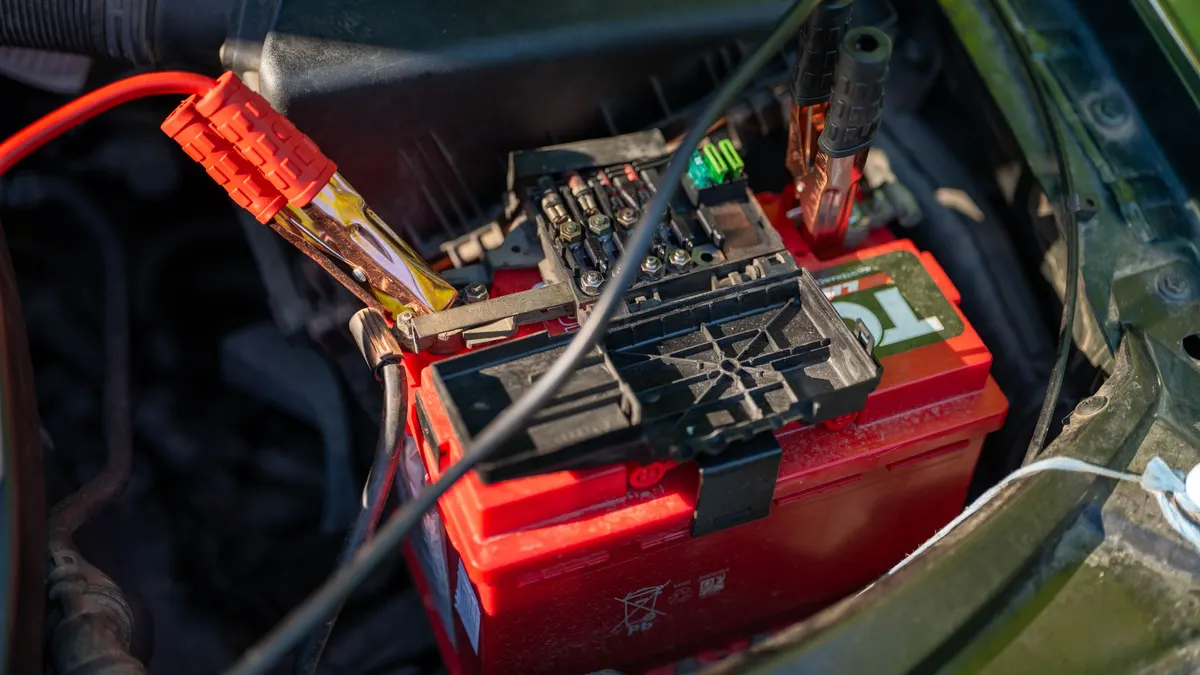
Here is the part most buyers miss. An inverter does not create power; it draws it from the battery, and at 12 volts that means a lot of current. As a rough guide, divide the AC watts by 12 volts, then add about 10 to 15 percent for inverter losses. For example, a 1,000-watt load draws roughly 90 or more amps from a 12-volt battery. A 2,000-watt load draws roughly twice that.
That current decides three things:
- Cable size: the cables between battery and inverter must carry that current without overheating. They are usually much thicker than people expect.
- Fuse size: a fuse or breaker rated for the cable and inverter must sit close to the battery.
- Battery capacity: the battery bank and its BMS must deliver that current continuously. A small battery may shut down or sag under a large inverter load.
This is why large inverters are often paired with lithium battery banks, which handle high current well. Our RV lithium battery guide explains BMS current ratings, and our Battery Runtime Calculator shows how long a battery will run a given inverter load. Some larger systems also move to 24 or 48 volts, which halves or quarters the current for the same power.
Idle draw and efficiency
Every RV inverter uses a little power just by being switched on, even with nothing plugged in. This idle or no-load draw seems small, but it runs around the clock. Over a day, it can use a noticeable share of a small battery bank. So, switch the inverter off when you do not need AC power, or use a model with a power-saving or search mode that wakes up only when a load is connected.
In addition, remember that inverting always loses some energy as heat. Wherever a device can run on 12-volt DC, such as a fridge, fan or USB-C laptop charger, running it directly from DC avoids those losses.
RV inverters, batteries and solar together
An RV inverter is only as useful as the energy behind it. If you plan to run AC loads regularly off-grid, pair the inverter with enough battery capacity and a way to recharge it. Solar is the quiet option. Our RV solar panels guide shows how to size panels for your daily use, including inverter loads. Portable power stations are another path, because they combine a battery, inverter and outlets in one box; see our guide to the portable power station for camping.
Installing an RV inverter safely
Inverter installation involves both high-current DC and 120-volt AC, so safety comes first. Victron’s free Wiring Unlimited guide is a detailed reference, and most manufacturers’ manuals share these principles.
- Keep DC cables short. Mount the inverter close to the batteries to limit voltage drop and cable cost.
- Use correctly sized cables and lugs. Follow the manufacturer’s cable size table for your inverter and cable length.
- Fuse at the battery. Place a suitably rated fuse or breaker on the positive cable near the battery.
- Ventilate. Inverters produce heat; do not bury them in a sealed compartment.
- Protect the AC side. Follow the manufacturer’s guidance on ground-fault protection and never connect inverter output to shore power without a proper transfer switch.
- Ground correctly. Bond the inverter chassis as the manual specifies.
If you are not trained in RV electrical work, have a qualified technician install it. A wiring mistake on the AC side can create a shock hazard, and a DC mistake can start a fire.
Transfer switches and whole-RV inverters
There are two common ways to connect an RV inverter. The simplest is a standalone inverter with its own outlets, used for specific devices. The other is to wire the inverter into some or all of the RV’s outlets. In that case, a transfer switch, either built into an inverter-charger or installed separately, automatically selects shore power, generator power or inverter power, so the sources never connect to each other.
Many owners power only selected circuits from the inverter, such as the TV and a few outlets, while leaving high-draw appliances like the water heater element and air conditioner on shore power only. This protects the batteries from loads they could never sustain.
What an RV inverter can realistically run
| Load type | Typical fit for an RV inverter | What to watch |
|---|---|---|
| Laptops, phones, TV, streaming devices | Easy, even with a small inverter | Idle draw if left on all day |
| CPAP and other medical devices | Good with a pure sine wave inverter | Check the device maker’s power guidance |
| Coffee maker, microwave, toaster | Possible in short bursts with a large inverter and battery | Very high battery current |
| Residential fridge | Possible with a large battery bank | Runs all day and night, so it adds up |
| Air conditioner, electric space heater | Short runs only with very large systems | Usually better on shore power or a generator |
Three example RV inverter setups
Seeing the sizing steps applied makes them easier to follow. So here are three common setups, each worked through with the same method.
Electronics only
This RVer charges laptops and phones, runs a TV in the evening and powers a CPAP at night. Because none of these loads is large, a small pure sine wave inverter is enough. In addition, the idle draw matters more than the peak rating here, so a model with a power-saving mode is worth choosing. Meanwhile, the existing battery bank can often cope, provided it is recharged daily.
Coffee and microwave in the morning
Next, consider someone who wants a coffee maker and short microwave use while boondocking. Heating appliances draw a lot, so this owner needs a much larger RV inverter. Consequently, battery current climbs sharply, which means thick cables, a large fuse and a battery bank rated for high current, usually lithium. However, because these loads run for minutes rather than hours, the total energy used can still be manageable with good solar.
Whole-coach inverter-charger
Finally, full-timers who want most outlets to work off-grid often install an inverter-charger with a transfer switch. As a result, the RV behaves much like it does on shore power, within the limits of the battery bank. In practice, owners still keep the air conditioner and water heater element on shore power only, because those loads would drain the batteries too fast.
Common RV inverter mistakes
- Buying by wattage alone. A large inverter is useless if the battery and cables cannot supply the current.
- Choosing modified sine to save money. The savings can disappear if a sensitive device fails.
- Leaving it on all day. Idle draw quietly drains the battery.
- Long, thin DC cables. They waste power and can overheat.
- Connecting AC sources together. Always use a proper transfer switch or an inverter-charger designed for it.
Caring for your RV inverter
Inverters need little maintenance, but a few checks help them last. First, keep vents and fans clear of dust and stored gear, because heat shortens electronics life. Second, check cable connections for tightness and signs of heat, such as discolored lugs, during routine battery checks. Third, update settings if you change battery type, since charger profiles differ between lead-acid and lithium. Finally, if the inverter shuts down under load, check battery voltage and temperature before assuming the inverter has failed, because low voltage and overheating are common causes.
RV inverter buying checklist
- List your AC loads and your worst-case combination.
- Choose continuous and surge ratings with headroom.
- Pick a pure sine wave inverter for electronics and medical devices.
- Confirm your battery bank and BMS can supply the current.
- Plan cable size, fuse size and mounting location before buying.
- Decide between a standalone inverter and an inverter-charger with a transfer switch.
- Check idle draw and power-saving features.
To compare current models, you can browse 12-volt pure sine wave inverters and RV inverter-chargers on Amazon, then check each one’s specifications against your sizing. For more power planning, see our Solar & Power hub.
Frequently asked questions about RV inverters
What size inverter do I need for my RV?
Add up the watts of every AC device you might run at the same time, add headroom, and check the start-up surge of anything with a motor or compressor. Many RVers who want a microwave or coffee maker end up with a larger inverter, while electronics-only users need far less.
Do I need a pure sine wave inverter?
For most RVs, yes. A pure sine wave inverter produces power similar to utility power, which suits electronics, chargers, motors and medical devices. Modified sine inverters cost less but can make some devices run hot, buzz or fail.
What is the difference between an RV converter and an inverter?
A converter turns 120-volt AC from shore power or a generator into 12-volt DC and charges the batteries. An inverter does the opposite, turning 12-volt battery power into 120-volt AC. An inverter-charger combines both in one unit.
Can an RV inverter run an air conditioner?
A large inverter with a big lithium battery bank can run an air conditioner for a limited time, but it drains the batteries quickly. Most RVers run air conditioning on shore power or a generator.
Does an inverter use power when nothing is plugged in?
Yes. Most inverters have an idle or no-load draw while switched on. Turning the inverter off when you do not need AC power, or using a power-saving mode, stops that small but steady drain.
Sources and how we researched this guide
This guide is research-based. We did not install or test the inverters named here. Technical guidance comes from inverter and battery manufacturer documentation, including Victron Energy’s Wiring Unlimited guide. Inverter installs involve high current and 120-volt AC, so use a qualified RV technician if you are not trained in electrical work. Found something out of date? Tell us and we will check it against the source.
- Victron Energy: inverters
- Victron Energy: Wiring Unlimited (DC cable, fuse and system design)
- NFPA 1192: standard on recreational vehicles
- ENERGY STAR: certified product energy ratings
Keep planning
- RV Generator Guide: Sizing, Fuel Types, Campground Rules, and Safety
- RV Solar Panels: How to Size, Choose, and Install Solar Power for an RV
- RV Lithium Battery Guide: Sizing, Charging, and Upgrade Costs
- Portable Power Station for Camping: How to Size One That Lasts
Go deeper: Solar & Power hub · RV Solar Sizing Calculator · Battery Runtime Calculator · Portable Power Station Selector

Written by Jeremy Jarvis
Jeremy Jarvis is the founder and editor of Freedom Road Living, where he builds research-based guides and free planning tools for people who live, work and travel in an RV. He sets the site's editorial standards, checks every guide against official sources such as the National Park Service and manufacturer documentation, and is responsible for corrections. Jeremy also founded Eco Nomad Travel, Mind Clarity Hub, SilkHarborTravel and WanderOza Travel, and he is the author of books on clarity, focus and practical AI, including The Power of Clarity and Digital Clarity.