
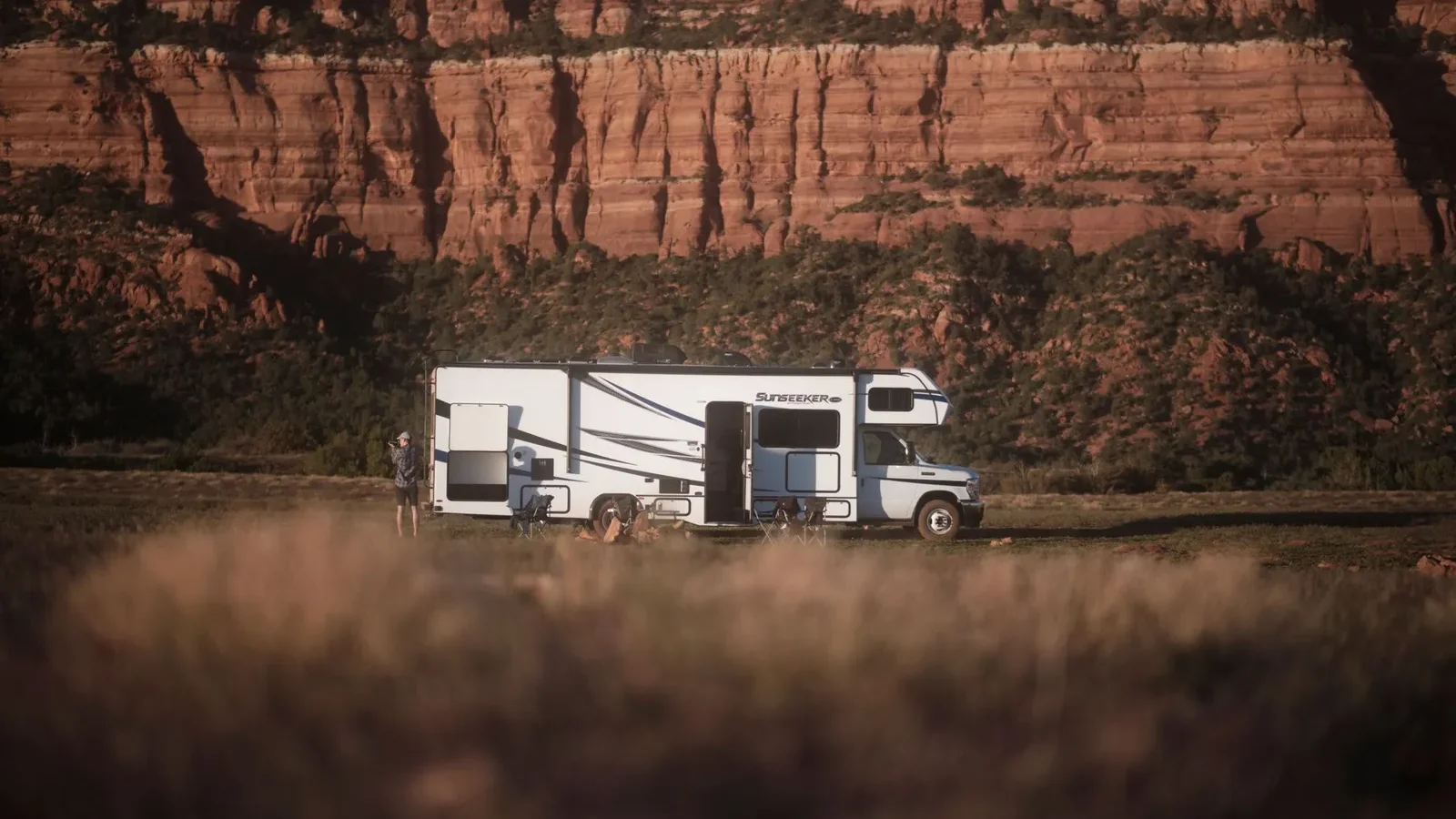
RV living means different things to different people: a year-round home on wheels, long winter seasons in the sun, or months-long work-from-anywhere trips. This hub brings together everything that goes into doing it well: the decision itself, the money, the paperwork, the rig, and the daily routines that make life on the road sustainable.
Is full-time RV living worth it?
For many people it is deeply rewarding; for others the downsides outweigh the freedom. The honest answer depends on how you earn or fund life, how often you want to move, and your tolerance for maintenance and uncertainty.
| Advantages | Trade-offs |
|---|---|
| Travel and a changing backyard | Small living space and less storage |
| Potentially lower housing costs if you travel slowly | Costs can exceed a house if you move fast or finance an expensive rig |
| Time outdoors and a simpler routine | Maintenance and repairs are constant |
| Freedom to follow good weather and family | Campground availability, weather, and connectivity limit where you can go |
| Community with other travelers | Distance from long-term friends and routine health care |
Buying, renting, and financing an RV
Start from your life, not a floor plan. New RVs come with warranties but depreciate quickly in the first years; used RVs cost less but need careful inspection for water damage, soft floors, roof condition, and tire age. RV loans often run longer than car loans, which lowers the payment but raises total interest and the risk of owing more than the RV is worth. Use the Affordability Calculator and RV Loan Calculator before you shop, and consider renting first.
RV costs and budgeting
The main cost drivers are campground fees, fuel, the RV payment, insurance, health care, food, connectivity, and maintenance. Moving less often is the most powerful way to lower costs, because it cuts fuel and lets you use weekly and monthly campground rates. Build your own number with the Full-Time RV Budget Calculator.
Insurance for full-time RVers
Standard recreational RV policies may not cover you if the RV is your primary residence. Full-timer coverage typically adds personal liability and personal property protection similar to a homeowner’s policy. Ask insurers specifically about full-time use, replacement cost versus actual cash value, emergency expenses, roadside assistance, and coverage in Canada if you plan to cross the border.
Domicile, residency, and mail
Full-time RVers still need a legal state of domicile for driver’s licenses, vehicle registration, voting, jury duty, taxes, and insurance. States differ in income tax, vehicle fees, inspection rules, and health insurance options. A mail forwarding service provides an address and scans or forwards mail. Rules change and affect taxes and benefits, so check official state sources and consider professional advice for your situation.
Safety on the road
- Test smoke, carbon monoxide, and propane detectors regularly and replace them by their expiration dates.
- Keep fire extinguishers accessible, and know two ways out of the RV.
- Check tire pressure and the DOT date code; tires can fail from age even with good tread.
- Stay within weight ratings and weigh your rig loaded.
- Check your VIN for open safety recalls with NHTSA.
- Use a surge protector or electrical management system at campgrounds.
Traveling with pets
Plan for temperature control when you are away from the RV, campground pet policies and breed restrictions, vaccination records for border crossings, and a veterinarian plan in each region.
RV travel between the United States and Canada
Crossing the border with an RV requires valid identification for everyone aboard, vehicle registration and proof of insurance, and attention to food, firewood, cannabis, firearms, and pet rules. Requirements change, so check U.S. Customs and Border Protection and the Canada Border Services Agency before each crossing, and confirm that your insurance and phone plans work in both countries.
Sustainable RV living
Practical habits make a difference: conserve water and power, dump tanks only at approved stations, follow Leave No Trace on public land, respect fire restrictions, and move less often.
Choosing the right RV type for how you will live
| RV type | Strengths | Consider | Often suits |
|---|---|---|---|
| Class A motorhome | Residential space, big storage, easy setup on arrival | Fuel, maintenance on two systems (house and engine), towing a car for errands | Couples who move often and want space |
| Class C motorhome | Simpler to drive, cab-over bed, good for families | Less storage than a Class A; check cargo capacity | Families and first-time full-timers |
| Class B camper van | Parks anywhere, efficient, stealthy | Very small space, limited tanks and storage | Solo travelers and minimalists |
| Fifth wheel | Most residential feel, split-level layouts, great for long stays | Needs a capable pickup; hitch in the truck bed | Slow travelers and long-term full-timers |
| Travel trailer | Wide range of sizes and budgets; unhitch and explore | Towing skill and weight matching matter | Budget-conscious buyers with a tow vehicle |
| Truck camper | Go-anywhere, no separate towing | Tight space; heavy load on the truck | Off-road and remote campers |
Whatever you choose, match weights carefully: the RV’s gross vehicle weight rating (GVWR), cargo carrying capacity, and your tow vehicle’s towing and payload ratings. Weigh your rig fully loaded at a truck scale.
A full-timer’s first-month checklist
- Domicile, driver’s licenses, and vehicle registration updated.
- Mail forwarding service active, with banks and insurers updated.
- Full-timer RV insurance and roadside assistance in place.
- Health coverage that works where you will travel.
- Emergency fund set aside; see the Emergency Fund Calculator.
- Primary and backup internet tested.
- Shakedown trip completed near home, with a fix-it list worked through.
- First month’s campgrounds reserved, with a buffer day or two.
Daily life: routines that make it sustainable
Most frustration in RV life comes from small systems: where things are stored, how often tanks are dumped, when laundry and groceries happen, and how travel days are organized. A simple departure checklist (antennas down, slides in, steps up, hitch checked, tanks closed, fridge secured, walk-around done) prevents most costly mistakes. A weekly maintenance glance at tires, seals, batteries, and detectors catches problems early.

Maintenance calendar at a glance
| How often | What to check |
|---|---|
| Every travel day | Tire pressure, lights, hitch or tow connections, loose items |
| Monthly | Roof and window seals, detector tests, battery connections, generator exercise |
| Seasonally | Roof sealant inspection, water heater, AC filters, slide mechanisms, winterizing or de-winterizing |
| Yearly | Brakes and bearings as the manufacturer specifies, propane system check, tire age review |
New guides for life on the road
RV living works best when three systems are dependable: power, internet, and a plan for where you will sleep each night. These newer guides cover each one in depth.
- Free camping in the US: legal dispersed camping, stay limits, and official maps.
- RV lithium battery guide: when a LiFePO4 upgrade pays off and what else must change.
- Starlink for RV: plans, power draw, and backups for remote work.
- National park RV length limits: which park campgrounds fit your rig.
You can browse every article, newest first, on our blog.
Every guide in this topic
Step-by-step, research-based guides that go deeper on each decision.
- Full-time RV living: the complete guide
- RV domicile and mail forwarding
- How to dump RV tanks
- How to winterize an RV
- How to rent an RV
- RV loans explained
- Free camping in the US
- Workamping jobs
Official resources
The agencies and organizations we check our facts against. Always confirm current rules and conditions with them before you travel or buy.
- USPS mail forwarding
- USA.gov: state motor vehicle services
- NHTSA: check vehicle and equipment recalls
- EPA: carbon monoxide safety
Planning for winter
Staying out through the cold months? Our winter RV camping guide covers frozen lines, heating, condensation, batteries, safety and snowbird destinations.
Frequently asked questions
It can be, but not automatically. Slow travel with monthly campground rates and a paid-off RV often costs less than a house, while fast travel, a large loan, and resort campgrounds can cost more. Compare your own numbers in our budget calculator. Usually, yes. Many standard RV policies are designed for recreational use. Full-timer coverage adds liability and personal property protection similar to a homeowner’s policy. Ask insurers about full-time use specifically. It depends on taxes, vehicle fees, insurance, health coverage, and where you spend time. Many full-timers compare several states, but the right choice is individual. Check official state sources and consider professional tax advice. Most use a mail forwarding service that provides a street address in their domicile state, scans envelopes, and forwards mail to wherever they are staying.Is it cheaper to live in an RV than a house?
Do I need special insurance to live in an RV full time?
What state should full-time RVers use as their domicile?
How do full-time RVers get mail?
Tools for RV living
- Full-Time RV Budget Calculator – monthly and annual costs
- RV Emergency Fund Calculator – repairs and displacement
- RV Rental vs. Purchase Calculator – rent or buy
- New RV Inspection Checklist – before you sign
Browse every guide in RV Living, or get new guides by email.