
RV Generator Guide: Sizing, Fuel Types, Campground Rules, and Safety
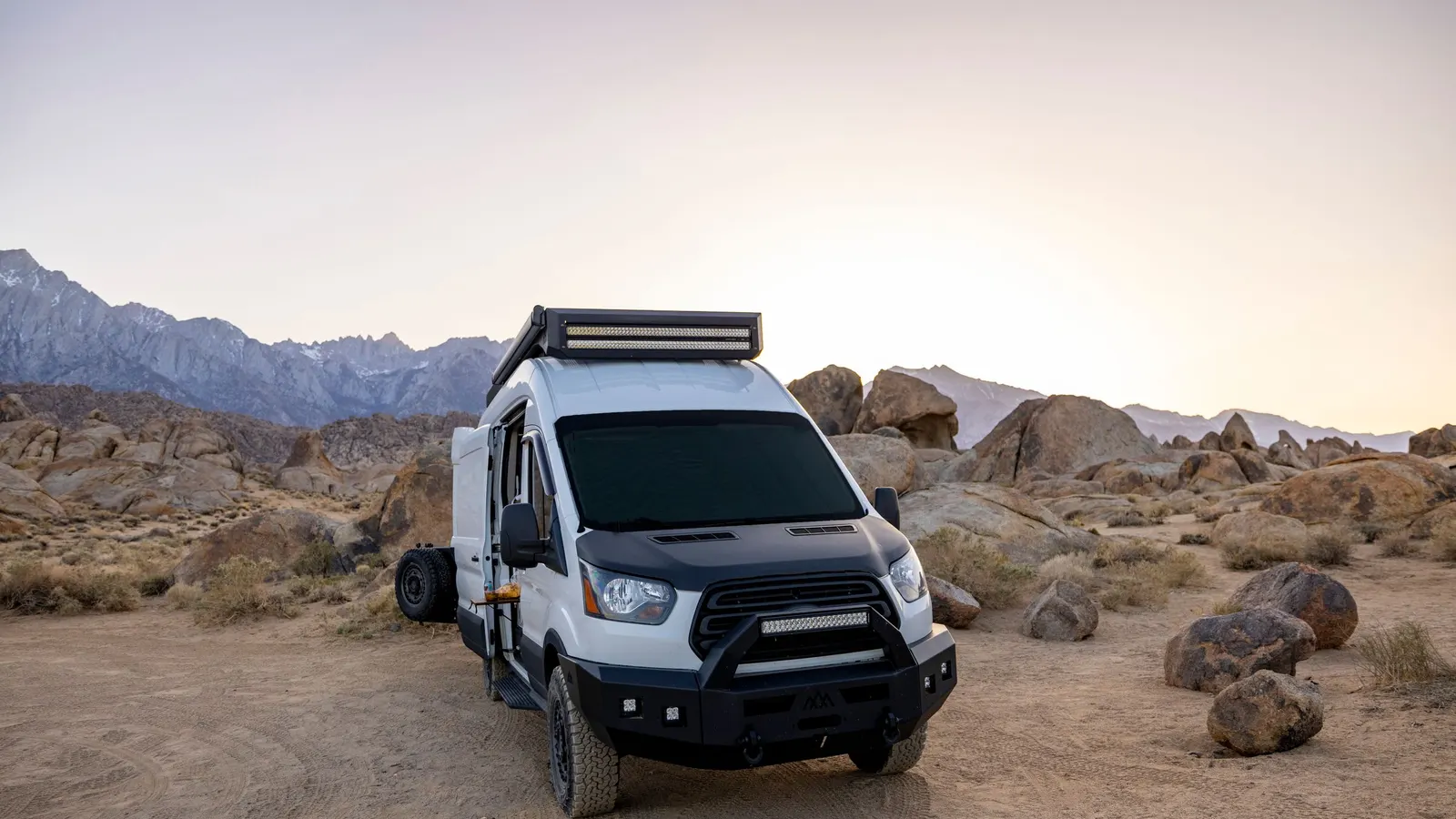
An RV generator gives you household power anywhere, from a remote forest campsite to a parking lot on a long travel day. It can run the air conditioner, the microwave and the coffee maker, and it can recharge your batteries when the sun will not. However, choosing a camper generator involves more than picking the biggest number. You need the right size for your loads, a fuel type that suits how you travel, and a plan for campground rules and carbon monoxide safety. This guide covers each step.
Last reviewed and updated: September 30, 2026. Written by Jeremy Jarvis.
Key takeaways
- Size an RV generator for your largest starting load, usually the air conditioner, plus everything else you run at the same time.
- Inverter generators are quieter and produce cleaner power, which suits electronics and campground quiet rules.
- Run generators outdoors only; Ready.gov advises keeping them at least 20 feet from windows, doors and attached garages.
- Many campgrounds limit generator hours, such as Grand Canyon’s Mather Campground, which allows them only 7 to 9 am and 6 to 8 pm.
Do you need an RV generator?
Not every RVer needs a generator. If you mostly stay at campgrounds with hookups, you may rarely use one. Similarly, if your loads are modest, solar and a good battery bank may cover everything. On the other hand, an RV generator becomes valuable when you:
- Boondock in hot weather and want to run an air conditioner.
- Use high-wattage appliances such as a microwave, induction cooktop or hair dryer away from hookups.
- Travel in cloudy or wooded areas where solar cannot keep up.
- Want backup power for medical equipment or work.
- Need to recharge batteries quickly after several cloudy days.
If none of these apply, a portable power station or solar may be a quieter, simpler choice. Our guide to the portable power station for camping explains that option.
Types of RV generators compared
| Type | Strengths | Trade-offs | Best for |
|---|---|---|---|
| Built-in (onboard) generator | Always installed, starts from inside, often runs on the RV’s fuel or propane | Heavy, costly to replace, needs regular exercise and service | Motorhomes and large fifth wheels |
| Portable inverter generator | Quieter, cleaner power for electronics, efficient at light loads | Higher cost per watt; must be set up and secured | Most travel trailers, vans and campers |
| Open-frame conventional generator | Low cost per watt, high output | Loud, heavier, less stable power | Backup use where noise does not matter |
| Dual-fuel generator | Runs on gasoline or propane | Usually less output on propane | RVers who want to use their propane supply |
For most RVers, a portable inverter generator offers the best balance of quiet, clean power and convenience. Meanwhile, motorhome owners often already have a built-in generator and only need to maintain it.
How to size an RV generator
Generator sizing depends on two numbers: running watts and starting watts. Running watts are the power an appliance uses continuously. Starting watts, by contrast, are the brief surge some appliances need to start, especially those with motors or compressors, such as air conditioners and refrigerators.
- List what you will run at once. Include the air conditioner, converter or battery charger, refrigerator if it runs on electric, microwave and any other loads.
- Add the running watts. Use the labels on each appliance or your owner’s manual.
- Find the largest starting load. Usually this is the air conditioner compressor.
- Check both numbers against the generator. Its continuous rating must cover your running total, and its starting rating must cover the largest surge while the rest is running.
- Add headroom. Generators run cooler, quieter and longer when they are not at their limit.
Our Portable Power Station Selector can help you list devices and their watts; the same list works for generator sizing.
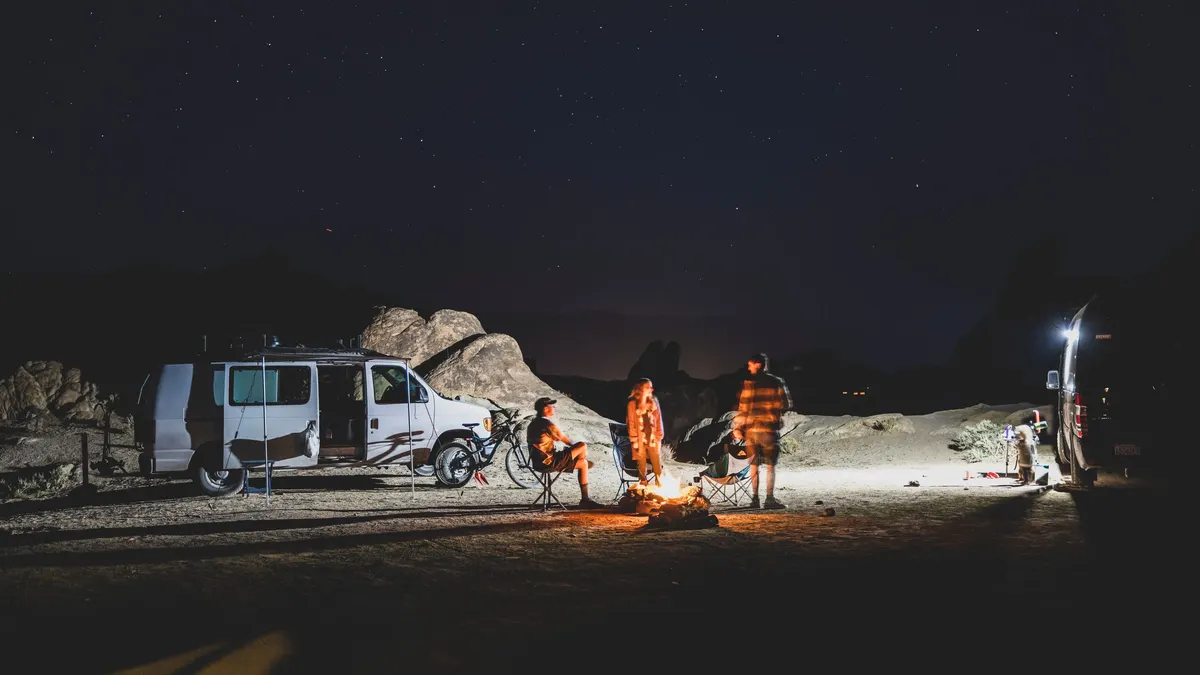
Running an RV air conditioner on a generator
The air conditioner is usually the reason people buy a camper generator, and it is also the hardest load to start. An RV air conditioner draws a large surge for a moment when the compressor kicks on. If the generator cannot supply that surge, it may stall or trip its breaker.
There are two common solutions. First, choose a generator with enough starting capacity for your air conditioner, with headroom. Second, consider a soft-start device, which many owners install on their air conditioners to reduce the start-up surge. As a result, a smaller, quieter generator may be able to run the air conditioner. In addition, turn off other large loads, such as the water heater element and microwave, while the air conditioner starts.
Generator fuel types
Gasoline
Gasoline is widely available and gives full rated output on most generators. However, it must be stored in approved containers, it can go stale, and carrying spare fuel takes space.
Propane
Propane stores well and many RVs already carry it. Consequently, dual-fuel generators let you run on the RV’s propane supply. On the other hand, generators usually produce somewhat less power on propane than on gasoline, so check both ratings.
Diesel
Some diesel motorhomes have diesel generators that draw from the main fuel tank. These are convenient but are typically built-in units rather than portables.
Campground generator rules and quiet hours
Generator rules are one of the biggest practical limits on RV generator use. Many campgrounds, especially in national parks, set strict generator hours. For example, NPS data for Grand Canyon’s Mather Campground lists generator hours of 7 to 9 am and 6 to 8 pm, quiet hours from 10 pm to 6 am, and no generators at all in Pine Loop. Desert View Campground lists the same generator hours. As a result, you cannot rely on a generator to run air conditioning through a hot afternoon at those campgrounds. Our guide to Grand Canyon campgrounds shows how these rules shape a stay.
Some campgrounds have generator-free loops, and some ban generators entirely. Therefore, check the rules before you book. Where generators are allowed, be considerate: place the generator so the exhaust and noise point away from neighbors, and run it only as long as you need.
Carbon monoxide safety
Generator exhaust contains carbon monoxide, which the EPA describes as an odorless, colorless and toxic gas. It can build up quickly in enclosed spaces and kill people and pets. Therefore, follow these rules every time.
- Run it outdoors only. The EPA warns never to use a portable generator inside homes, garages, crawlspaces, sheds or similar areas.
- Keep your distance. Ready.gov advises using generators outdoors and at least 20 feet away from windows, doors and attached garages.
- Point the exhaust away. Direct it away from your RV, open windows, vents and neighbors.
- Use CO alarms. Keep working carbon monoxide alarms inside the RV and test them regularly.
- Watch snow and enclosures. Snow, tall grass or a skirted RV can trap exhaust under or around the rig.
If a CO alarm sounds or anyone feels dizzy, nauseated or confused, get everyone into fresh air immediately and call for help.
Connecting a generator to your RV
Most portable generators connect to the RV’s shore power cord through a 30-amp RV outlet or an adapter. Built-in generators connect automatically through the RV’s transfer switch. Either way, use properly rated adapters and cords, and keep connections off wet ground.
Many RVers also plug their generator through an electrical management system, which can catch voltage problems. Check your protector’s instructions for generator use, because some generators produce power the protector may flag. Our RV surge protector guide explains how these devices work.
Parallel kits: two small generators instead of one large one
Many inverter generators can be linked with a parallel kit, combining two smaller units into one larger supply. This approach offers flexibility: you can run one generator for light loads and both for the air conditioner. In addition, two smaller units are easier to lift than one large one. However, you have two engines to maintain and two units to store and secure.
Generator vs solar and batteries
Generators and solar are not rivals; they complement each other. Solar is silent and free once installed, but it depends on the sun. A camper generator works anytime but uses fuel and makes noise. Many boondockers use solar and lithium batteries for daily loads, then run a generator briefly on cloudy days or for the air conditioner. Our guides to RV solar panels and the RV inverter explain how to build that kind of system.
Maintaining an RV generator
Generators fail most often from neglect. Follow your owner’s manual for oil changes, air filters and spark plugs. Many manufacturers also recommend exercising generators regularly under load, because fuel can go stale and parts can dry out when a generator sits unused. In addition, use fuel stabilizer for gasoline that will sit, or run the carburetor dry for storage if your manual recommends it. Finally, keep the generator clean and check for fuel leaks before each trip.
Altitude, heat and weather
Generators lose some power at high elevation, because thinner air affects combustion. Hot weather can also reduce output. Therefore, if you camp in the mountains or the desert, choose a generator with extra headroom. Meanwhile, protect portable generators from rain with a purpose-made cover that still allows ventilation, and never run one in an enclosed space to keep it dry.
Example camper generator setups
Seeing the sizing method applied makes it easier to choose. So here are three common setups, each described in general terms rather than specific models.
Weekend camper with a small trailer
This camper runs lights, a fan, phone chargers and the converter to recharge the battery, plus a coffee maker in the morning. Because there is no air conditioner in the plan, a small, quiet inverter camper generator is usually enough. In addition, its light weight makes it easy to lift in and out of a truck bed.
Family trailer with one air conditioner
Next, consider a family that boondocks in summer and wants one air conditioner on hot afternoons. Here, the air conditioner’s starting surge decides the size. Consequently, this family either chooses a mid-size inverter generator with enough starting capacity or adds a soft-start device so a smaller unit can cope. Meanwhile, they avoid running the microwave while the air conditioner starts.
Large motorhome with two air conditioners
Finally, a large motorhome with two air conditioners and residential appliances usually relies on a built-in generator sized for the coach. As a result, the owner’s main job is maintenance and fuel planning rather than choosing a portable unit.
Camper generator noise and etiquette
Noise is the most common complaint about generators at campgrounds. Inverter generators are generally much quieter than open-frame models, especially at light loads, which is one reason they are popular for camping. Even so, every camper generator makes noise. Therefore, place it where the sound and exhaust point away from neighbors, run it only during allowed hours, and turn it off when your batteries are charged. In addition, avoid running it early in the morning or late in the evening, even if the rules allow it, when others are likely to be relaxing or sleeping.
Storing and carrying fuel safely
Fuel storage is part of owning a generator. Use approved containers designed for gasoline, keep them outside the living area, and secure them so they cannot tip during travel. Likewise, check propane connections for leaks and close tank valves when not in use. Meanwhile, never refuel a hot or running generator; let it cool first to reduce fire risk. In short, treat fuel with the same care as the exhaust.
RV generator buying checklist
- List your loads and find your running and starting watts.
- Choose inverter, built-in, open-frame or dual-fuel based on how you camp.
- Check the starting capacity against your air conditioner, or plan a soft-start.
- Compare noise ratings if you camp at campgrounds.
- Consider weight, size and how you will carry and secure it.
- Check fuel options and output on each fuel.
- Plan CO safety: placement, exhaust direction and alarms.
To compare current options, you can browse RV-ready inverter generators and generator parallel kits on Amazon, then check each model against your sizing.
Common RV generator mistakes
- Sizing for running watts only. The air conditioner’s starting surge is what usually trips small generators.
- Ignoring generator hours. Many campgrounds limit use to short morning and evening windows.
- Running it too close to the RV. Exhaust can enter through windows, vents and doors.
- Letting it sit for months. Stale fuel is a common cause of hard starting.
- Forgetting security. Lock portable generators to the RV or a fixed object.
Chosen and used well, an RV generator gives you freedom to camp anywhere in comfort. For more power planning, visit our Solar & Power hub.
Frequently asked questions about RV generators
What size generator do I need for my RV?
Add the running watts of everything you will use at once, then make sure the generator’s starting capacity covers the biggest motor load, usually the air conditioner. Many RVers who run one air conditioner choose a mid-size inverter generator, while larger rigs with two air conditioners need much more.
Can a generator run an RV air conditioner?
Yes, if it is large enough to handle the air conditioner’s start-up surge as well as its running load. A soft-start device can lower the start-up surge on many air conditioners, which lets a smaller generator cope.
Is an inverter generator better for an RV?
For most RVers, yes. Inverter generators are typically quieter and more fuel-efficient at light loads, and they produce stable power suited to electronics. Open-frame generators cost less per watt but are louder.
How far should a generator be from an RV?
Ready.gov advises using generators outdoors and at least 20 feet from windows, doors and attached garages. Point the exhaust away from your RV and your neighbors, and keep working carbon monoxide alarms inside.
Can I run my RV generator at night?
Usually not at campgrounds. Many set generator hours. For example, the NPS lists generator hours at Grand Canyon’s Mather Campground as 7 to 9 am and 6 to 8 pm, with quiet hours from 10 pm to 6 am.
Sources and how we researched this guide
This guide is research-based. We did not test the generators mentioned here. Safety guidance comes from the U.S. EPA and Ready.gov, campground rules come from National Park Service data, and sizing follows manufacturer conventions for running and starting watts. Follow your generator and RV manuals, and keep working carbon monoxide alarms. Found something out of date? Tell us and we will check it against the source.
- Ready.gov: power outages and generator safety
- U.S. EPA: carbon monoxide and indoor air quality
- National Park Service: Grand Canyon South Rim campgrounds
- U.S. CPSC: carbon monoxide and generator safety
Keep planning
- RV Inverter Guide: Sizing, Pure Sine Wave, and Safe Installation
- RV Solar Panels: How to Size, Choose, and Install Solar Power for an RV
- RV Lithium Battery Guide: Sizing, Charging, and Upgrade Costs
- Portable Power Station for Camping: How to Size One That Lasts
Go deeper: Solar & Power hub · RV Solar Sizing Calculator · Battery Runtime Calculator · Portable Power Station Selector

Written by Jeremy Jarvis
Jeremy Jarvis is the founder and editor of Freedom Road Living, where he builds research-based guides and free planning tools for people who live, work and travel in an RV. He sets the site's editorial standards, checks every guide against official sources such as the National Park Service and manufacturer documentation, and is responsible for corrections. Jeremy also founded Eco Nomad Travel, Mind Clarity Hub, SilkHarborTravel and WanderOza Travel, and he is the author of books on clarity, focus and practical AI, including The Power of Clarity and Digital Clarity.