
Power decides where you can camp and how long you can stay. Get it right and you can work from a quiet site far from hookups for days. Get it wrong and you are running a generator at dinner or packing up early. This guide walks through energy use, portable power stations, installed solar, batteries, inverters, generators, and shore power, so you can choose the right combination.
Start with your daily energy use
Everything else follows from one number: how many watt-hours (Wh) you use per day. List every device, its wattage, and how many hours a day it runs. A laptop, router, 12-volt fridge, lights, and phone charging are very different from an air conditioner or induction cooktop. The Portable Power Station Selector adds this up for you.
Portable power stations vs. installed solar
| Portable power station | Installed RV solar and battery system | |
|---|---|---|
| Setup | Plug and play | Wiring, fusing, and mounting (professional install recommended) |
| Scalability | Limited, though some expand with extra batteries | Scales to large battery banks and arrays |
| Portability | Moves between vehicles and campsites | Fixed to the RV |
| Integration | Separate from the RV’s 12-volt system | Powers the RV’s own outlets and systems |
Many RVers start with a power station and portable panels, then add installed solar when they know their real usage.
Solar panels: how much do you need?
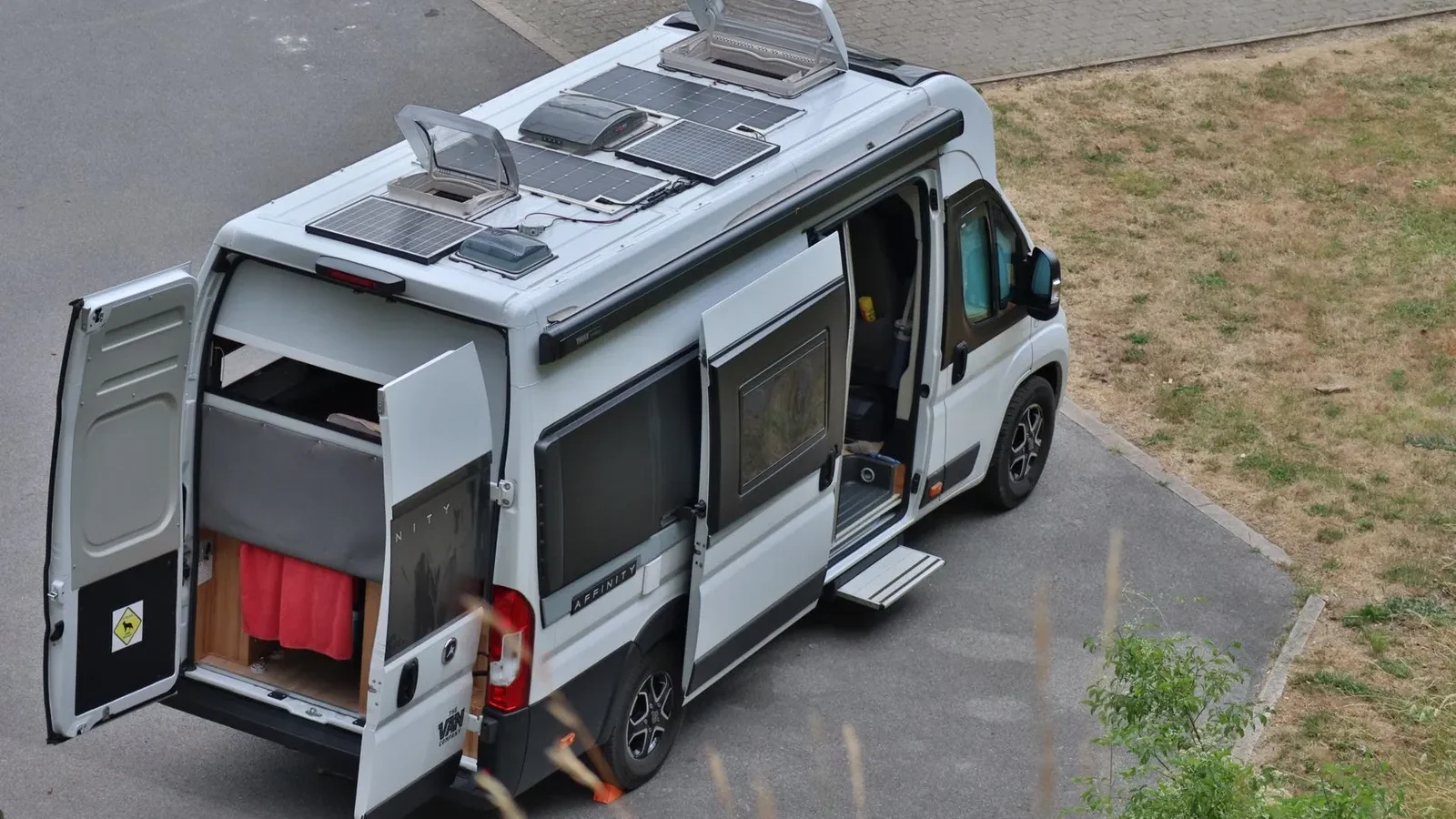
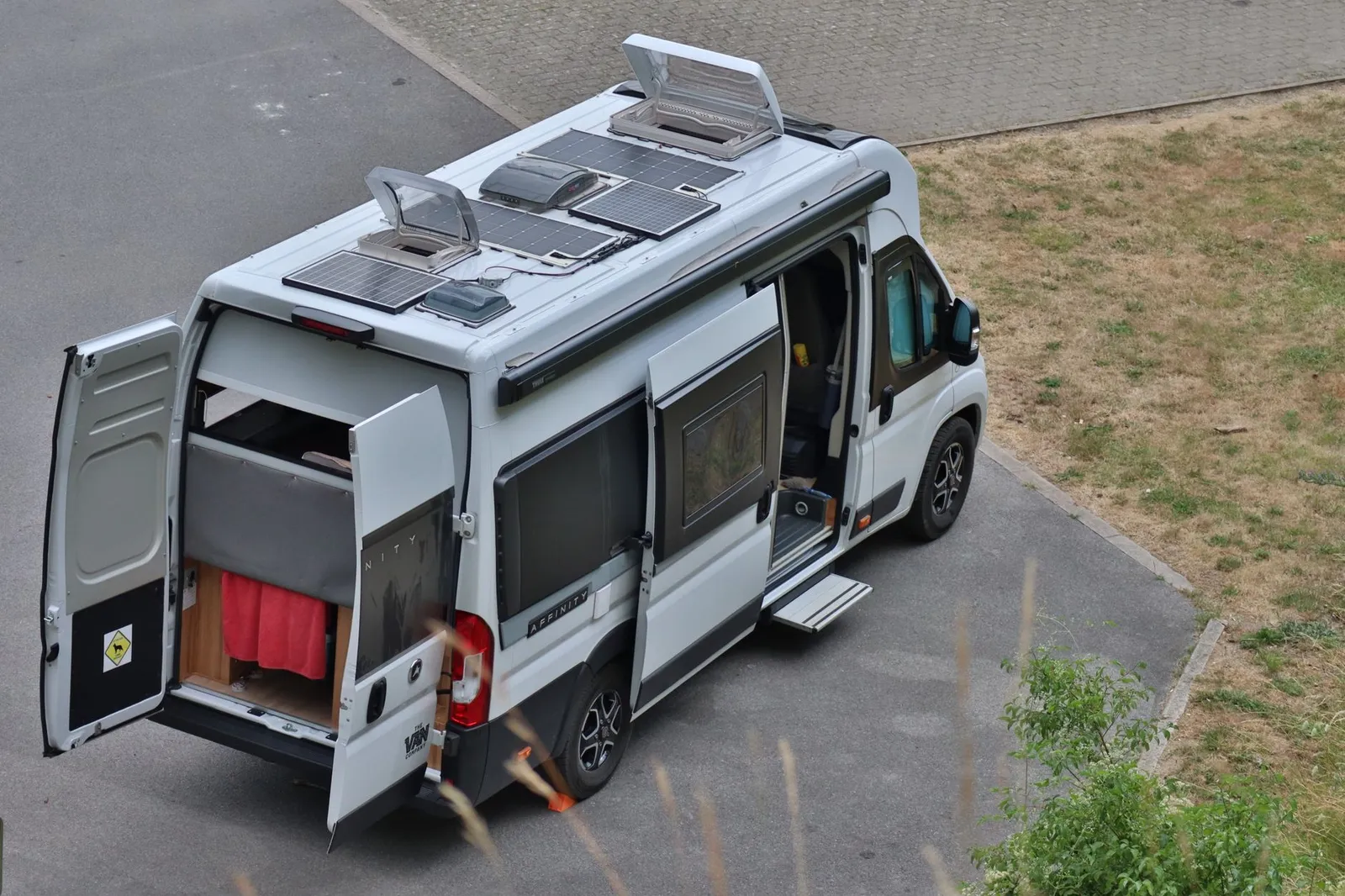
Panel output depends on sun hours, season, latitude, panel angle, shading, heat, and system losses. Winter sun in the northern United States and Canada can deliver a fraction of summer output. The RV Solar Sizing Calculator converts your daily watt-hours and local sun hours into array size, battery capacity, and charge controller amps, and shows every step.
Batteries: lithium (LiFePO4) vs. lead-acid
Lithium iron phosphate batteries let you use most of their rated capacity, charge faster, and weigh less, but cost more upfront. Lead-acid batteries cost less but should not be discharged much below half to protect their life. Charging lithium below freezing can damage it unless the battery has low-temperature protection. Use the Battery Runtime Calculator to see how long a bank will run your loads.
Inverters, converters, and charge controllers
- Inverter: turns battery DC power into household AC power. Size it for everything you run at once, plus startup surge.
- Converter or charger: charges batteries from shore power or a generator.
- Charge controller: manages solar charging; MPPT controllers are more efficient than PWM for most RV systems.
Running an RV air conditioner off-grid
Air conditioners draw far more power than typical RV solar systems can supply for long. Running one on batteries requires a very large bank and inverter, and usually shore power or a generator for sustained cooling. Soft-start devices can reduce startup surge so a smaller generator can handle it.
Generators and shore power
Generators fill gaps in cloudy weather and power high loads. Follow campground quiet hours and park rules, never run one in an enclosed space, and keep carbon monoxide detectors working. At campgrounds, protect your RV with a surge protector or electrical management system.
Safety first
Undersized wiring, missing fuses, and incorrect lithium charging settings cause fires. Follow manufacturer instructions and electrical codes, and use a qualified installer for fixed systems.
Three example power setups
| Setup | Typical loads | Typical approach |
|---|---|---|
| Weekend light | Phones, lights, a fan, occasional laptop | A small portable power station with a folding solar panel |
| Remote-work boondocker | Laptop, monitor, router or satellite dish, 12-volt fridge, lights | A mid-size lithium bank, roof solar with an MPPT controller, and an inverter sized for the office |
| Full-timer, all seasons | Everything above plus occasional high loads such as a microwave or coffee maker | A large lithium bank, a large roof array, a high-capacity inverter-charger, and a generator for extended cloudy weather and air conditioning |
These are starting points, not specifications. Size your own system from your daily watt-hours with the Solar Sizing Calculator.
Step-by-step: sizing your system
- List every device, its wattage, and hours per day. Use the device label or manual, not a guess.
- Add up daily watt-hours and add a safety margin.
- Choose battery capacity for the number of days you want to ride through cloudy weather.
- Size solar from your daily use, local sun hours in the season you camp, and system losses.
- Size the inverter for everything that runs at the same time, including startup surge.
- Choose a charge controller rated for your array’s current and voltage.
- Have fusing, wire gauge, and lithium charge settings checked by a qualified installer.
Reading power specifications
- Watt-hours (Wh): how much energy a battery or power station stores.
- Usable capacity: what you can actually draw without harming the battery.
- Continuous output (W): what the inverter can supply steadily.
- Surge or peak output (W): short bursts for motors and compressors starting up.
- Solar input limits: the maximum panel wattage and voltage a power station or controller accepts.
- Cycle life: how many charge cycles before capacity declines to a stated level.
Cold, heat, and battery care
Batteries lose effective capacity in the cold, and lithium batteries should not be charged below freezing unless they have built-in low-temperature protection or heating. Heat shortens battery life, so ventilate battery compartments and avoid direct sun on power stations. Store batteries partly charged if the RV will sit for a long time.
Start with these power guides
Most power questions come down to two decisions: how much energy you use in a day, and how you will store and replace it. These guides walk through both with the same math our calculators use.
- Portable power station for camping: a four-step sizing method, size tiers, and a buying checklist.
- RV lithium battery guide: sizing a LiFePO4 bank, charging-system changes, cold-weather rules, and installation safety.
- Starlink for RV: how much power a satellite dish adds to your daily budget.
After reading, run your own numbers with the RV Solar Sizing Calculator and the Battery Runtime Calculator. Because both tools show their working, you can see exactly how each assumption changes the result.
Every guide in this topic
Step-by-step, research-based guides that go deeper on each decision.
- RV solar panels
- RV lithium battery
- RV inverter
- RV generator
- Portable power station for camping
- RV surge protector
Official resources
The agencies and organizations we check our facts against. Always confirm current rules and conditions with them before you travel or buy.
Compare popular power stations
See how the EcoFlow DELTA 3 Plus, BLUETTI AC180 and Jackery Explorer 1000 v2 compare on capacity, output, weight, solar input and expansion, using each maker’s official specs.
Frequently asked questions
Start from your daily watt-hours, then divide by local peak sun hours and allow for system losses. Our RV Solar Sizing Calculator does the math and shows each step. It can run many 12-volt and small AC loads such as laptops, lights, fans, and a 12-volt fridge. Running an air conditioner or the whole RV usually requires a much larger installed system or a generator. For many full-time and off-grid RVers, yes: more usable capacity, faster charging, and less weight. The trade-offs are higher upfront cost and cold-weather charging limits. Only with a very large battery bank, inverter, and solar array, and even then usually for limited periods. Most RVers use shore power or a generator for sustained air conditioning.How much solar do I need for an RV?
Can a portable power station run an RV?
Is a lithium RV battery worth it?
Can I run my RV air conditioner on solar?
Tools for solar and power
- RV Solar Sizing Calculator – panels, batteries, controller
- Battery Runtime Calculator – how long it lasts
- Portable Power Station Selector – capacity and output class
Browse every guide in RV Solar and Portable Power.