

Full-time RV living can give you more freedom, more time outdoors, and the ability to work from almost anywhere. It is also a real financial and practical commitment. This guide is the map for Freedom Road Living: five steps, in order, each with a free tool and deeper guides. Work through them and you will finish with a realistic budget, a clear idea of what RV fits you, a connectivity and power plan, and a first route.
New: build your personal RV plan in two minutes
Answer seven quick questions and get a step-by-step roadmap with the exact tools and guides for your situation.
If you only have ten minutes, do two things now: run the Full-Time RV Budget Calculator with your own numbers, and read Step 1 honestly with anyone who will travel with you.
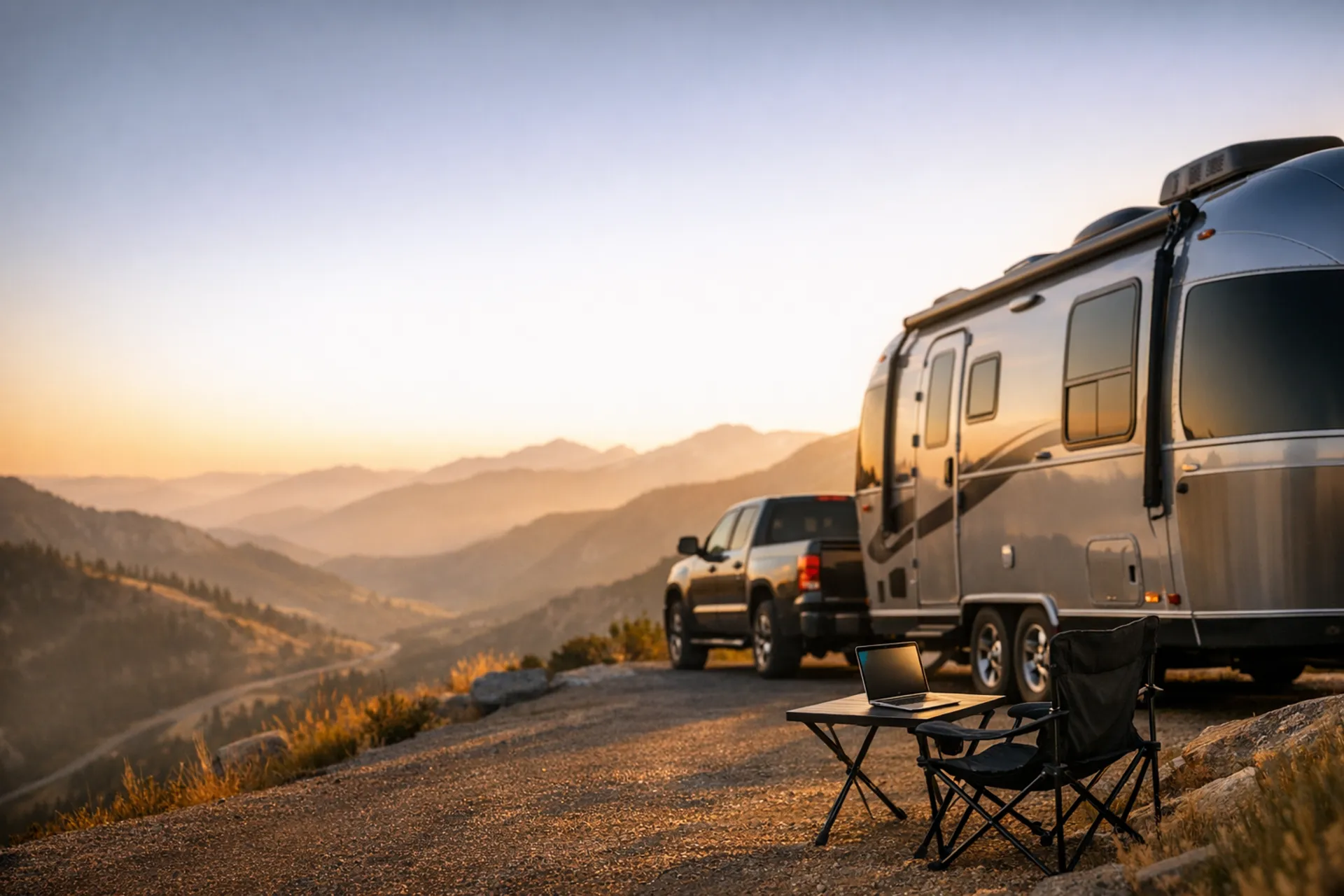
Step 1: Decide whether full-time RV life fits you
People choose RV life for different reasons: travel, lower housing costs in some cases, being near family in different places, outdoor recreation, or a slower pace. The trade-offs are just as real. Space is small. Things break and need fixing, often at inconvenient times. Travel days are work. Mail, health care, legal residency, and voting all need a plan. Weather, campground availability, and connectivity shape where you can go.
Before committing, answer these questions together:
- How will we fund life on the road: savings, a remote job, freelancing, a business, or retirement income?
- How often do we want to move? Moving less usually costs less and is less tiring.
- What do we do if the RV is in a repair shop for two weeks?
- How will we handle health care, prescriptions, and emergencies away from home?
- What happens to our current home, belongings, pets, and commitments?
The cheapest way to test the lifestyle is to rent an RV for a week or two in the season and region you would actually travel. Our Rental vs. Purchase Calculator shows when renting stops making sense.
Step 2: Build a realistic budget
There is no single “cost of RV living.” Costs swing widely with how fast you travel, the kind of campgrounds you choose, whether you finance the RV, its age and condition, and health insurance. That is why we built a calculator instead of quoting an average. Enter real quotes where you can: a campground’s monthly rate, your insurance premium, your phone and internet plans, and your actual fuel economy.
- Full-Time RV Budget Calculator – your monthly and annual number
- RV Emergency Fund Calculator – a cushion for repairs and hotel nights
- RV Fuel Cost Calculator – fuel for each leg
- Campground Cost Calculator – the cheapest mix of nightly, weekly, and monthly rates
Two budget lines people underestimate: the maintenance reserve (tires, roof sealant, appliances, and generator service arrive on their own schedule) and displacement costs when the RV is in the shop.
Step 3: Choose, finance, and inspect the right RV
Start from how you will live, not from a showroom. How many people and pets? Do you need a dedicated workspace? Will you boondock off-grid or stay at full-hookup parks? Do you want to tow a car, or tow the RV with a truck? Those answers point you toward a motorhome, a fifth wheel, a travel trailer, or a camper van.
Then set a price range you can sustain. The Affordability Calculator reserves room for insurance, storage, and maintenance before it sizes a loan, and the RV Loan Calculator shows the total interest on long RV loan terms. Never sign without walking through the New RV Inspection Checklist, and consider an independent certified inspector for used RVs.
Step 4: Plan internet and power
If you work from the road, connectivity is not optional. The strongest setups use at least two independent connections, such as cellular on two different carriers or cellular plus satellite. Our RV Internet Setup Selector suggests a primary and backup plan, and the Data Usage Calculator sizes your plan.
Power decides where you can camp and for how long. Start with your daily energy use in the Power Station Selector, then size panels and batteries with the Solar Sizing Calculator. Plan on shore power or a generator for sustained air conditioning.
Step 5: Plan routes, campgrounds, and income
Start slow: shorter drive days, longer stays, and arrival before dark. Check RV length limits and reservation windows on official park pages, and follow the seasons to avoid extreme heat and cold. Our Campgrounds and Routes hub explains the options, and the Trip Cost Calculator estimates each leg. If you will earn on the road, read Work From the Road for realistic options. We never promise income.
A simple 90-day launch timeline
- Days 1-30: budget with real quotes, research RV types, rent for a test trip if possible, and decide on domicile and mail forwarding.
- Days 31-60: choose and inspect the RV, arrange insurance and financing, plan connectivity and power, and start downsizing.
- Days 61-90: shakedown trip close to home, fix what breaks, finalize your first route, and build your emergency fund.
Common first-year mistakes to avoid
- Moving too fast. Frequent long drives raise fuel costs and exhaust you. Slow down.
- Buying before renting. A short rental reveals what layout and size you actually need.
- Underestimating maintenance. Budget a monthly reserve from day one.
- One internet connection. If you work, always have a backup.
- Ignoring weight ratings. Overloading is unsafe and wears out tires, brakes, and suspension.
- No emergency fund. A breakdown can mean repairs and hotel nights at the same time.
Your planning toolkit
Every free tool on Freedom Road Living explains its assumptions and runs privately in your browser. Start with the tools directory, and bookmark the ones you will use each month.
Popular guides to read next
Once you have worked through the basics above, these guides answer the questions new RVers ask most often.
- Free camping in the US, for stretching your budget legally.
- Portable power station for camping, for off-grid power without a generator.
- Starlink for RV, for internet where cell signals do not reach.
- National park RV length limits, before you book a park campground.
Frequently asked questions
It depends on whether you buy the RV outright or finance it, its age, and how you travel. Add your purchase or down payment, setup gear, several months of living costs, and an emergency fund. Our budget and emergency fund calculators help you build the number from your own quotes rather than someone else’s average. For most people, yes. A one- or two-week rental in the season you plan to travel is the cheapest way to learn what size, layout, and travel pace suit you before committing to a purchase. There is no single best type. Fifth wheels offer residential space, motorhomes make travel days simple, travel trailers are flexible and affordable, and camper vans are nimble but small. The right choice depends on how many people travel, whether you need a workspace, and how often you move. Many people do, but it requires dependable internet with a backup, enough power for a full workday, and confirmation that your employer allows you to work from different states or countries.How much money do I need to start full-time RV living?
Should I rent an RV before buying one?
What is the best RV type for full-time living?
Can I work remotely while living in an RV?
Get the plan by email
New guides and tools, seasonal route ideas, and gear worth knowing about. No hype, and you can unsubscribe at any time.