
Free Camping in the US: How to Find Legal Free Campsites
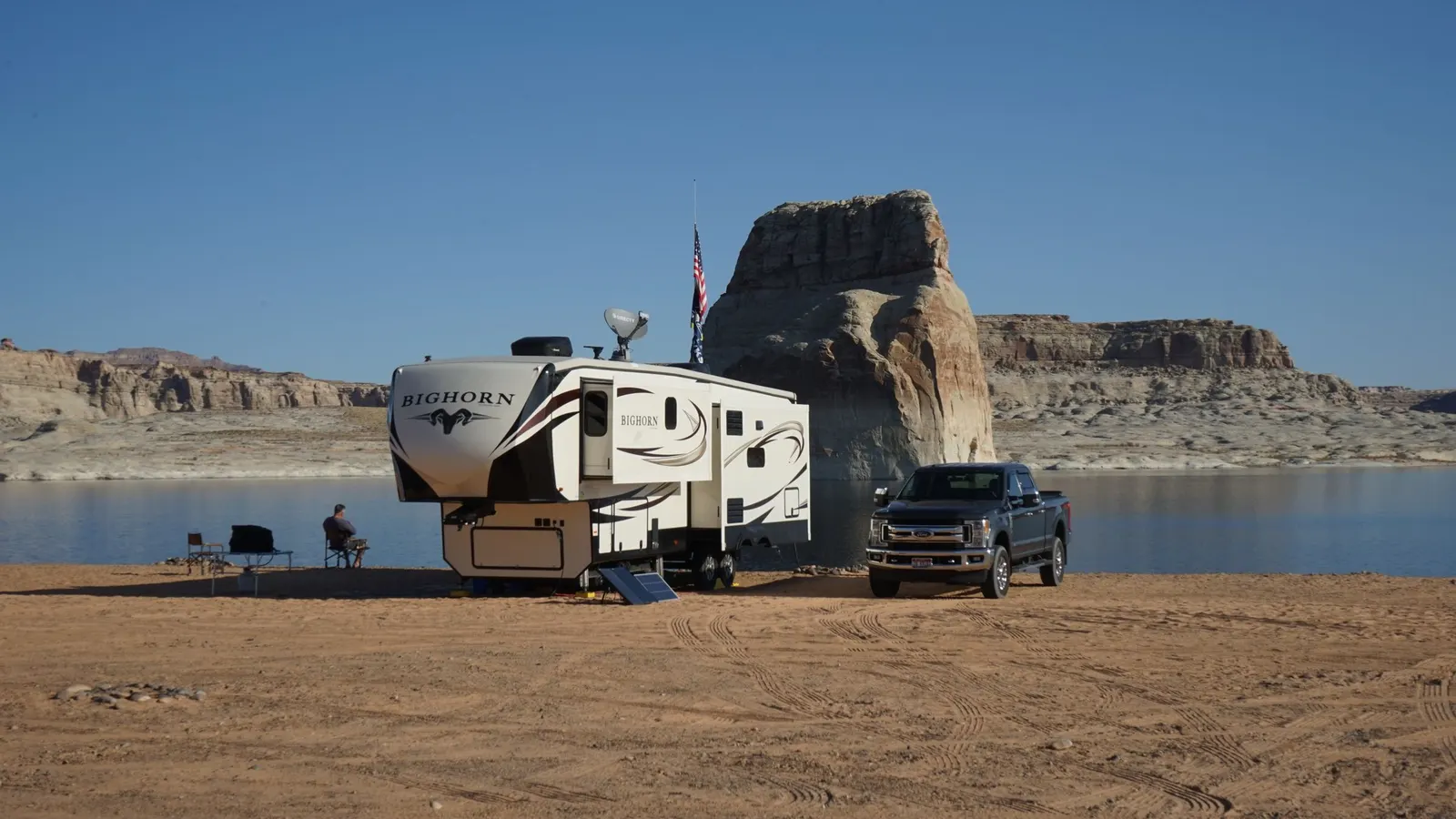
Free camping is real, legal and surprisingly common in the United States, especially in the West. Millions of acres of public land allow you to pull off a forest road or open desert track and stay for days without paying a fee. However, free camping comes with rules, stay limits and no services. This guide explains where free camping is allowed, how to find free camping spots with official maps, and how to do it safely.
Last reviewed and updated: September 30, 2026. Written by Jeremy Jarvis.
First, a note on words. You will hear free camping called dispersed camping, boondocking or dry camping. In practice, they mean nearly the same thing: camping outside a developed campground, usually without hookups, water or toilets. We use the terms interchangeably below.
What counts as free camping?
Broadly, free camping falls into three groups. Each has different rules, so it helps to know which one you are planning for.
- Dispersed camping on public land: undeveloped sites on Bureau of Land Management (BLM) land and in national forests and grasslands. This is the most common form of free camping.
- Free developed campgrounds: a small number of primitive federal, state or county campgrounds that charge nothing, often with a vault toilet and a few fire rings.
- Overnight parking: a single night in a parking lot where the owner and local law allow it. This is a travel-day stopover, not a campsite.
Most free campsites are dispersed sites. Consequently, the rest of this guide focuses on public land, then covers overnight parking separately.
Where is free camping allowed?
The big two are BLM land and national forests. Together, they cover a vast share of the western states, and national forests also reach across the East and South. However, being on public land is not the same as being allowed to camp anywhere on it.

Free download: The Full-Time RV Launch Checklist
Our 16-page planner: a 12-month countdown, inspection checklist, budget and weights worksheets and a maintenance calendar. Free and printable.
| Land type | Free camping allowed? | Typical stay limit | Where to check rules |
|---|---|---|---|
| BLM public land | Generally yes, unless posted closed | 14 days in a 28-day period | The local BLM field office |
| National forests and grasslands | Generally yes, outside developed sites, unless posted | Often 14 days, varies by forest | The ranger district and its Motor Vehicle Use Map |
| National parks | Rarely outside designated campgrounds | Set per campground | Each park’s camping page |
| Army Corps of Engineers lakes | Mostly fee campgrounds, a few free primitive areas | Often 14 days | The project office or Recreation.gov |
| State lands and wildlife areas | Varies widely; some require a permit | Varies | The state agency that manages the land |
In short, BLM land and national forests are where most free camping happens. National parks are a different case: they protect heavily visited places, so camping is usually limited to fee campgrounds.
How stay limits work on free campsites
Stay limits keep popular free campsites from turning into permanent settlements. On BLM land, the general rule is that dispersed camping is limited to 14 days within a 28-day period. After that, many field offices require you to move a set distance, commonly 25 miles, before camping again. National forests often use a similar 14-day limit, although some forests set different numbers.
Because the details vary, treat 14 days as the starting assumption, then confirm the local rule. Rangers do enforce stay limits, and repeat violations can lead to fines. Also note that some areas near towns or popular attractions have shorter limits or ban overnight stays entirely.
How to find free camping spots with official maps
Apps and forums are useful for reviews, but the legal answer always comes from the land manager. So, start with official sources, then use apps to check road conditions and recent reports.
- Confirm the land owner. Use BLM and Forest Service maps to confirm the land is public. Private land and state trust land can sit right next to public land with no obvious fence.
- Get the Motor Vehicle Use Map (MVUM). For national forests, the MVUM shows which roads are open to which vehicles and often marks corridors where roadside dispersed camping is allowed. Driving off designated roads can damage land and lead to a ticket.
- Call or check the local office. The BLM field office or ranger district knows current closures, fire restrictions and seasonal rules better than any app.
- Check federal campgrounds as a backup. Our RV Campground Finder lists national forest, BLM, Army Corps and national park campgrounds by state from official federal data, so you always have a paid fallback nearby.
- Scout in daylight. Arrive with enough light to check the road, the ground and the site before you commit a large rig.
Many good free camping spots sit a few miles down a graded forest road, not at the trailhead. However, road quality changes with weather, so a road that is fine in dry weather can be impassable after rain.
Picking a good free campsite
Once you know an area allows free camping, choose a site that has already been used. Previously used sites have bare ground, a fire ring if fires are allowed, and room to park. As a result, you avoid crushing new vegetation, and you are less likely to get stuck.
- Look for level, firm ground with a clear way back out.
- Stay well away from lakes and streams. Many forests require camping at least 100 to 200 feet from water, so check the local rule.
- Avoid dry washes and low spots that can flood in a storm.
- Leave space between you and other campers. On public land, privacy is part of the appeal for everyone.
Where to start: free camping by region
Public land is not spread evenly across the country. As a result, where you start looking for free campsites depends heavily on where you travel. The notes below are starting points for research, not a list of guaranteed sites, and every area still has its own rules.
The West and the desert Southwest
Most BLM land sits in the western states, so the West is where dispersed camping is easiest to find. In winter, many RVers head to the low deserts of Arizona and southern California, where the BLM also runs permitted Long-Term Visitor Areas for extended stays. Those areas require a permit and are not free, but nearby public land often allows short free stays under the normal limits. In summer, higher forests in Colorado, Utah, Idaho, Montana and Oregon offer cooler dispersed sites along forest roads.
The Midwest, South and East
There is far less BLM land east of the Rockies. Instead, national forests carry most of the load. For example, the Black Hills National Forest in South Dakota allows dispersed camping on most of the forest for a set number of days, and many eastern and southern national forests allow it in at least some areas. However, eastern forests tend to have more private land mixed in, denser vegetation and fewer large open sites, so smaller rigs have more options.
Near national parks
Camping inside most national parks means a designated campground. Still, national forests and BLM land often border popular parks. Consequently, a free campsite just outside the boundary can be a practical base, especially when park campgrounds are full. Use our campground finder to see which federal campgrounds sit in the same state, then check the neighboring forest or field office for dispersed rules.
Common free camping mistakes to avoid
Most problems on free campsites come from a short list of avoidable mistakes. Knowing them in advance saves money, time and sometimes a tow bill.
- Trusting an app pin over the land manager. A pin can sit on private land or in an area that has since closed.
- Taking a big rig down an unknown road. Scout on foot or in a smaller vehicle first; turning a long trailer around on a narrow road can be impossible.
- Arriving after dark. You cannot judge ground, slope or clearance at night.
- Ignoring the weather. Dirt roads can turn to mud in one storm and strand vehicles for days.
- Overstaying. Stay limits exist to protect the land, and rangers do check.
Free campsites versus paid campgrounds
Free campsites and paid campgrounds solve different problems. Therefore, it helps to compare them side by side before you plan a route. The table below summarizes the typical trade-offs, although individual sites vary.
| Factor | Dispersed free campsites | Paid campgrounds |
|---|---|---|
| Nightly cost | None | A nightly fee, sometimes with weekly or monthly rates |
| Hookups and water | Usually none | Often water, electric and sometimes sewer |
| Reservations | Not available; first come, first served | Often available, and required at busy parks |
| Space and privacy | Often generous | Defined sites, closer neighbors |
| Road access | Can be rough, unpaved and narrow | Usually paved or graded |
| Stay limit | Typically 14 days, then move | Set by each campground |
In practice, many travelers alternate. For instance, they spend several nights at free campsites, then one night at a paid campground to dump tanks, fill water and do laundry. That rhythm keeps costs down without running out of water or power.
Free camping spots in towns: overnight parking
On a long travel day, you may just need a safe place to sleep. Some businesses allow overnight parking for self-contained RVs, and some highway rest areas allow a limited stay. However, permission varies by store, by city and by state. Many cities ban overnight parking or sleeping in vehicles, and a store’s corporate policy does not override a local ordinance.
Therefore, always ask the manager in person, park at the edge of the lot, stay one night, and leave nothing behind. Do not put out chairs, awnings or grills. In other words, overnight parking is a courtesy that works only as long as travelers treat it that way.
Free camping rules and etiquette
Free campsites have no staff, so every camper is responsible for leaving the site as clean as they found it. These basics keep public land open to free camping for everyone.
- Pack out everything. There is usually no trash service. Take all trash, food scraps and cigarette butts with you.
- Handle waste properly. Dump RV tanks only at a dump station. If you have no toilet, follow the land manager’s rules for human waste, which often means a portable toilet system.
- Check fire restrictions every time. Fire rules change with conditions, and many areas ban all campfires during dry periods.
- Respect generator hours and neighbors. Even without posted hours, run generators sparingly and never late at night.
- Stay on existing roads. Driving off designated routes damages soil and plants for years.
Planning power and water for free camping
Free camping means no hookups, so your water, power and waste capacity decide how long you can stay. Start with water. A common planning figure is about one to two gallons per person per day for drinking, cooking and basic washing, and more if you shower. Next, check your gray and black tank sizes, because full tanks often end a trip before empty fresh water does.
Power is the other limit. A fridge, lights, fans and a laptop can drain a small battery in a day or two. For that reason, many campers pair free camping with solar or a portable power station. Our guide to choosing a portable power station for camping walks through the sizing math, and the Solar & Power hub covers rooftop systems.
How much can free camping save you?
Campground fees are often one of the biggest costs of RV travel. For example, a traveler who replaces ten paid nights a month with free camping can save a meaningful share of their monthly budget, although fuel, water and dump fees still add up. To see the real numbers for your own plans, compare site fees with our Campground Cost Calculator, then factor in the extra driving that remote free campsites can require.
That said, free camping is not always cheaper. Long detours down rough roads burn fuel, and a night in a paid campground with hookups can be worth it to empty tanks, do laundry and recharge. Most travelers mix free camping with paid stays rather than choosing one or the other.
Is free camping safe?
For most people, yes, with common-sense precautions. Tell someone where you will be, because many free camping areas have little or no cell service. Carry extra water, a first-aid kit and a way to call for help, such as a satellite messenger. Also, trust your instincts: if a site feels wrong, leave and find another one. Finally, watch the weather, because flash floods, snow and high winds can make remote roads dangerous quickly.
Free camping checklist before you go
Run through this list the day before any free camping trip. It covers the items that most often cut a trip short.
- Confirm the land is open to dispersed camping and note the stay limit.
- Download offline maps, including the Motor Vehicle Use Map for national forests.
- Check current fire restrictions and closures with the local office.
- Fill fresh water, empty tanks and top up fuel and propane.
- Charge batteries and pack a way to recharge.
- Pack trash bags, a shovel or portable toilet supplies, and leveling blocks.
- Share your plans and expected return with someone at home.
Free camping rewards preparation. Do the homework, follow the local rules, and leave each site better than you found it, and some of your best nights on the road will cost nothing at all.
Planning tools for free camping
Free camping usually means no hookups, so the limits are your tanks, your power and your propane. These free calculators turn those limits into a plan before you leave town.
- Boondocking Days Calculator: how many days your fresh, gray and black tanks allow.
- RV Propane Usage Calculator: how long your propane lasts for heat, hot water and cooking.
- RV Generator Size Calculator: the running and starting watts you need off-grid.
When it is time to empty the tanks, our guide on how to dump RV tanks covers dump stations and etiquette.
Frequently asked questions about free camping
Is free camping legal in the United States?
Yes, in many places. Dispersed camping is generally allowed on Bureau of Land Management land and in national forests unless an area is posted closed. It is not allowed in most national parks outside designated campgrounds, and city rules often ban sleeping in vehicles on streets.
How long can you stay at a free campsite on public land?
The BLM generally limits dispersed camping to 14 days within a 28-day period, and many national forests use a similar 14-day limit. After that, you usually have to move a set distance away, often 25 miles. Local rules vary, so check the field office or ranger district.
How do I find free camping spots near me?
Start with official maps. BLM field office maps show public land, and USDA Forest Service Motor Vehicle Use Maps show which roads are open and where roadside camping is allowed. Then use our free campground finder to see federal campgrounds by state.
Can you camp for free in national parks?
Rarely. Most national parks require you to stay in a designated campground, and most of those charge a fee. Some parks have free primitive sites or backcountry permits, so check each park’s camping page.
Do free campsites have water or toilets?
Usually not. Dispersed sites typically have no water, trash service, toilets or hookups. Bring water, pack out all trash, and plan where you will dump tanks and refill before you go.
Sources and how we researched this guide
This guide is research-based. We summarize rules published by the Bureau of Land Management, the USDA Forest Service and the National Park Service, and we did not visit or test the places mentioned. Rules differ by field office, forest and season, so always confirm locally. Found something out of date? Tell us and we will check it against the source.
- Bureau of Land Management: camping on public lands
- USDA Forest Service: know before you go
- BLM Nevada: 14-day stay limit and 25-mile move rule
- BLM New Mexico: dispersed camping conditions
- Coronado National Forest: dispersed camping rules
- San Juan National Forest: dispersed camping guidelines
- Black Hills National Forest: dispersed camping
- Recreation.gov: federal campgrounds and permits
- National Park Service: camping
Keep planning
- Workamping Jobs and Camp Host Jobs: How to Find Work on the Road
- Motorhome vs Fifth Wheel for Full-Time Living
- New vs Used RV: Which Should You Actually Buy?
- RV Propane Tank Guide: Sizes, How Long They Last and Safety
Go deeper: Campgrounds & Routes hub · RV Campground Finder and Length Checker · Campground Cost Calculator

Written by Jeremy Jarvis
Jeremy Jarvis is the founder and editor of Freedom Road Living, where he builds research-based guides and free planning tools for people who live, work and travel in an RV. He sets the site's editorial standards, checks every guide against official sources such as the National Park Service and manufacturer documentation, and is responsible for corrections. Jeremy also founded Eco Nomad Travel, Mind Clarity Hub, SilkHarborTravel and WanderOza Travel, and he is the author of books on clarity, focus and practical AI, including The Power of Clarity and Digital Clarity.