
Portable Fridge for Camping: How to Choose, Power and Pack One
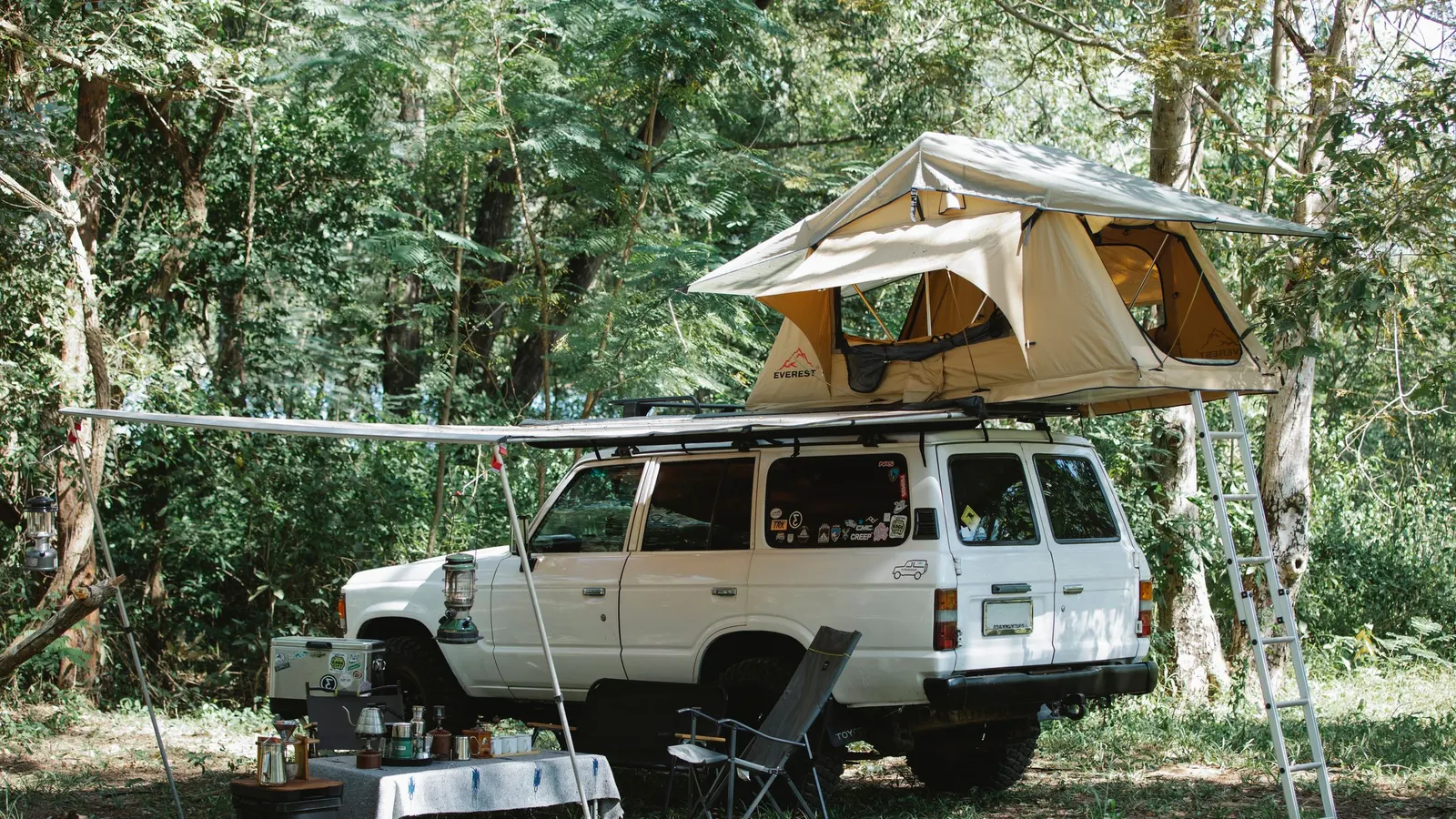
A portable fridge for camping changes trips more than almost any other piece of gear. No more draining melted ice, no more soggy sandwiches, and no more cutting a trip short because the milk turned. However, portable fridges cost far more than coolers, and the wrong one can drain your battery overnight. This guide explains how to choose a 12V camping fridge that fits your trips, your vehicle and your power system.
Last reviewed and updated: October 1, 2026. Written by Jeremy Jarvis.
Key takeaways
- A 12-volt compressor fridge is the best portable fridge for camping for most people: it holds a set temperature in hot weather and sips battery power.
- Size the fridge to your trip length and group, then plan power for the hottest days, not the average ones.
- Keep cold food at or below 40°F, which USDA calls the line between safe storage and the danger zone.
- Pre-chill the fridge at home, pack it full and keep it shaded to cut power use sharply.
First, we compare the three cooling types. Next, we cover sizing, real power use and how to run a camping fridge from a battery or solar. Finally, we share food-safety temperatures from USDA and the packing habits that make any portable fridge work better. If you are fitting out an RV kitchen instead, our RV refrigerator guide covers built-in units.
The short answer: which portable fridge for camping should you buy?
For most people, the best portable fridge for camping is a 12-volt compressor model sized to your group and trip length. Compressor fridges work like a small home refrigerator. As a result, they hold a set temperature even on hot days, they can freeze, and they use modest power once they are cold.
Thermoelectric coolers cost much less, yet they can only cool a limited amount below the outside air, so they struggle in summer heat. Absorption fridges run on propane, which is useful off-grid, although they are less efficient on battery power and need to sit level. In other words, choose a compressor fridge unless your budget or your fuel plan points clearly elsewhere.
Three types of portable camping fridge, explained
Every portable camping fridge uses one of three cooling methods. Understanding them is the fastest way to cut through confusing product listings.

Free download: The Full-Time RV Launch Checklist
Our 16-page planner: a 12-month countdown, inspection checklist, budget and weights worksheets and a maintenance calendar. Free and printable.
12V compressor fridges
A compressor fridge pumps refrigerant through a sealed loop, exactly like a kitchen refrigerator. The RV Geeks explain that a 12-volt fridge uses a compressor that operates exclusively on 12-volt DC power, so it needs neither propane nor 120-volt AC. Because of that, it runs straight from a vehicle socket, a house battery or a portable power station. Most models also accept AC through an adapter at home.
Thermoelectric coolers
Thermoelectric units use a solid-state module and a fan to move heat out of the box. They are light, quiet and inexpensive. Even so, their cooling is limited compared with the outside air, which means a hot car or a sunny campsite can leave food too warm. They also draw power continuously rather than cycling off, so they are rarely the efficient choice they appear to be.
Absorption (3-way) fridges
Absorption fridges use heat to drive cooling, so they can run on propane, 120-volt AC or 12-volt DC. They are silent and work well on propane at a remote camp. On the other hand, they are inefficient on 12-volt power, perform poorly in high heat, and need to be fairly level to work properly. For these reasons, few portable models still use absorption.
Camping fridge types compared
The table below summarizes the trade-offs. Ranges are typical, so always confirm a specific model’s specification sheet.
| Feature | 12V compressor | Thermoelectric | Absorption (3-way) |
|---|---|---|---|
| Cooling in hot weather | Strong, holds a set temperature | Weak, limited cooling below outside air | Fair, struggles in high heat |
| Can freeze | Yes, on most models | No | Some models |
| Power sources | 12V DC, AC with adapter | 12V DC, some AC | Propane, 120V AC, 12V DC |
| Battery efficiency | Best, cycles on and off | Poor, runs continuously | Poor on 12V |
| Needs to be level | No | No | Yes, fairly level |
| Typical price | Highest | Lowest | Middle to high |
Overall, the compressor design wins for nearly every camper who has a decent battery. The extra cost pays back in fewer spoiled meals and less wasted power.
What size portable fridge for camping do you need?
Portable fridges are sold by capacity in quarts or liters. Bigger is not automatically better, because a larger box weighs more, takes more space and uses more power. Instead, size the fridge to how many people you feed and how long you go between grocery stops.
- Small (about 20 to 35 quarts): one or two people on weekend trips, or drinks and lunch for a day trip.
- Medium (about 40 to 55 quarts): a couple on trips of up to a week, or a small family on weekends.
- Large (about 60 to 80 quarts and up): families, long remote trips, or anyone who wants a separate freezer zone.
Before you buy, measure the space in your vehicle, including the height with the lid open. Also check the empty weight, because a full fridge is heavy to lift in and out of a trunk. Many overlanders mount a fridge on a slide so it pulls out at waist height.
How much power does a 12V camping fridge use?
This is the number that decides whether a camping fridge works for you. A compressor fridge does not run all the time. Instead, it cycles on until it reaches the set temperature, then rests. Its daily energy use therefore depends on outside heat, how often you open it, how full it is and how cold you set it.
Manufacturer specification sheets for many 12V camping fridges list running draws of roughly 40 to 60 watts when the compressor is on. In practice, that often works out to a few hundred watt-hours a day in mild weather, and more in summer heat. Power consumption also varies with compressor quality, as The RV Geeks note. Consequently, two fridges of the same size can use quite different amounts of energy.
To estimate your own use, take the model’s stated average consumption, add a margin for hot weather, and compare it with your battery. Our Battery Runtime Calculator turns those numbers into hours and days of runtime.

Powering a portable fridge for camping: battery, solar and vehicle
A portable fridge for camping is only as reliable as the power behind it. You have four common options, and many campers combine two of them.
- Vehicle 12-volt socket: fine while driving. However, running a fridge overnight from a starting battery can leave you unable to start the engine. Use the fridge’s low-voltage cut-off on its highest setting if you do this.
- Portable power station: the simplest off-grid option. Plug the fridge into the station’s 12-volt socket, not an AC outlet, to avoid inverter losses. Our guide to choosing a portable power station for camping explains how to size one.
- House battery in an RV or van: the most capacity per dollar, especially with lithium batteries that charge while you drive.
- Solar panels: extend any battery for days. A folding panel aimed at the sun can cover a fridge’s daily use in good weather, though clouds cut output sharply.
Our Portable Power Station Selector adds a fridge to your other camping loads and suggests a size. For the solar side, the RV Solar Sizing Calculator estimates how many panel watts you need. Plan for the hottest days, because that is when a 12V camping fridge works hardest.
Features worth paying for in a camping fridge
Once you have chosen the type and size, a few features separate a frustrating fridge from a great one. These are worth comparing across brands.
- Dual-zone control: two compartments with separate temperatures, so one can freeze while the other chills.
- Battery protection: an adjustable low-voltage cut-off that shuts the fridge off before it drains your battery too far.
- Efficient compressor and thick insulation: both reduce how often the compressor runs.
- Eco and max modes: an eco mode saves power once the fridge is cold, while a max mode pulls the temperature down quickly.
- App or display: lets you check the temperature without opening the lid.
- Sturdy handles and tie-down points: important for a heavy fridge that rides in a moving vehicle.
- Drain plug and removable baskets: make cleaning far easier.
Efficiency matters because the fridge runs around the clock. ENERGY STAR, for example, says its certified coolers are up to 20 percent more efficient than models that only meet the federal minimum. Few portable fridges carry that label, so compare stated average consumption and insulation thickness instead.
When you are ready to compare models, browse 12V compressor fridges and dual-zone portable fridge freezers, then check each listing’s average power draw against your battery. The brand box on this page also links to fridge makers we work with.
Food safety: keep your camping fridge at 40°F or colder
A fridge only helps if it keeps food out of the danger zone. USDA’s Food Safety and Inspection Service explains that bacteria grow most rapidly between 40°F and 140°F, doubling in as little as 20 minutes. It advises keeping cold food at or below 40°F. In addition, USDA says perishable food should never sit out of refrigeration for more than 2 hours, or 1 hour when the temperature is above 90°F.
For a freezer zone, FoodSafety.gov notes that food stored continuously at 0°F or below can be kept indefinitely, although quality declines over time. Its cold storage charts also list how many days common foods last in the fridge, which is useful for meal planning on longer trips.
Because the display shows the air temperature near the sensor, place a cheap fridge thermometer in the warmest part of the box. That way, you know every item is truly cold, not just the corner near the evaporator.

How to pack a portable camping fridge so it uses less power
Good packing habits can cut a fridge’s power use noticeably. They also keep food colder and safer. Try these steps on your next trip.
- Pre-cool the fridge at home on AC power the night before you leave.
- Load food that is already cold or frozen, never warm groceries.
- Pack it full, using bottles of water to fill gaps, because cold mass holds temperature.
- Put the items you reach for most often on top.
- Keep the fridge in the shade and leave a gap around the vents for airflow.
- Use an insulated fridge cover in hot weather.
- Open the lid less often, and close it quickly.
A shaded, well-ventilated fridge simply runs less. Similarly, a hot car trunk with blocked vents makes even an excellent compressor work much harder, which means more battery drain.
Common mistakes with a 12V camping fridge
Most problems with portable fridges come from a few repeat mistakes. Avoid them, and your camping fridge will do its job quietly for years.
- Running it from the starting battery overnight. A flat starting battery can strand you at a remote camp.
- Using thin or long wiring. Voltage drop on a long, thin cable can make the fridge cut out early. Use the supplied cable or a heavier gauge.
- Blocking the vents. A compressor needs airflow to shed heat, especially in summer.
- Setting it colder than needed. Every extra degree costs power. Aim for safe, not icy.
- Buying too big. A half-empty large fridge wastes space and energy.
Portable fridge for camping or a high-end cooler?
A premium rotomolded cooler costs less and needs no power. For short trips, it may be all you need. However, ice takes space, melts, and needs replacing every day or two in warm weather. Over a long season, the cost of ice and spoiled food adds up, and the hassle never goes away.
By contrast, a portable fridge for camping keeps a steady temperature for as long as it has power. As a result, it suits longer trips, hot climates, remote camps and anyone who carries medicine that must stay cold. Many campers keep a cooler for drinks and a fridge for food, which reduces how often the fridge is opened.
Buying checklist for a portable camping fridge
Before you compare brands, run through this checklist. It keeps you focused on the details that decide whether a fridge works on your trips.
- It is a compressor model, unless you have a specific reason to choose otherwise.
- The capacity fits your group and trip length, and the outside size fits your vehicle with the lid open.
- The stated average power use fits your battery, with a margin for hot weather.
- It has an adjustable low-voltage cut-off to protect your battery.
- Dual zones are included if you want to freeze and chill at the same time.
- The weight is something you can lift, or you have a slide or a helper.
- The warranty covers the compressor for a meaningful period.
Ultimately, the best portable fridge for camping is the one sized to your trips and backed by enough power. Start with your battery and your menu, and the right 12V camping fridge becomes an easy choice. For the rest of your camp kitchen and power setup, explore the RV Gear hub and the Solar & Power hub.
Frequently asked questions about portable camping fridges
What is the best type of portable fridge for camping?
For most campers, a 12-volt compressor fridge. It holds a set temperature even in hot weather and can also freeze, while thermoelectric coolers only cool a limited amount below the outside air. Absorption models run on propane but are less efficient on battery power.
What temperature should a camping fridge be set to?
Keep it at or below 40 degrees F, which USDA identifies as the top of safe cold storage. Bacteria grow fastest between 40 degrees F and 140 degrees F. If you run a freezer zone, 0 degrees F or below keeps frozen food safe indefinitely, according to FoodSafety.gov, though quality slowly declines.
How long can food sit out of a camping fridge?
USDA says never leave perishable food out of refrigeration for more than 2 hours, or more than 1 hour when the temperature is above 90 degrees F. On hot camp days, take out only what you need and return it quickly.
Can a portable power station run a 12V camping fridge?
Yes. Plug the fridge into the station’s 12-volt socket rather than an AC outlet to avoid inverter losses. How long it lasts depends on the fridge, the heat and how often you open the lid, so work it out with our free Battery Runtime Calculator.
Are energy-efficient coolers really better?
Efficiency ratings matter because a camping fridge runs all day. ENERGY STAR says its certified coolers are up to 20 percent more efficient than models that only meet the federal minimum. For portable models, compare the stated average power draw and the insulation thickness.
Sources and how we researched this guide
This guide is research-based. We did not test the fridges or brands named on this page. Power figures are typical ranges from manufacturer specification sheets, the food-safety temperatures come from USDA and FoodSafety.gov, and the power math is the same math our free calculators use. Found something out of date? Tell us and we will check it against the source.
- The RV Geeks: 12V RV refrigerator pros and cons
- USDA Food Safety and Inspection Service: the danger zone (40°F to 140°F)
- FoodSafety.gov: cold food storage charts
- ENERGY STAR: refrigerators and coolers
Keep planning
- RV Propane Tank Guide: Sizes, How Long They Last and Safety
- RV Air Conditioner Guide: BTUs, Power, Soft Starts and Upkeep
- RV Trailer Hitch Guide: Hitch Classes, Tongue Weight and Weight Distribution
- RV Awning Care: How to Clean, Protect and Extend the Life of Your Awning
Go deeper: RV Gear hub · RV Starter Gear Checklist

Written by Jeremy Jarvis
Jeremy Jarvis is the founder and editor of Freedom Road Living, where he builds research-based guides and free planning tools for people who live, work and travel in an RV. He sets the site's editorial standards, checks every guide against official sources such as the National Park Service and manufacturer documentation, and is responsible for corrections. Jeremy also founded Eco Nomad Travel, Mind Clarity Hub, SilkHarborTravel and WanderOza Travel, and he is the author of books on clarity, focus and practical AI, including The Power of Clarity and Digital Clarity.