
RV Awning Care: How to Clean, Protect and Extend the Life of Your Awning
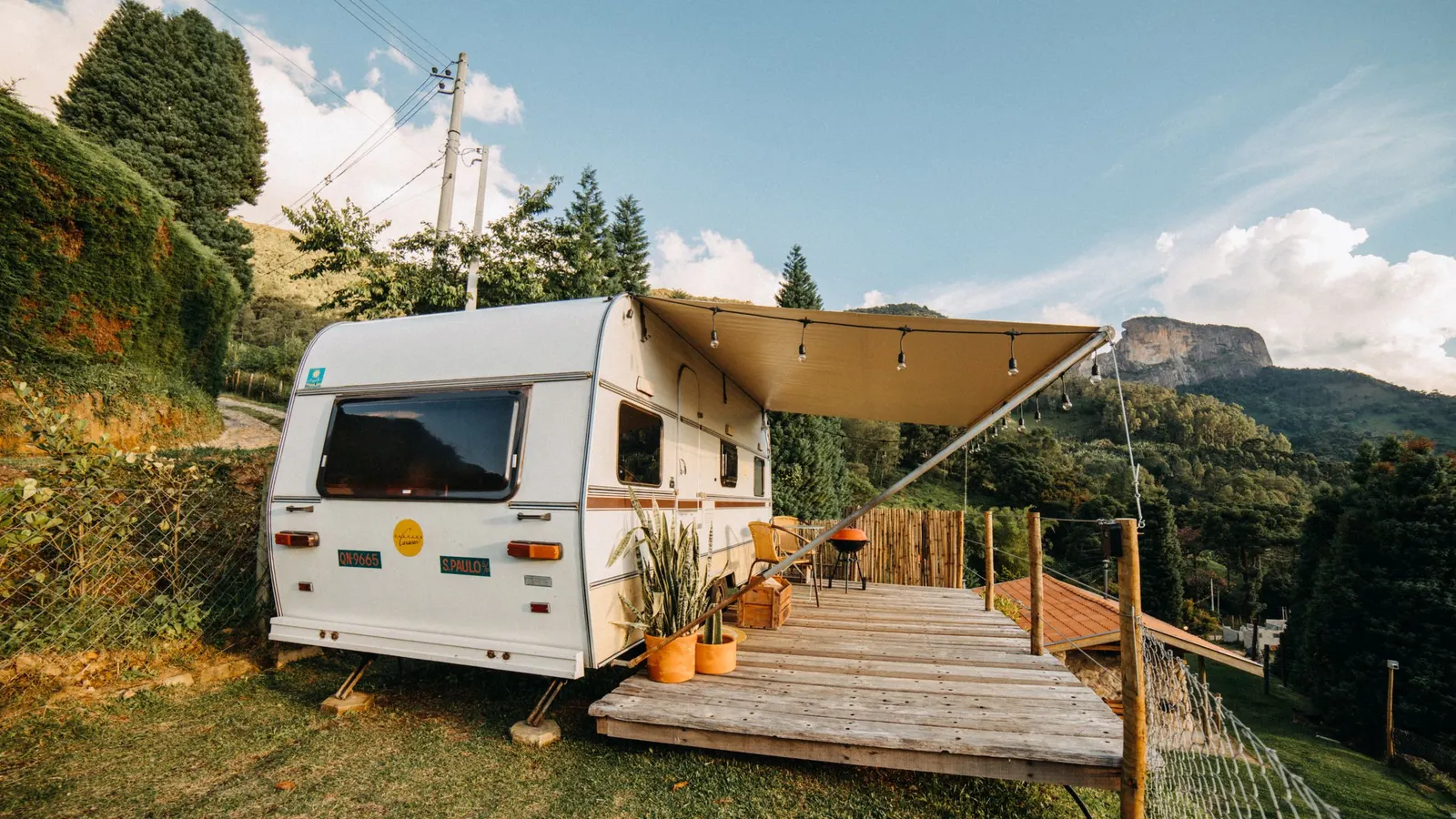
An RV awning turns a parking spot into an outdoor living room. It shades the side of the rig, keeps light rain off the door and creates a comfortable patio for meals and evenings outside. But awnings are also one of the most easily damaged parts of an RV. A single gust of wind can bend the arms, and a season of rolling it up wet can leave the fabric covered in mildew. Good RV awning care prevents both. This guide explains how to clean an RV awning, how to protect it from wind and rain, how to deal with stains and mildew, and how to keep the hardware working smoothly for years.
Last reviewed and updated: September 30, 2026. Written by Jeremy Jarvis.
Key takeaways
- Retract the awning before wind or extended rain arrives, and any time you leave the campsite for long; awning makers Carefree and Lippert both advise this.
- Never roll up an awning wet and dirty: mildew feeds on the grime, not the fabric.
- Choose a cleaner without bleach for routine washing, because Camping World warns bleach may discolor awning fabric.
- Know whether your fabric is vinyl or acrylic; they need different products and care.
Throughout, we draw on Camping World’s awning maintenance guide, RV Life’s Let’s RV article on common awning mistakes, which cites the awning makers Carefree of Colorado and Lippert, and RVAwningInfo’s cleaning guide. As always, check your own awning’s manual, since designs vary.
Why RV awning care matters
Awnings fail in two main ways: sudden damage and slow decay. Sudden damage usually comes from wind or pooled rain. Let’s RV notes that if you have RVed for any length of time, you probably know someone whose patio awning was destroyed by wind or mildew. Slow decay, on the other hand, comes from dirt, sun and moisture breaking down the fabric over months and years.
Replacement is not cheap. RVAwningInfo notes that a grimy awning rolled up wet trip after trip tends to give out years early, and that replacement fabric alone can cost hundreds of dollars. By contrast, regular RV awning care takes only a few minutes per trip and an hour or so each season. Because of that, it is one of the best returns on time you can get as an RV owner.
Know your RV awning fabric
Before you clean anything, identify your fabric. RVAwningInfo points out that vinyl and acrylic, the two common awning fabrics, need different products, and that they look similar from a camp chair. The table below summarizes the differences.

Free download: The Full-Time RV Launch Checklist
Our 16-page planner: a 12-month countdown, inspection checklist, budget and weights worksheets and a maintenance calendar. Free and printable.
| Fabric | How it is made | Care notes | Watch out for |
|---|---|---|---|
| Vinyl | Polyester scrim coated or laminated with PVC | Use a vinyl-safe awning cleaner | Does not breathe; stiffens and can crack when operated in freezing weather |
| Acrylic (woven) | Woven acrylic fibers, often solution-dyed | Gentle cleaner; fabric protectant after cleaning | Harsh scrubbing can damage the weave and coatings |
An easy way to tell them apart is to look at the underside. Vinyl usually has a smooth, slightly shiny coated surface, while acrylic looks and feels like woven cloth on both sides. If you are unsure, check your RV’s documentation or the awning maker’s label, usually found on the roller tube end or the fabric edge.
How to clean an RV awning
Camping World recommends inspecting and cleaning the awning regularly, and cleaning both sides at the end of each camping season. Here is how to clean an RV awning, step by step, based on its guidance:
- Pick a calm, mild day. Wind makes cleaning hard and unsafe.
- Open the awning completely. Camping World starts with the awning fully extended.
- Rinse both sides. Spray the top and bottom with clean water from a garden hose and spray nozzle.
- Scrub gently. Use an approved cleaner and a soft-bristle brush on the top and bottom.
- Rinse thoroughly. Remove the cleaner and the debris you loosened.
- Dry it completely. Leave the awning open until both sides are fully dry before retracting it.
Camping World’s technician tip is to use a soft brush with an extension, which lets you reach the full awning from a ladder. Never stand on the awning, and be cautious on the roof; a sturdy ladder is the safer choice for most owners. Also, Camping World advises choosing a cleaner without bleach, because bleach may discolor awning fabric.
Some owners use a simple trick for the top side: apply cleaner, then roll the awning up for a few minutes so the cleaner contacts the top surface, then roll it out again and rinse. If you do this, never leave it rolled up with cleaner for long, and always rinse and dry fully afterward.
Removing stains from an RV awning
Camping World lists the usual culprits: bird droppings, tree sap, decaying plant matter and more. For spot stains, apply a cleaning solution to the stain, scrub with a soft brush, then rinse. Camping World suggests repeating the process for stubborn stains rather than scrubbing harder. Aggressive scrubbing can damage the fabric’s coating, especially on vinyl.
Prevention helps most. Avoid parking directly under trees that drip sap or attract birds when you can, and rinse fresh bird droppings soon after they land. Likewise, wipe up grease splatter from cooking under the awning before it sets.
Preventing mildew on your RV awning
Mildew is the most common long-term awning problem. RVAwningInfo makes an important point: mildew does not eat the fabric. Instead, it lives on the film of pollen, dust, tree sap, road grime and bird droppings that settles on the awning between trips. Add trapped moisture, and mildew has everything it needs. As a result, RVAwningInfo’s full rule is to store the awning dry and clean, not just dry.
Let’s RV says the same thing in its list of mistakes: damp fabric left rolled up grows mildew, and the leftover grime is what causes it. So, if you must retract a wet awning, for example because wind is coming, roll it back out and let it dry as soon as conditions allow. Camping World also suggests extending the awning periodically during long stays so any trapped moisture can dry.
For active mildew, clean the whole awning, not just the spots, so you remove the grime that feeds it. RVAwningInfo notes that a mild bleach-and-soap solution, used carefully, can treat active mold; however, check your awning maker’s instructions first, since some fabrics and stitching do not tolerate bleach.
RV awnings and wind
Wind is the number one awning killer. Let’s RV reports that Carefree of Colorado tells owners to retract before wind or extended rain shows up, and that Lippert’s awning care guide calls for full retraction for high wind, heavy rain, or any time you leave the rig for an extended period. Therefore, the simplest rule of RV awning care is this: if you are leaving, or the wind is picking up, bring it in.
Let’s RV also warns against relying on tie-downs or a wind sensor to keep your awning safe. Wind sensors can help, but gusts can arrive faster than a motor can retract the awning. Similarly, tie-down kits add stability in light breezes but will not save an awning in a storm. Many experienced RVers retract the awning every night before bed and every time they drive off to explore. Camping World echoes this: you do not want to wake up to the sound of a ripping awning because you forgot to retract it.
Rain, pooling and awning pitch
Light rain is usually fine, and Camping World notes that awnings protect from light rain. However, pooled water is a different story. Let’s RV warns that a few inches of rainwater weighs more than you would think and can bend hardware or stretch fabric until something gives. An awning that cannot drain properly can hold far more water than it seems.
The fix is pitch. Camping World explains that you may want to adjust the awning’s pitch to shed water after rain. Depending on the design, you may need to unlock the pitch arm first, then pull down or push up on the arm to change the angle. Lowering one end lets water run off. Even so, Let’s RV notes that adjustable pitch and auto-dump features are model-specific, so check your manual first, and never force an arm past its designed range. Also, Camping World cautions against overextending an arm when raising it, and against lowering an arm into the path of the entry door or a slide room. Finally, Let’s RV advises retracting before heavy or prolonged rain even if the awning is pitched.
Caring for awning arms and hardware
The fabric gets most of the attention, but the hardware deserves care too. During each cleaning, inspect the arms, brackets and roller tube for bends, cracks and loose fasteners. Look for frayed stitching where the fabric meets the roller and the RV’s awning rail. In addition, clean dirt out of the arm channels and pivot points, and use only the lubricant your awning maker recommends, since some lubricants attract dirt.
If you notice the fabric rolling up unevenly, stop and check. Uneven rolling can crease the fabric and strain the motor or spring. Likewise, a manual awning with a weak spring may need professional service, because the spring stores a lot of energy and can be dangerous to adjust yourself.

Power awnings and motors
Power awnings are convenient, but their motors and electronics add a few care points. Make sure your RV batteries are charged, since a weak battery can leave a power awning stuck open. Learn the manual override for your model before you need it, so you can retract it if the motor or battery fails. Also, keep the motor housing clean and check the wiring connections during regular inspections. If your awning has a wind sensor, test it according to the manual, but remember Let’s RV’s warning not to rely on it alone.
Storing your RV awning for the season
At the end of the camping season, Camping World recommends cleaning both sides of the awning and letting it dry completely before retracting it. Make sure it is fully locked in its travel position. If your RV will be stored outside, a breathable RV cover can help protect the rolled awning from sun and grime; our RV covers guide explains how to choose one. For vinyl awnings, RVAwningInfo cautions that vinyl stiffens in the cold and can crack if you operate it in freezing weather, so avoid opening it in very cold conditions. Our guide on how to winterize an RV covers the rest of your storage prep.
A seasonal RV awning maintenance schedule
A simple schedule keeps RV awning maintenance from slipping:
- Every use: retract when you leave the site and before wind or heavy rain; let it dry before storing.
- Every trip: look for tears, holes, mold and mildew, as Camping World recommends during inspections.
- A few times a season: rinse both sides and spot-clean stains.
- End of season: deep clean both sides, dry completely and inspect the hardware.
- Before the first trip: test the motor or spring, check the arms and confirm the lock works.
Following this schedule takes little time, yet it catches most problems early, before they turn into costly repairs.
How to clean an RV awning on the road
Many campgrounds do not allow full RV washing, and some limit hose use. Even so, you can still keep the awning in good shape between deep cleans. First, check the campground rules; a quick rinse of the awning is often allowed even where full washing is not. Next, use a spray bottle of diluted awning cleaner and a soft brush to treat small areas, then wipe or rinse them. Waterless cleaners made for RV exteriors can also work for light dirt, as long as they are safe for your fabric.
In addition, a simple daily habit helps a lot. Brush off leaves, pine needles and dust before you retract the awning, and wipe fresh bird droppings right away. Doing a little each day means that learning how to clean an RV awning thoroughly becomes a once-or-twice-a-season job rather than a constant chore. When you get home, or reach a campground that allows washing, give the awning a full clean using the steps above.
Awning accessories that help
A few inexpensive accessories make RV awning care easier and protect the fabric:
- De-flappers or fabric clamps: reduce fabric flapping in light breezes, which lowers wear on the stitching.
- Awning shades and side screens: add shade and privacy; take them down before wind picks up.
- LED awning lights: mount in a rail or channel rather than taping to the fabric, which can leave residue.
- A long-handled soft brush: makes cleaning both sides safer from a ladder.
However, accessories do not change the basic rule. Shades and side screens catch even more wind than the awning alone, so they increase the need to retract early. Similarly, de-flappers reduce flapping but do not make the awning safe in strong gusts. Treat every accessory as a comfort upgrade, not a safety feature.
When to repair or replace an RV awning
Small problems are often repairable. For example, small holes and tears in the fabric can usually be patched with repair tape made for your fabric type. Loose stitching can be resewn by a canvas shop. Meanwhile, bent arms or a damaged roller tube usually need replacement parts from the awning maker. On the other hand, if the fabric is badly stained, brittle, or torn in several places, replacing the fabric may make more sense. RVAwningInfo notes that vinyl awning fabric often lasts several years and that solution-dyed acrylic tends to last longer, so age is a factor too. When you replace it, choose the fabric that best suits your climate and how you camp, and keep a note of the size and model for future reference.
RV awning care checklist
- Identify whether your fabric is vinyl or acrylic.
- Use an approved, bleach-free cleaner and a soft brush.
- Clean both sides, rinse well and dry completely.
- Retract before wind, heavy rain or leaving the site.
- Pitch the awning to shed light rain, within its designed range.
- Inspect arms, brackets, stitching and the roller tube.
- Know the manual override for a power awning.
- Store it dry, clean and locked.
To compare current supplies, you can browse RV awning cleaners, soft brushes with extension handles and awning de-flappers on Amazon, then check each product against your fabric type.
Common RV awning mistakes
- Leaving the awning out unattended. Wind can arrive without warning.
- Trusting a wind sensor alone. Retract it yourself when in doubt.
- Letting rain pool. Pitch it or retract it.
- Rolling it up wet and dirty. Mildew feeds on the grime.
- Using bleach for routine cleaning. It may discolor the fabric.
- Forcing an arm. Stay within the designed range.
Consistent RV awning care keeps your outdoor living space looking good and working safely for many seasons. Learn how to clean an RV awning properly, respect the wind and rain, and store it dry and clean. For more gear advice, visit our RV Gear hub.
Frequently asked questions about RV awning care
How do you clean an RV awning?
Camping World’s steps are to open the awning completely, spray the top and bottom with clean water, gently scrub both sides with an approved cleaner and a soft-bristle brush, then rinse. Let it dry completely before retracting it.
Can I leave my RV awning out in the rain?
Only in light rain with the awning pitched to shed water, and never when you leave the site. Let’s RV notes that awning makers advise retracting before wind or extended rain arrives, because pooled water can bend hardware or stretch fabric.
How do I get mildew off my RV awning?
Clean the whole awning, not just the spots. RVAwningInfo explains that mildew lives on the film of pollen, dust, sap and grime on the fabric, so the rule is to store the awning both dry and clean.
Can I use bleach on my RV awning?
Avoid it for routine cleaning. Camping World recommends a cleaner without bleach because it may discolor awning fabric. Check your awning maker’s instructions before using any bleach solution on active mold.
Should I rely on a wind sensor?
Not by itself. Let’s RV advises against relying on tie-downs or a wind sensor to keep an awning safe; retract it when wind picks up or when you leave the campsite.
Sources and how we researched this guide
This guide is research-based. We did not test the products mentioned. Cleaning steps come from Camping World’s RV awning maintenance guide; wind, rain and mildew guidance comes from RV Life’s Let’s RV awning mistakes article, which cites Carefree of Colorado and Lippert, and from RVAwningInfo’s cleaning guide. Always follow your awning maker’s instructions. Found something out of date? Tell us and we will check it against the source.
- Camping World: RV awning maintenance basics
- Let’s RV: top RV awning mistakes to avoid
- RVAwningInfo: RV awning cleaning and care
- Carefree of Colorado
Keep planning
- RV Propane Tank Guide: Sizes, How Long They Last and Safety
- RV Air Conditioner Guide: BTUs, Power, Soft Starts and Upkeep
- Portable Fridge for Camping: How to Choose, Power and Pack One
- RV Trailer Hitch Guide: Hitch Classes, Tongue Weight and Weight Distribution
Go deeper: RV Gear hub · RV Starter Gear Checklist

Written by Jeremy Jarvis
Jeremy Jarvis is the founder and editor of Freedom Road Living, where he builds research-based guides and free planning tools for people who live, work and travel in an RV. He sets the site's editorial standards, checks every guide against official sources such as the National Park Service and manufacturer documentation, and is responsible for corrections. Jeremy also founded Eco Nomad Travel, Mind Clarity Hub, SilkHarborTravel and WanderOza Travel, and he is the author of books on clarity, focus and practical AI, including The Power of Clarity and Digital Clarity.