
RV Propane Tank Guide: Sizes, How Long They Last and Safety
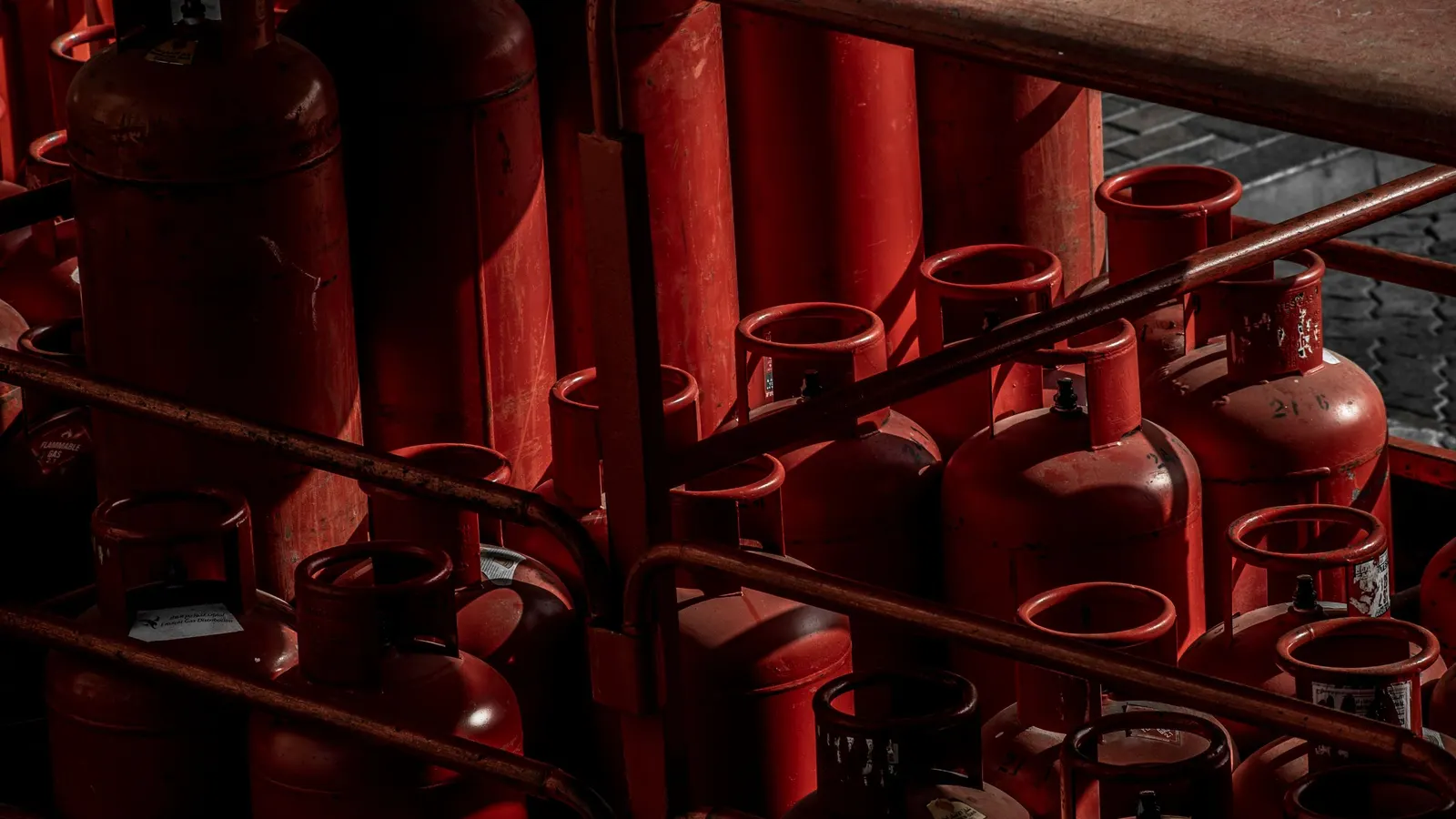
Your RV propane tank quietly powers some of the most important comforts on the road: heat on cold nights, hot water, a working stove and, in many rigs, the refrigerator. Yet propane is also the fuel that catches new RVers out, usually when a tank runs dry on the coldest night of the trip. This guide explains how RV propane systems work, which tank you have, how long it lasts and how to handle it safely.
Last reviewed and updated: October 2, 2026. Written by Jeremy Jarvis.
Key takeaways
- Towables usually carry removable DOT cylinders, while motorhomes usually have a permanently mounted ASME tank that is filled in place.
- How long an RV propane tank lasts depends mostly on the furnace: summer cooking barely dents a tank, while cold nights can empty one quickly.
- DOT cylinders carry a date stamp and must be requalified or replaced, which U.S. rules set at 12 years from manufacture for the first requalification.
- Test the propane leak detector, travel with appliances off where your manual says to, and never ignore a rotten-egg smell.
First, we compare the two main tank types and their common sizes. Next, we show what uses propane and how to estimate how long a tank lasts in summer and winter. Finally, we cover refilling, date stamps, gauges and the safety habits that matter most. Our free RV Propane Usage Calculator turns your own appliances and temperatures into a days-per-tank estimate.
The short answer: what RV propane tank do you have?
Most travel trailers and fifth wheels carry two removable DOT cylinders, usually mounted on the tongue or in a side compartment. Most motorhomes, by contrast, have a single permanently mounted ASME tank under the floor that is filled in place. Both store propane as a pressurized liquid, and both feed the same appliances through a regulator.
Therefore, the first step is simply to look. If you can lift the tank out, it is a DOT cylinder. If it is bolted to the frame with a fill valve on the side, it is an ASME tank.
DOT cylinders vs ASME tanks
The two tank types follow different rules and are refilled differently. Knowing which you have tells you how to refill, store and inspect your RV propane tank.

Free download: The Full-Time RV Launch Checklist
Our 16-page planner: a 12-month countdown, inspection checklist, budget and weights worksheets and a maintenance calendar. Free and printable.
| Feature | DOT cylinder | ASME tank |
|---|---|---|
| Typical rigs | Travel trailers, fifth wheels, truck campers | Motorhomes |
| Mounting | Removable, usually on the tongue or in a compartment | Permanently mounted to the frame |
| How to refill | Take it to a refill station or swap it at an exchange | Drive the RV to a propane station |
| Date stamp | Yes, on the collar; requalification required | Inspection rules differ; follow your manual |
| Main advantage | Easy to swap; you can refill one while using the other | Larger capacity; nothing to carry |
Common RV propane tank sizes
DOT cylinders are sold by the weight of propane they hold. The two most common sizes on RVs are 20 lb and 30 lb, and some larger trailers use 40 lb cylinders. As a rough guide, a 20 lb cylinder holds about 4.7 gallons of propane and a 30 lb cylinder about 7 gallons, because propane weighs a little over 4 pounds per gallon.
ASME tanks on motorhomes are rated in gallons and vary widely by model. In addition, every propane tank is designed to be filled only to about 80 percent of its volume, leaving room for the liquid to expand as it warms. Your owner’s manual lists the usable capacity for your rig.
What uses propane in an RV?
Several appliances can draw from your RV propane system. Each uses a very different amount, which is why consumption swings so much with the seasons.
- Furnace: by far the biggest user in cold weather.
- Water heater: moderate use, depending on how much hot water you need.
- Absorption refrigerator: a small, steady draw when running on propane.
- Stove and oven: modest use for everyday cooking.
- Generator: some motorhome generators run on propane and use it quickly.
Appliance ratings are listed in BTUs per hour. The U.S. Energy Information Administration defines a BTU as the heat needed to raise one pound of water by one degree Fahrenheit, and a gallon of propane holds roughly 91,500 BTU. Dividing your daily BTU use by that figure gives your daily propane use in gallons.
How long does an RV propane tank last?
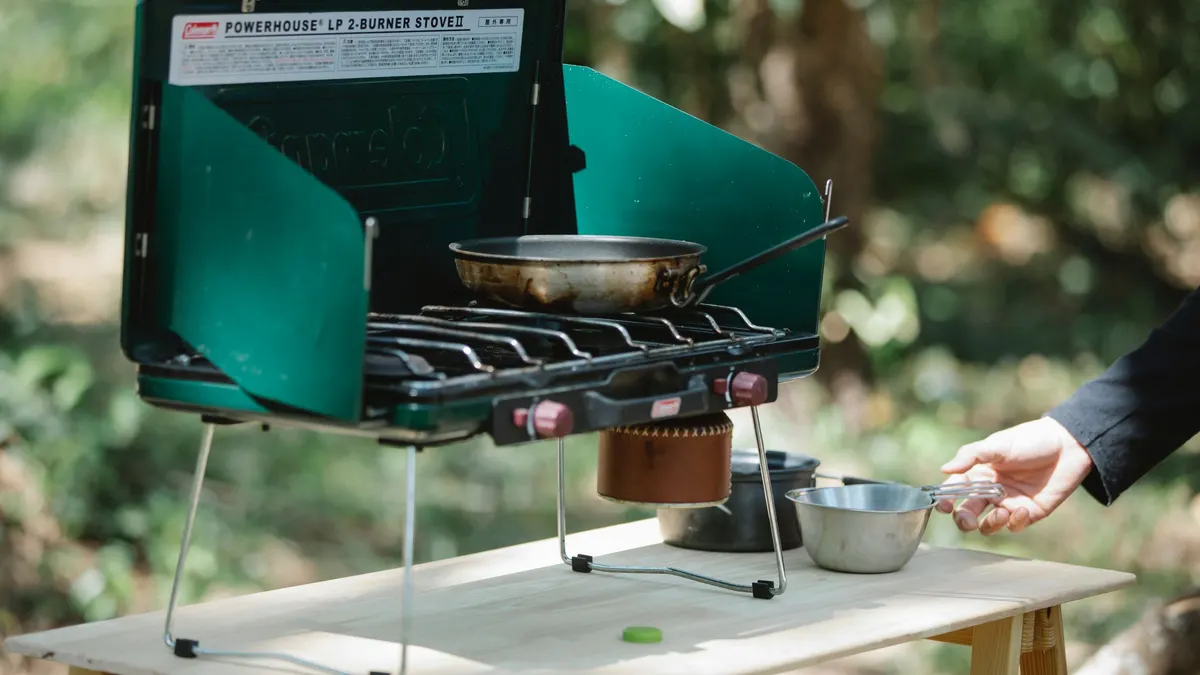
The honest answer is that it depends almost entirely on the furnace. In mild weather, an RV propane tank can last weeks, because cooking, hot water and the fridge use relatively little. On freezing nights, however, the furnace may cycle for hours, and the same tank might last only a few days.
Here is a simple way to estimate your own usage:
- List each propane appliance and its BTU rating from the label or manual.
- Estimate how many hours each one actually runs per day, remembering that a furnace cycles on and off.
- Multiply BTUs by hours, add them up, and divide by about 91,500 BTU per gallon.
- Compare that daily figure with the usable gallons in your tanks.
Our RV Propane Usage Calculator does this math for you, including how cold nights change the result. Run it before winter trips, because that is when running out is most likely and most uncomfortable.
Refilling vs exchanging RV propane
DOT cylinders can be refilled at a propane station or swapped at an exchange cage outside many stores. Each option has trade-offs.
- Refilling usually costs less per gallon, and you keep your own cylinders. You also get them filled to their full safe level.
- Exchanging is convenient and widely available, although exchange cylinders are often filled to less than full capacity.
ASME tanks must be filled in place, so motorhome owners drive to a propane station with an attendant. Turn off appliances with flames and pilot lights before refueling, and follow the attendant’s instructions. With two DOT cylinders, many RVers run one until empty, then refill it while the second keeps the rig supplied. An automatic changeover regulator makes this seamless.
Date stamps and requalification
Every DOT cylinder has its manufacture date stamped on the collar. According to The RV Geeks, under U.S. federal rules a DOT propane cylinder must be replaced or requalified 12 years after that date. Requalification can extend its life, but many owners simply replace old cylinders. Refill stations may refuse an out-of-date cylinder, so check the stamp before a trip.
While you are checking, look for rust, dents and damage to the valve. A damaged cylinder should be taken out of service, regardless of its date.
Checking how much propane is left
Many RVs have a basic level indicator, but it can be inaccurate. Fortunately, there are several easy ways to check your RV propane tank:
- Weigh it: subtract the tare weight stamped on the collar from the cylinder’s weight on a scale.
- Use a gauge: inline pressure gauges or magnetic level indicators give a rough reading.
- Warm-water trick: pour warm water down the side and feel for the cool line where the liquid level sits.
Compare propane level gauges and an automatic changeover regulators if you want to stop guessing.
RV propane safety
Propane is safe when handled properly, and a few habits matter most. First, propane has an added odor that smells like rotten eggs. If you smell it, leave the RV, avoid switches and flames, turn off the tank if you can safely do so, and call for help. Do not return until a qualified technician has checked the system.
Second, test your propane leak detector and carbon monoxide alarm before every trip. Any appliance that burns fuel can produce carbon monoxide if it is not properly maintained or vented. The EPA notes that carbon monoxide cannot be seen, tasted or smelled, and it stresses keeping combustion equipment maintained and properly adjusted.
Third, store and transport DOT cylinders upright and secured, with valves closed. Never bring a cylinder inside a living space, and keep tanks away from heat sources.

RV propane in cold weather
Winter camping changes everything about propane. The furnace runs far more, and very cold temperatures also reduce the pressure inside the tank, which can make appliances struggle as the tank gets low. As a result, plan to refill more often and keep tanks above a quarter full in deep cold.
Similarly, reduce heat loss to stretch your supply. Skirting, insulated window covers, closing off unused areas and a well-sealed door all help. Some winter campers supplement the furnace with electric heat when plugged in, which saves propane. If you store the RV for the season instead, our guide on how to winterize an RV covers the steps, including what to do with the propane system.
Traveling with the propane on or off
RVers debate whether to travel with propane on, for example to keep the fridge cold. Many manufacturers advise turning appliances off, and propane off, when refueling and when entering tunnels where propane is restricted. Some tunnels and bridges ban propane cylinders entirely. Therefore, follow your RV manufacturer’s instructions and check route restrictions before you travel. A fridge that is cold at departure usually stays cold for several hours with the door closed.
RV propane system maintenance
Beyond the tanks, the rest of the system needs occasional attention. Check hoses for cracks, make sure connections are tight, and listen for the regulator working smoothly. Appliances that burn propane, such as the furnace, water heater and refrigerator, benefit from periodic service by a qualified technician. Our guides to RV water heater repair and the RV refrigerator explain what to look for.
Ways to use less RV propane
Stretching your supply means fewer refill stops and less worry on cold nights. Most of the savings come from the furnace, because it is the biggest user by far.
- Use electric heat on hookups: a small electric space heater on shore power can carry much of the heating load, saving propane for the night.
- Lower the thermostat at night: sleeping under a warmer blanket lets the furnace cycle less often.
- Insulate windows and vents: reflective covers and vent cushions cut heat loss noticeably.
- Heat water only when needed: turning off the water heater between uses saves a steady trickle of propane.
- Run the fridge on electric when possible: on shore power, the electric mode saves propane for boondocking days.
Meanwhile, keep safety first. Use only heaters designed for indoor use, keep them clear of bedding and curtains, and never use a stove or oven to heat the RV.
Adding capacity: larger or extra tanks
If you camp in cold weather or boondock for long stretches, a bigger RV propane supply can make life easier. Towable owners can often move from 20 lb to 30 lb cylinders, provided the tongue rack and cover fit and the extra weight stays within tongue and payload limits. Our Tongue Weight Calculator helps you check that.
Some RVers also add a quick-connect port or an extend-a-stay kit, which lets a larger portable tank feed the RV system. These setups involve gas fittings, so they should be installed and leak-tested properly. Motorhome owners with a fixed ASME tank usually cannot enlarge it, so they plan refill stops instead.
Common RV propane mistakes
Most propane problems come from a handful of repeat mistakes. Avoid these, and your system will stay safe and reliable.
- Running out on a cold night: check levels before dark, not when the furnace stops.
- Ignoring the date stamp: an expired cylinder may be refused at the refill station.
- Disabling the leak detector: if it chirps or alarms, find out why instead of switching it off.
- Storing cylinders on their side: DOT cylinders belong upright and secured.
- Refueling with flames lit: turn off appliances and pilot lights before you fuel the vehicle or fill the tank.
RV propane tank checklist
Run through this list before every trip, and especially before cold-weather travel.
- Check the date stamp on each DOT cylinder.
- Inspect tanks, valves and hoses for damage or rust.
- Confirm how much propane you have, by weight or gauge.
- Test the propane leak detector and carbon monoxide alarm.
- Estimate your usage with the RV Propane Usage Calculator.
- Plan refill stops along your route for longer trips.
- Secure cylinders upright with valves closed for travel.
Ultimately, an RV propane tank is simple to live with once you know your consumption. Check the date, track how much you use, and keep the safety devices working, and propane will keep your rig warm, fed and comfortable wherever you camp. For more on power and comfort, explore the RV Gear hub and our RV generator guide.
Frequently asked questions about RV propane tanks
Do RV propane tanks expire?
Portable DOT cylinders do. They carry a manufacture date stamped on the collar, and The RV Geeks explain that under U.S. federal rules a DOT cylinder must be replaced or requalified 12 years after its manufacture date. Permanently mounted ASME motorhome tanks follow different inspection rules, so check your owner’s manual.
How long does an RV propane tank last?
It depends on what you run. Cooking and hot water use little propane, while the furnace uses much more on cold nights. Enter your appliances and temperatures in our free RV Propane Usage Calculator for an estimate that fits your trip.
What is the difference between DOT and ASME propane tanks?
DOT cylinders are portable and removable, the kind most travel trailers carry on the tongue. ASME tanks are permanently mounted, usually in motorhomes, and are filled in place at a propane station.
Why is propane stored as a liquid?
The U.S. Energy Information Administration explains that propane is about 270 times more compact as a liquid than as a gas, so it is stored under pressure as a liquid and becomes a gas again when the valve opens.
What should I do if I smell propane in my RV?
Leave the RV, avoid switches and flames, turn off the tank valve if you can do so safely, and call for help from a safe distance. Do not return until a qualified technician has checked the system.
Sources and how we researched this guide
This guide is research-based. We did not test the tanks, regulators or gauges mentioned. Capacity figures are typical industry values, consumption estimates use the same math as our free RV Propane Usage Calculator, and safety guidance follows official agencies. Always follow your RV and appliance manufacturers’ instructions. Found something out of date? Tell us and we will check it against the source.
- The RV Geeks: RV propane tanks, covers and date stamps
- U.S. EIA: uses of hydrocarbon gas liquids (propane)
- U.S. EIA: British thermal units explained
- U.S. EPA: carbon monoxide and indoor air quality
Keep planning
- RV Air Conditioner Guide: BTUs, Power, Soft Starts and Upkeep
- Portable Fridge for Camping: How to Choose, Power and Pack One
- RV Trailer Hitch Guide: Hitch Classes, Tongue Weight and Weight Distribution
- RV Awning Care: How to Clean, Protect and Extend the Life of Your Awning
Go deeper: RV Gear hub · RV Starter Gear Checklist

Written by Jeremy Jarvis
Jeremy Jarvis is the founder and editor of Freedom Road Living, where he builds research-based guides and free planning tools for people who live, work and travel in an RV. He sets the site's editorial standards, checks every guide against official sources such as the National Park Service and manufacturer documentation, and is responsible for corrections. Jeremy also founded Eco Nomad Travel, Mind Clarity Hub, SilkHarborTravel and WanderOza Travel, and he is the author of books on clarity, focus and practical AI, including The Power of Clarity and Digital Clarity.