
RV Surge Protector Guide: Surge Protector vs EMS, 30 Amp vs 50 Amp
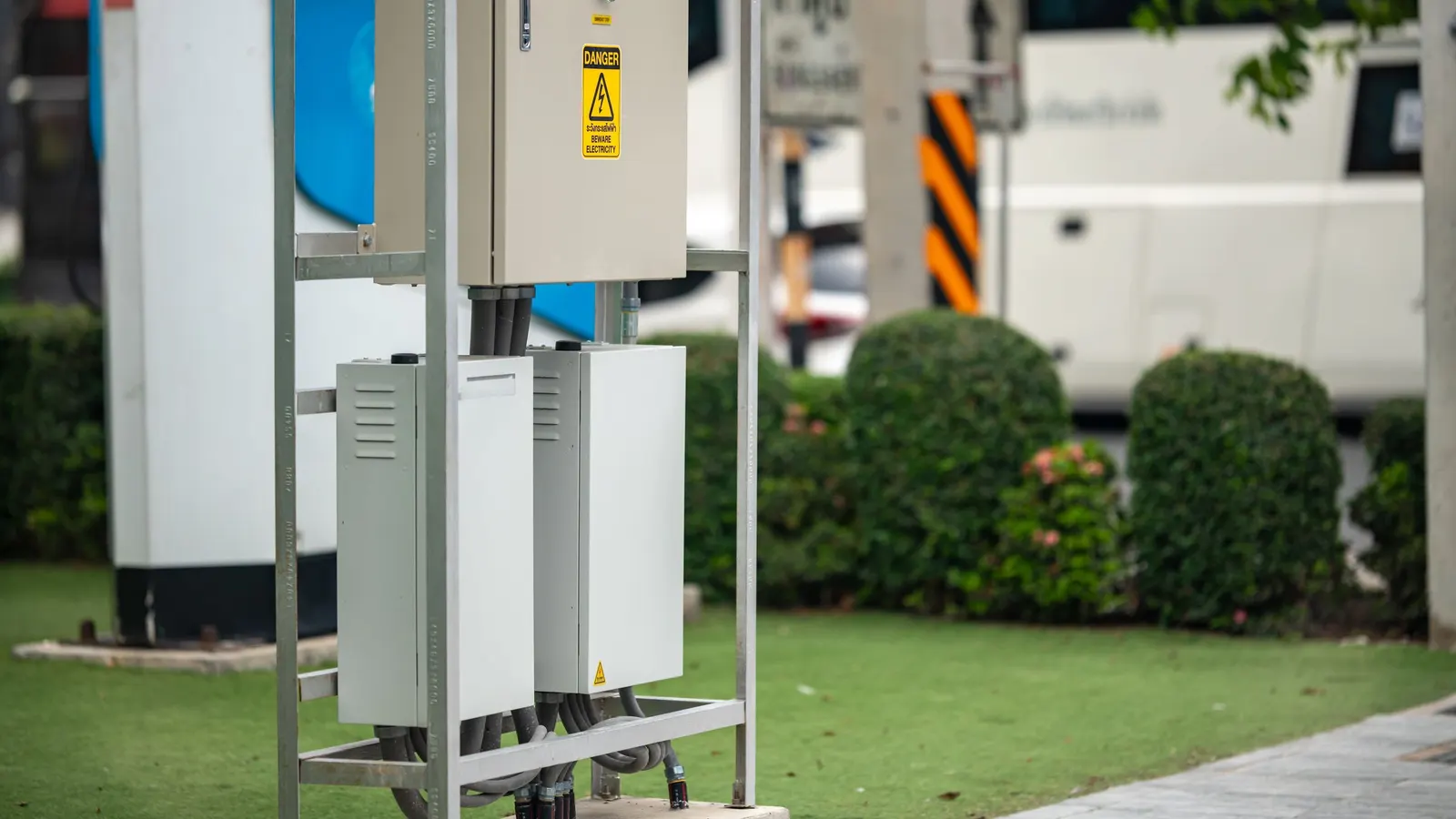
An RV surge protector is one of the least exciting and most important pieces of gear you can own. Campground power is not always clean or correctly wired, and a single bad pedestal can damage an air conditioner, a converter, a refrigerator control board or the electronics you work on. This guide explains what can go wrong, how a basic camper surge protector differs from an electrical management system, how 30-amp and 50-amp service really work, and how to choose and use the right protection.
Last reviewed and updated: September 30, 2026. Written by Jeremy Jarvis.
Key takeaways
- A basic RV surge protector absorbs voltage spikes; an electrical management system (EMS) also shuts power off for wiring faults and high or low voltage.
- Southwire says its Surge Guard units cut power when voltage rises above 132 volts or falls below 102 volts.
- A 50-amp RV uses two 120-volt, 50-amp circuits; a 30-amp pedestal supplies far less power, even through an adapter.
- Plug in the protector before you connect the RV, and read its display before you trust a campground pedestal.
Why an RV surge protector matters
At home, your power comes through a professionally installed electrical service. At a campground, by contrast, you plug into a pedestal that may be old, overloaded, exposed to weather or miswired. Hundreds of RVs may share the same supply, and voltage can sag on hot afternoons when every air conditioner runs at once. In addition, storms and lightning can send spikes through the lines.
Your RV contains several expensive components that are sensitive to those problems, including air conditioners, converters, inverter-chargers, refrigerator controls and entertainment systems. As a result, a protector that costs a fraction of one repair can be very good insurance.
What goes wrong at campground pedestals
Southwire, which makes the Surge Guard line, lists the problems its products are designed to protect against. They are a useful checklist of what can go wrong.
- Surges: brief voltage spikes, often from lightning or utility switching.
- High and low voltage: sustained voltage outside the safe range, which can overheat motors and compressors.
- Miswired pedestals: wiring errors that can energize the RV’s frame or damage equipment.
- Open neutral: a broken neutral connection that can send unbalanced, damaging voltage to appliances.
- Open ground: a missing safety ground, which is a shock hazard.
- Reverse polarity: hot and neutral swapped at the pedestal.
- High neutral current and overheated plugs: signs of failing connections that can melt plugs and receptacles.
Some of these problems are obvious, while others give no warning until something fails. That is why monitoring matters as much as surge absorption.

Free download: The Full-Time RV Launch Checklist
Our 16-page planner: a 12-month countdown, inspection checklist, budget and weights worksheets and a maintenance calendar. Free and printable.
RV surge protector vs EMS: what is the difference?
This is the most important decision when you shop. A basic camper surge protector and an electrical management system (EMS) look similar, but they do different jobs.
| Feature | Basic RV surge protector | Electrical management system (EMS) |
|---|---|---|
| Absorbs voltage spikes | Yes, up to its joule rating | Yes |
| Checks pedestal wiring before connecting | Often indicator lights only | Yes, and refuses power if faulty |
| Shuts off for high or low voltage | Usually no | Yes |
| Protects against open neutral | Usually no | Yes, on many models |
| Shows voltage and amperage | Sometimes | Usually, by display or app |
| Cost | Lower | Higher |
In short, a basic RV surge protector handles spikes, while an EMS also protects against the slower, sneakier problems such as low voltage and open neutral, which can damage air conditioners and electronics over time. For many owners, especially those who travel full-time or run expensive equipment, the extra protection of an EMS is worth the higher price.
30 amp vs 50 amp RV power explained
Amperage confuses many new RVers, so it is worth understanding before you buy. RVs come wired for either 30-amp or 50-amp service, and you can tell by the plug on the power cord: a 30-amp plug has three prongs, and a 50-amp plug has four.
A 30-amp RV runs on a single 120-volt circuit. A 50-amp RV is very different. As Southwire explains, a 50-amp RV is wired with two 50-amp, 120-volt circuits, for a total of 100 amps, while a 30-amp pedestal only provides 30 amps in total. In other words, a 50-amp RV has far more power available than a 30-amp RV, which is why larger rigs with two air conditioners use it.
Adapters let you plug into a different pedestal, but they do not create power. Southwire notes that you can use a 50-amp-to-30-amp adapter with a 50-amp Surge Guard and still be protected, but you will be limited to the power the 30-amp pedestal can supply. So, when you use an adapter, run fewer high-draw appliances at once. Southwire also says plugging a 30-amp Surge Guard into a 50-amp pedestal with an adapter is possible but not recommended.
The rule is simple: buy an RV surge protector that matches your RV’s own power cord, 30-amp for a 30-amp RV and 50-amp for a 50-amp RV.
Joule ratings and what they mean
Surge protectors list a joule rating, which describes how much surge energy they can absorb. Higher is generally better. For example, Southwire describes some of its full-protection units as offering up to 4,200 joules of surge protection. However, a high joule rating alone does not protect against low voltage, open neutral or miswiring. Therefore, compare joule ratings only after you decide whether you need a basic protector or an EMS.
Portable vs hardwired protection
Surge protection comes in two forms. A portable unit plugs into the pedestal, and your RV cord plugs into it. It is easy to install, moves between RVs and can be checked at a glance. However, portable units sit outside, so they can be stolen or exposed to weather. A hardwired unit is installed inside the RV’s electrical system, usually by a technician. It is protected from theft and weather, and it is always in place, but installation costs more and it stays with the RV.
Many owners start with a portable camper surge protector, then move to a hardwired EMS once they settle on an RV they plan to keep. Either way, the protection is the same in principle.
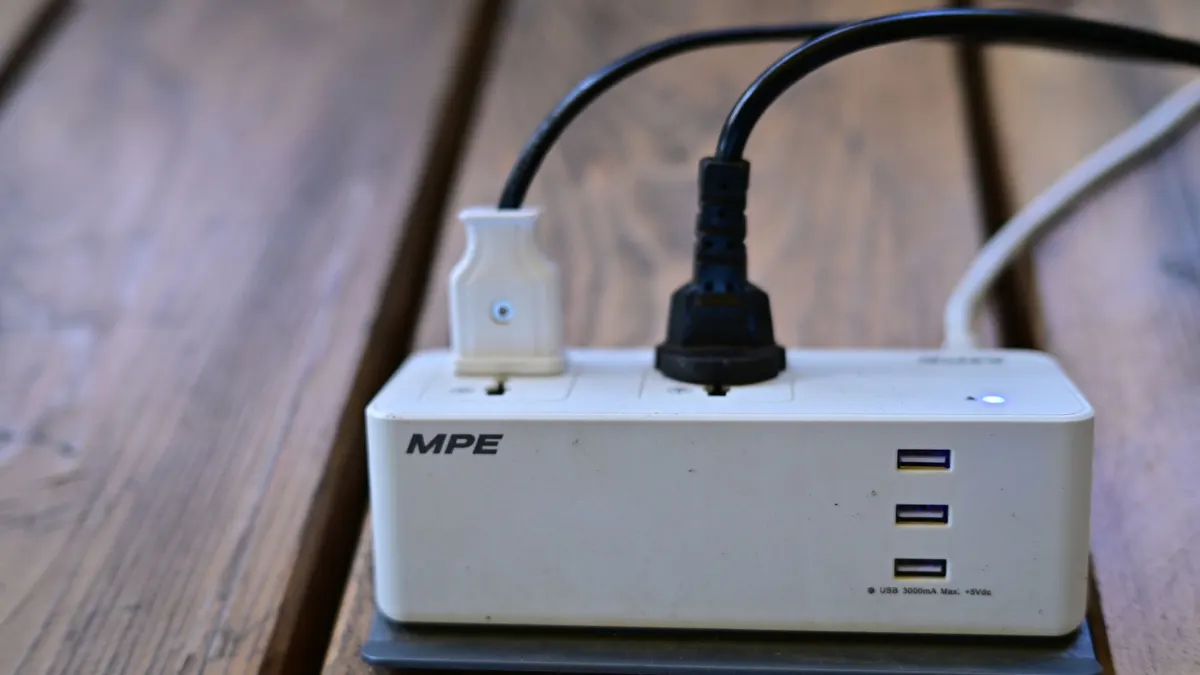
How to use an RV surge protector step by step
- Turn off the pedestal breaker. Always connect and disconnect with the breaker off.
- Plug the protector into the pedestal. Most models then test the pedestal.
- Read the display or indicator lights. Check for wiring faults and the voltage reading before you continue.
- Connect your RV’s power cord to the protector.
- Turn the pedestal breaker on. Many EMS units wait a short delay before passing power, which protects air conditioner compressors.
- Lock the unit if possible. A simple lock helps prevent theft.
When you leave, reverse the process: turn the breaker off, unplug the RV, then unplug the protector.
Why your RV surge protector shuts off power
A protector that cuts power is usually doing its job. Southwire says its Surge Guard units shut off power when voltage rises above 132 volts or falls below 102 volts. Low voltage is especially common on busy afternoons, when many RVs run air conditioners at once. If your unit shuts off, first check the display or app for the error code. Next, reduce your load by turning off the air conditioner, water heater element or other high-draw appliances. If the problem continues, ask the campground to check the pedestal or move you to another site.
Do not bypass the protector to get power back. If it has detected a wiring fault such as an open ground, plugging in directly could put you or your RV at risk.
Voltage boosters, generators and inverters
Some RVers use voltage boosters at campgrounds with chronically low voltage. Southwire says a booster can be used with a Surge Guard, but it should plug into the pedestal in front of the Surge Guard, not after it. Otherwise, the protector may shut off power when voltage stays low for a few seconds. Southwire also notes that a voltage regulator is not itself a protective device.
Generators and inverters are another source of power, and they can produce their own problems, such as voltage swings. If you run a generator, check your protector’s instructions for generator use. Our guides to the RV generator and the RV inverter explain how those systems fit into your RV’s power setup.
Caring for your RV surge protector
Surge protectors need little maintenance, but they do need attention. Inspect the plug blades and cord for discoloration, melting or cracks, which can indicate overheating. Keep the unit off wet ground where possible, and store it dry. According to Southwire, surge protection does not usually fail unless there is a direct lightning strike, which would likely leave other obvious damage. Even so, replace any unit with a damaged housing, plug or cord.
Who needs an EMS instead of a basic camper surge protector?
A basic camper surge protector can be a reasonable starting point for occasional weekend campers who stay at well-maintained campgrounds. However, several kinds of RVers benefit from the extra monitoring of an EMS.
- Full-timers: the more nights you plug in, the more likely you are to meet a bad pedestal.
- Owners of newer, electronics-heavy RVs: control boards, inverters and smart appliances are expensive to replace.
- Remote workers: losing a laptop or router to a power problem can cost both equipment and income.
- Travelers in hot climates: low voltage on busy afternoons is hard on air conditioner compressors.
- Anyone with a 50-amp rig: two legs mean more ways for wiring faults to cause damage.
On the other hand, if you rarely plug in and mostly boondock, a simpler camper surge protector may be enough. In short, the more you depend on shore power, the more an EMS pays for itself.
Checking a campground pedestal yourself
Even with a protector, it helps to know the basics of checking a pedestal. First, look at it: a cracked, scorched or loose receptacle is a warning sign, and you should ask for another site. Second, read your EMS display before connecting the RV, because most units show voltage and any wiring fault. Third, if you carry a simple plug-in voltage meter, you can check the voltage inside the RV during the day, especially on hot afternoons when demand peaks. As a result, you will learn which campgrounds tend to have weak power and plan your air conditioner use accordingly.
Campground electrical safety tips
Surge protection is one part of electrical safety, but not the only part. For example, never touch the RV and the pedestal at the same time if you feel a tingle from the RV’s body, which can indicate a ground fault; instead, turn off the pedestal breaker and get help. Likewise, keep cords and connections off standing water, and do not use household extension cords for shore power. In addition, use properly rated RV adapters rather than improvised connections. OSHA’s electrical safety guidance applies the same principle: respect electricity, and fix faults rather than working around them.
Preventing theft of a portable RV surge protector
Portable units sit outside, which makes them easy to steal. Fortunately, a little effort helps a lot. Many models include a hole or bracket for a padlock that secures the unit to the pedestal door. Alternatively, a short cable lock works well. In addition, record the model and serial number, and consider an engraving or label with your name. As a result, your camper surge protector is less tempting and easier to identify if it goes missing.
RV surge protector buying checklist
- Match the amperage to your RV’s power cord: 30-amp or 50-amp.
- Decide between a basic surge protector and an EMS.
- Compare joule ratings within the type you choose.
- Choose portable or hardwired based on how long you will keep the RV.
- Look for a clear display or app that shows voltage and error codes.
- Check warranty terms, and whether replaceable parts are available.
- Plan a way to lock a portable unit to the pedestal.
To compare current options, you can browse 50-amp RV surge protectors and EMS units and 30-amp RV surge protectors on Amazon, then check each model’s protections against this guide.
Common RV surge protector mistakes
- Buying the wrong amperage. Match the protector to your RV’s cord, not the pedestal.
- Relying on joules alone. Surge absorption does not protect against low voltage or open neutral.
- Plugging in with the breaker on. This can cause arcing and damage contacts.
- Bypassing a tripped unit. The fault it found is still there.
- Leaving it unsecured. Portable units are a common theft target.
An RV surge protector is one of the first items on our RV Starter Gear Checklist, and it is worth checking when you buy a used RV too; see the New RV Inspection Checklist. For more gear guidance, visit our RV Gear hub.
Frequently asked questions about RV surge protectors
Do I need a surge protector for my RV?
Most RV owners use one, because campground power pedestals can deliver surges, low voltage or wiring faults that damage air conditioners, converters and electronics. Repairs to those systems can cost far more than a protector.
What is the difference between an RV surge protector and an EMS?
A basic surge protector absorbs voltage spikes. An electrical management system adds monitoring that shuts off power for problems such as high or low voltage, open neutral, open ground and reverse polarity. Southwire lists all of those protections across its Surge Guard range.
Do I need a 30 amp or 50 amp surge protector?
Match the protector to your RV’s power cord. Southwire explains that a 50-amp RV is wired with two 50-amp, 120-volt circuits, while a 30-amp pedestal only provides 30 amps in total, so the protector should match the RV’s service.
Why does my RV surge protector keep shutting off power?
It is usually doing its job. Southwire says its units shut off power when voltage is over 132 volts or under 102 volts, and they also react to wiring faults. Check the display or app for the error, then try another pedestal or reduce your load.
How long does an RV surge protector last?
Southwire says surge protection does not usually fail unless there is a direct lightning strike, which would likely cause other obvious damage. Still, inspect the cord, plug and housing regularly and replace damaged units.
Sources and how we researched this guide
This guide is research-based. We did not test the surge protectors named here. Technical points come from Southwire’s Surge Guard product information and FAQ and from the NFPA 1192 standard for recreational vehicles. Electrical work beyond plugging in a portable unit should be done by a qualified RV technician. Found something out of date? Tell us and we will check it against the source.
- Southwire: RV power FAQ
- Southwire: recreational power and Surge Guard
- NFPA 1192: standard on recreational vehicles
- OSHA: electrical safety
Keep planning
- RV Propane Tank Guide: Sizes, How Long They Last and Safety
- RV Air Conditioner Guide: BTUs, Power, Soft Starts and Upkeep
- Portable Fridge for Camping: How to Choose, Power and Pack One
- RV Trailer Hitch Guide: Hitch Classes, Tongue Weight and Weight Distribution
Go deeper: RV Gear hub · RV Starter Gear Checklist

Written by Jeremy Jarvis
Jeremy Jarvis is the founder and editor of Freedom Road Living, where he builds research-based guides and free planning tools for people who live, work and travel in an RV. He sets the site's editorial standards, checks every guide against official sources such as the National Park Service and manufacturer documentation, and is responsible for corrections. Jeremy also founded Eco Nomad Travel, Mind Clarity Hub, SilkHarborTravel and WanderOza Travel, and he is the author of books on clarity, focus and practical AI, including The Power of Clarity and Digital Clarity.