
Sleeping Bear Dunes Camping: Platte River, D.H. Day, and Island Sites
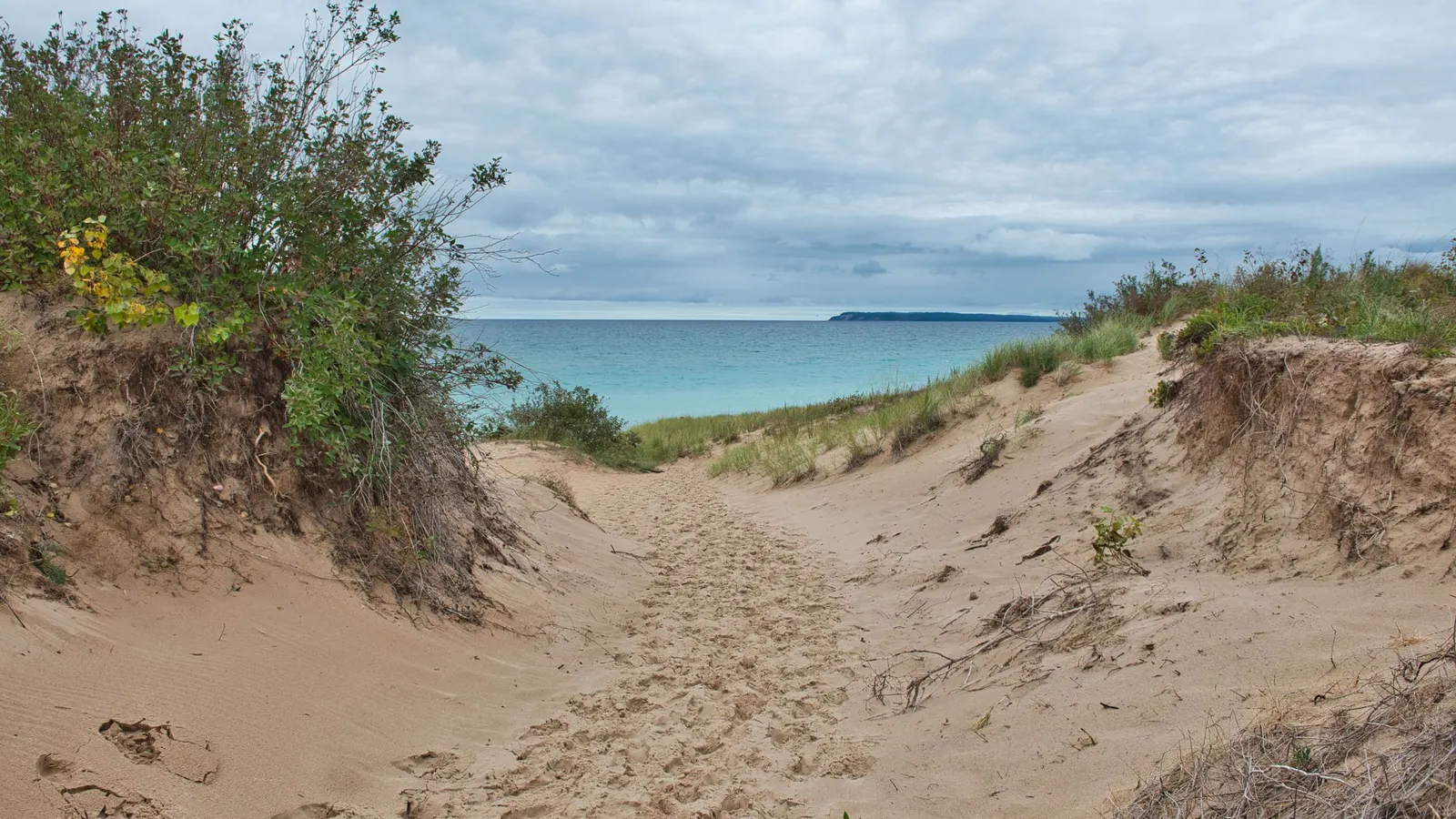
Sleeping Bear Dunes camping puts you between towering sand dunes, clear Lake Michigan water and quiet northern forest. The national lakeshore has two drive-in campgrounds that suit RVs, plus island and backcountry campgrounds for tent campers. This guide compares them all using official National Park Service data, so you can plan camping at Sleeping Bear Dunes with the right campground, the right rig and the right reservation.
Last reviewed and updated: September 30, 2026. Written by Jeremy Jarvis.
Key takeaways
- Platte River and D.H. Day are the two drive-in campgrounds for RVs; Platte River lists a 40-foot limit and D.H. Day lists 35 feet.
- Platte River lists 96 electric sites; D.H. Day lists no electric hookups.
- Reservations are required in the main season (May 1 to October 31 at Platte River, May 15 to October 15 at D.H. Day) and open six months ahead.
- Island campgrounds on North and South Manitou are for backpack and boat-in camping, not RVs.
Sleeping Bear Dunes campgrounds at a glance
The table below lists the main campgrounds as they appear in National Park Service data on September 30, 2026. Listed fees are the prices shown for each site type and can change, so confirm on Recreation.gov before you book.
| Campground | Access | Max RV | Sites | Listed fees |
|---|---|---|---|---|
| Platte River Campground | Drive-in | 40 ft | 179 (96 electric) | $31 electric, $26 no electric, $22 walk-in |
| D.H. Day Campground | Drive-in | 35 ft | 87 (no electric) | $20 in the reservation season, $10 shoulder season |
| D.H. Day Group Campground | Drive-in, groups | None listed | 4 | $40 per group site |
| Bay Campground, South Manitou Island | Boat-in | Not for RVs | 28 | $10 |
| Weather Station Campground, South Manitou Island | Boat-in | Not for RVs | 23 | $10 |
| Popple Campground, South Manitou Island | Boat-in | Not for RVs | 7 | $10 |
| Village Campground, North Manitou Island | Boat-in | Not for RVs | 8 | $10 |
| White Pine Backcountry Campground | Hike-in | Not for RVs | 6 | $13 with permit |
In short, RVers choose between Platte River and D.H. Day. Everything else is for tent campers who arrive on foot or by boat.
Platte River Campground
Platte River Campground is the lakeshore’s full-service campground and the better fit for most RVs. NPS data lists 179 sites, including 96 with electrical hookups, a 40-foot limit for both RVs and trailers, a dump station, potable water and year-round cell reception. The listed fees are $31 for an electric site and $26 for a site without electricity, plus walk-in and group sites.
From May 1 through October 31, the NPS says every site at Platte River, including the walk-in sites, is reservation only. Summer campground office hours are listed as typically 9 am to 8 pm. For RVers who need power for air conditioning, CPAP or remote work, Platte River is usually the first choice for Sleeping Bear Dunes camping.

Free download: The Full-Time RV Launch Checklist
Our 16-page planner: a 12-month countdown, inspection checklist, budget and weights worksheets and a maintenance calendar. Free and printable.
D.H. Day Campground
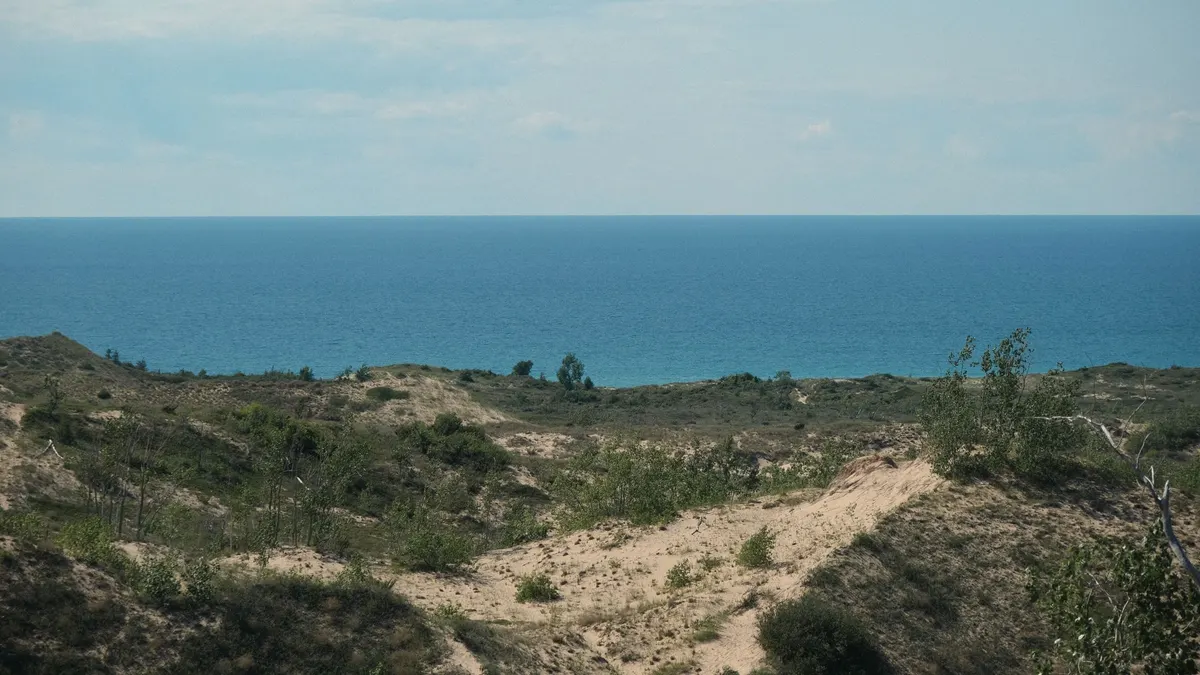
D.H. Day Campground is the simpler, more rustic option. NPS data lists 87 sites, a 35-foot limit for both RVs and trailers, a dump station and potable water, but no electrical hookups. It is open from April 27 through the fourth Sunday in November each year.
The season works in three parts. From May 15 through October 15, every site requires a reservation, and the listed fee is $20. Before and after that window, from April 27 to May 14 and from October 16 until closing, the campground uses self-registration, the listed fee is $10, and the NPS notes that no water is available. In other words, shoulder-season camping at Sleeping Bear Dunes is cheaper but requires you to bring your own water.
Because there are no hookups, plan your power ahead. Our guides to the RV lithium battery and the portable power station for camping explain how to size batteries for several days off-grid.
Island and backcountry camping at Sleeping Bear Dunes
The lakeshore also includes campgrounds on South Manitou Island and North Manitou Island, plus the White Pine backcountry campground on the mainland. These are for tent camping. The island campgrounds are reached by boat, and White Pine requires a backcountry permit and a park pass, according to the NPS. Listed fees are $10 for the island sites and $13 for White Pine.
If you travel by RV, these sites can still be part of your trip. For example, you can base your RV at Platte River or D.H. Day, then take a day or overnight trip to the islands with a tent. Check the park website for boat schedules and island rules before you plan.
Reservations and same-day options
The NPS says reservations can be made up to six months in advance of your arrival date, online at Recreation.gov or by calling 1-877-444-6777, and that both the phone line and the website open at 10 am. Reservable dates often fill months ahead. However, the park also notes that frequent cancellations and date changes open sites closer to or on the date of arrival.
Same-day reservations, when available, can be booked in person with park staff at the campground ranger station, online at Recreation.gov, or by phone. So if your first choice is full, keep checking. Flexibility on dates and campgrounds makes a big difference for camping at Sleeping Bear Dunes in summer.
Passes and camping discounts
An entrance pass is required to visit the lakeshore, and the park’s fees page lists standard, annual and America the Beautiful pass options. Campground fees are separate from the entrance pass.
Some pass holders pay less to camp. For D.H. Day, the NPS lists half off the camping fee for holders of the Golden Age, Golden Access, Interagency Access, Interagency Senior Annual and Interagency Senior Lifetime passes, for campsites occupied by the cardholder. The park notes that the pass must be entered when you make the reservation and cannot be applied on arrival. Platte River also lists reduced rates for the same pass types, calculated in your Recreation.gov account.
Platte River or D.H. Day: which should you choose?
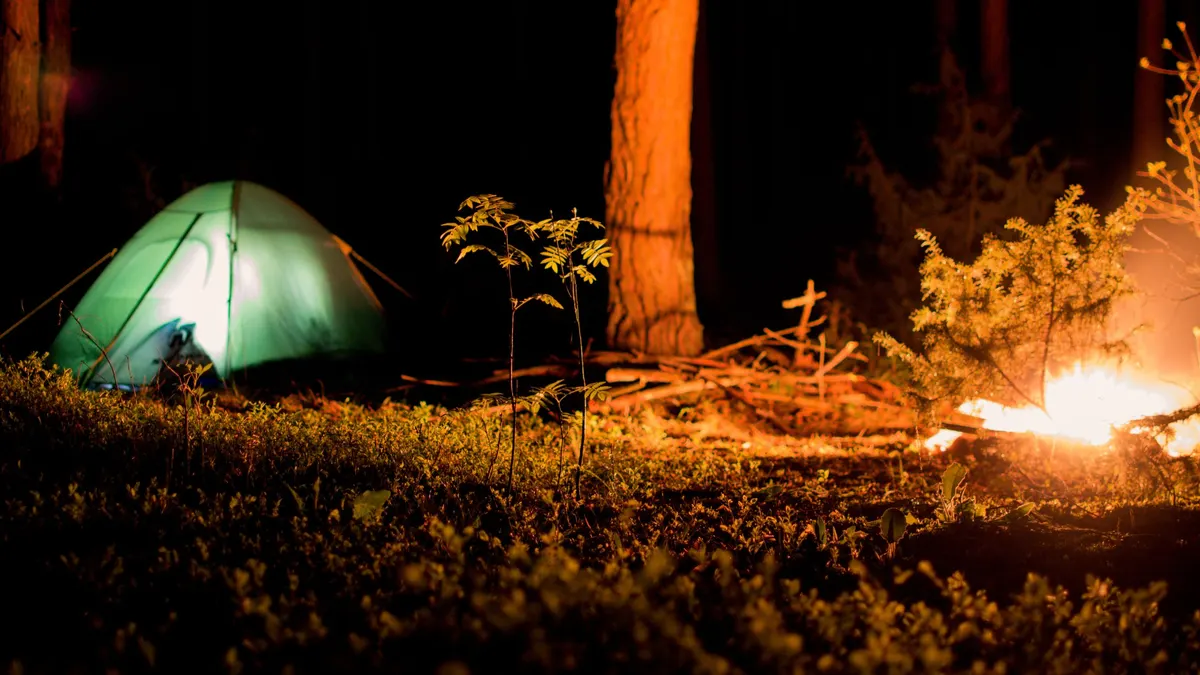
Both Sleeping Bear Dunes campgrounds have strengths, so the right choice depends on your rig and your plans.
- Choose Platte River if your rig is 36 to 40 feet, if you need electric hookups, or if you want the most sites to choose from.
- Choose D.H. Day if your rig is 35 feet or shorter, you are comfortable without hookups, and you want the lower listed fee.
- Consider the shoulder season at D.H. Day if you want self-registration and can bring your own water.
To compare total costs, including any detour miles between campgrounds, try our Campground Comparison Tool.
Sleeping Bear Dunes camping for big rigs
Long rigs have fewer choices here, so planning matters. First, measure your RV or trailer from bumper to bumper, including racks and hitches. Then compare that number with the listed limits: 40 feet at Platte River and 35 feet at D.H. Day. If your rig is longer than 40 feet, Sleeping Bear Dunes camping inside the lakeshore will not work, and you should look at campgrounds outside the park instead.
Even if your rig fits the listed limit, check the individual site. As a rule, a campground’s limit reflects its longest sites, not every site. So open the site details on Recreation.gov and confirm the length, the type of pad and whether it is a back-in or pull-through. In addition, look for notes about slope, because a sloped site can make leveling a long trailer difficult.
Sleeping Bear Dunes camping without hookups
D.H. Day lists no electrical hookups, and many Platte River sites have none either. As a result, much Sleeping Bear Dunes camping is dry camping. That is easy with a little preparation. For example, arrive with a full fresh water tank, especially in D.H. Day’s shoulder season, when the NPS notes no water is available. Likewise, start with empty holding tanks and use the dump station before you leave.
Power is the other piece. Lights, a water pump and a furnace fan draw from your house battery every day. Therefore, charge fully before you arrive, and bring a way to recharge, such as solar panels or a portable power station. If you run a CPAP or work online, choose a Platte River site with electric service instead.
Sleeping Bear Dunes camping by season
Each season brings different trade-offs. In summer, both campgrounds require reservations, sites fill early and every service is running. In late spring and early fall, by contrast, D.H. Day switches to self-registration at a lower listed fee, but without water. Meanwhile, Platte River stays reservation only from May 1 through October 31. So, if you want the lowest cost and the most flexibility, the shoulder weeks at D.H. Day are worth a look. On the other hand, if you want hookups and full services, summer at Platte River is the safer bet.
Whatever the season, check the park’s current campground page before you go. Opening dates, water service and closures can change from year to year.
Common Sleeping Bear Dunes camping mistakes
Most problems here are avoidable. Knowing them in advance makes your trip smoother and cheaper.
- Waiting to book. Reservable dates often fill months in advance, so set a reminder for the day your window opens.
- Forgetting the discount. If you hold a qualifying senior or access pass, enter it when you reserve. The NPS says it cannot be applied on arrival at D.H. Day.
- Arriving empty in the shoulder season. Without water at D.H. Day before May 15 and after October 15, you need to arrive with a full tank.
- Booking a site that is too short. Check each site’s length, not only the campground limit.
- Giving up too early. Cancellations are frequent, so keep checking Recreation.gov for same-day openings.
How much does Sleeping Bear Dunes camping cost?
Costs depend on your campground, season and site type. As a rough guide from the listed fees, a week at a Platte River electric site costs seven times the $31 nightly fee, while a week at D.H. Day in the reservation season costs seven times the $20 fee. On top of that, add your entrance pass, fuel and any reservation fees shown at checkout. To total the whole trip, use our RV Trip Cost Calculator, and to compare campgrounds side by side, use the Campground Comparison Tool.
Tips for RV camping at Sleeping Bear Dunes
- Measure your rig and compare it with each campground’s listed limit before you book.
- Reserve as soon as your dates open, six months ahead.
- Check individual site details on Recreation.gov, because the listed limit is usually the longest site.
- In the shoulder season at D.H. Day, arrive with full fresh water.
- Bring leveling blocks, a way to recharge batteries, and layers for cool lake evenings.
- Keep a backup plan with federal or state campgrounds nearby.
When to go camping at Sleeping Bear Dunes
Summer brings warm weather for swimming and the busiest campgrounds. Late spring and fall are quieter, and D.H. Day’s shoulder season offers lower listed fees with self-registration, though without water. Because weather on Lake Michigan can change quickly, pack for wind and rain in any season. In addition, check the park website for current campground opening dates and any closures before you go.
Beyond the campground
The lakeshore is spread out, so plan driving time between the dunes, beaches and trailheads. Parking areas at popular overlooks and beaches can be tight for large rigs, which is one reason many RVers explore by towed car or bike once camp is set up. Also, fuel up before long days of sightseeing, and plan to return to camp in daylight.
Sleeping Bear Dunes camping checklist
- Entrance pass, and any discount pass entered at booking.
- Reservation confirmation saved offline.
- Full fresh water for shoulder-season stays at D.H. Day.
- Power plan if you are staying without hookups.
- Bug spray, rain gear and warm layers.
- Backup campground saved in case plans change.
With the right campground and an early reservation, Sleeping Bear Dunes camping is one of the best lakeshore RV experiences in the Midwest. For more national park planning, see our guide to Grand Teton campgrounds and our national park RV length limits guide.
Frequently asked questions about Sleeping Bear Dunes camping
Where can you camp at Sleeping Bear Dunes with an RV?
The two drive-in campgrounds are Platte River Campground and D.H. Day Campground. NPS data lists a 40-foot RV limit at Platte River and a 35-foot limit at D.H. Day.
Does Platte River Campground have hookups?
Yes, some sites. NPS data lists 96 sites with electrical hookups among 179 total sites, plus a dump station and potable water.
Do you need reservations at D.H. Day Campground?
The NPS says reservations are required from May 15 through October 15. Self-registration is available in the shoulder seasons, from April 27 to May 14 and from October 16 until the fourth Sunday in November.
How far ahead can you reserve Sleeping Bear Dunes campsites?
The NPS says reservations can be made up to six months in advance of your arrival date, online at Recreation.gov or by calling 1-877-444-6777.
Can you camp on the Manitou Islands?
Yes. NPS data lists campgrounds on South Manitou Island and North Manitou Island, but they are reached by boat and are for tent camping, not RVs.
Sources and how we researched this guide
This guide is built from official National Park Service data. Campground details, listed fees, seasons and reservation rules come from the NPS campground API and the park’s pages, retrieved on September 30, 2026. We did not visit these campgrounds. Fees and seasons can change, so confirm on Recreation.gov and the park website before you book. Found something out of date? Tell us and we will check it against the source.
- National Park Service: Sleeping Bear Dunes campgrounds
- National Park Service: Sleeping Bear Dunes fees
- National Park Service API: campground data
- Recreation.gov: reserve federal campsites
Keep planning
- Grand Canyon Campgrounds for RVs: Mather, Desert View, and Current Water Restrictions
- Zion Campgrounds for RVs: Watchman, South, and the Large-Vehicle Rules
- Hoh Rainforest Campground and Olympic National Park Camping for RVs
- Camping in the Smoky Mountains: Every Park Campground for RVs and Tents
Go deeper: Campgrounds & Routes hub · RV Campground Finder and Length Checker · RV Trip Cost Calculator

Written by Jeremy Jarvis
Jeremy Jarvis is the founder and editor of Freedom Road Living, where he builds research-based guides and free planning tools for people who live, work and travel in an RV. He sets the site's editorial standards, checks every guide against official sources such as the National Park Service and manufacturer documentation, and is responsible for corrections. Jeremy also founded Eco Nomad Travel, Mind Clarity Hub, SilkHarborTravel and WanderOza Travel, and he is the author of books on clarity, focus and practical AI, including The Power of Clarity and Digital Clarity.