
Zion Campgrounds for RVs: Watchman, South, and the Large-Vehicle Rules
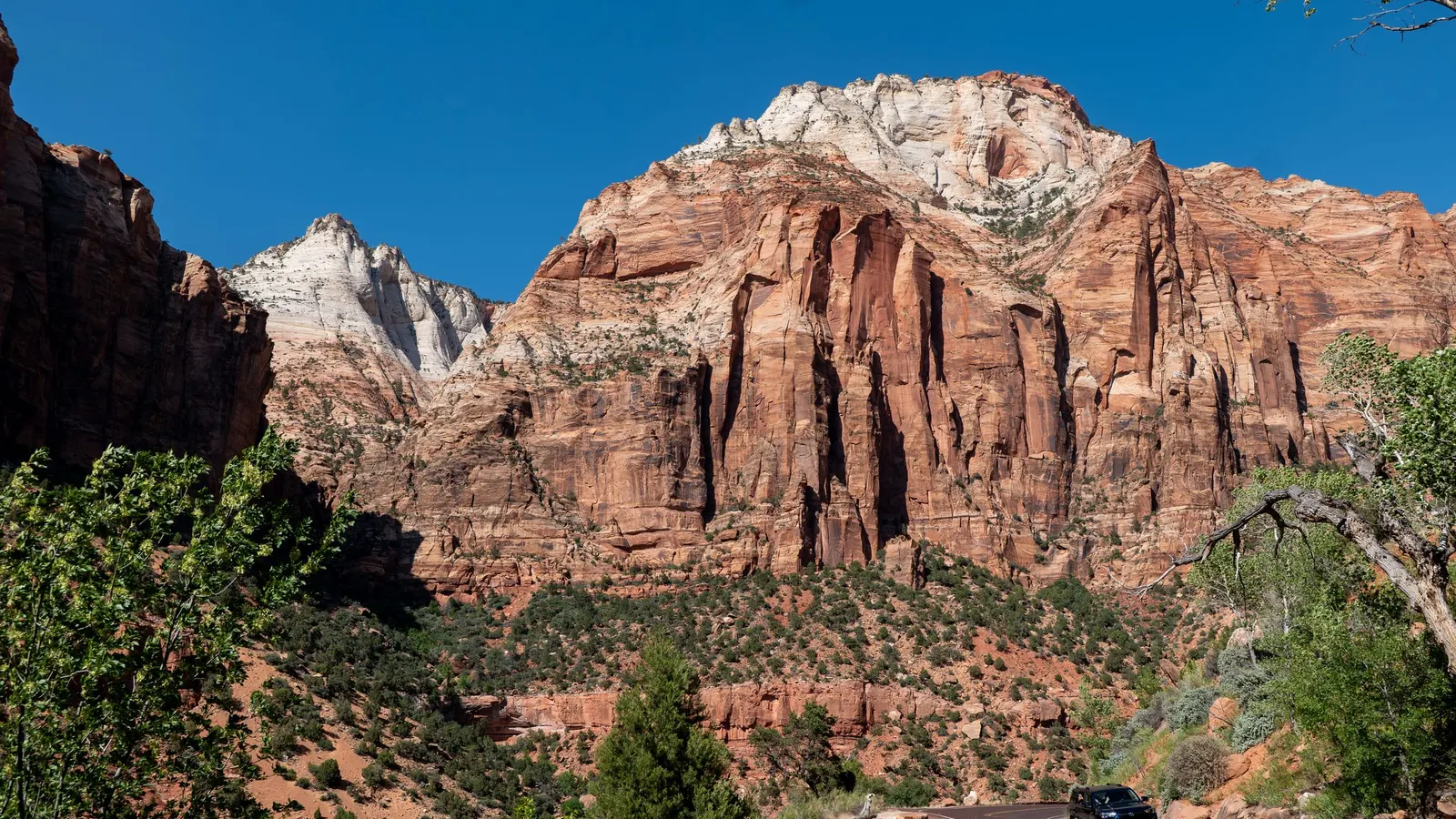
Zion campgrounds sit at the mouth of one of the most dramatic canyons in the American West, within walking distance of the visitor center and the park shuttle. For RVers, Zion camping is wonderful but tightly managed, and Zion camping rewards early planning. There are only two RV campgrounds, sites are full nearly every night in season, and the park enforces strict size limits on its scenic highway. This guide explains every Zion campground and the large-vehicle rules using official National Park Service sources, so you can plan without surprises.
Last reviewed and updated: September 30, 2026. Written by Jeremy Jarvis.
Key takeaways
- Zion has two RV campgrounds, Watchman and South, both near the South Entrance in Springdale; Lava Point is tent-only.
- Watchman lists 92 electric sites and is open year-round; South is seasonal and books only 14 days ahead.
- Large vehicles may not drive the Zion-Mt. Carmel Highway between Canyon Junction and the East Entrance.
- The NPS says park campgrounds are full nearly every night in season, so reserve as early as each window allows.
Zion campgrounds at a glance
The table lists Zion’s campgrounds as they appear in NPS data on September 30, 2026. Fees are the listed nightly prices. Site lengths vary, and the NPS says each site’s length limit is shown in its details on Recreation.gov.
| Campground | Sites | Electric sites | Listed fees | Booking window | Season |
|---|---|---|---|---|---|
| Watchman | 184 | 92 | $35 non-electric, $45 electric | Up to six months ahead | Typically year-round |
| South | 124 | None listed | $35 | Up to 14 days ahead | Typically mid-March to October 31 |
| Lava Point | 6 | None | $25 tent-only | Up to 14 days ahead | Typically May to September |
In NPS data, Watchman and South both list 40-foot maximum lengths for RVs and trailers, but the park notes that individual site lengths vary. Lava Point does not allow RVs, campers or trailers.
Watchman Campground
Watchman Campground sits next to the Zion Canyon Visitor Center, a quarter mile from the South Entrance in Springdale, Utah. It is the park’s main RV campground and the only one with electric sites, 92 of 184. The listed fees are $35 for a non-electric site and $45 for an electric site, with group sites available. NPS data lists a year-round dump station and year-round cell reception.
Watchman is described as typically open year-round, although the D, E and F loops may close seasonally because of weather or maintenance. The NPS says reservations can be made up to six months before your arrival date at Recreation.gov or by calling 877-444-6777, and that the campground is full nearly every night during the busy season. Therefore, set a reminder for the day your window opens.

Free download: The Full-Time RV Launch Checklist
Our 16-page planner: a 12-month countdown, inspection checklist, budget and weights worksheets and a maintenance calendar. Free and printable.
South Campground
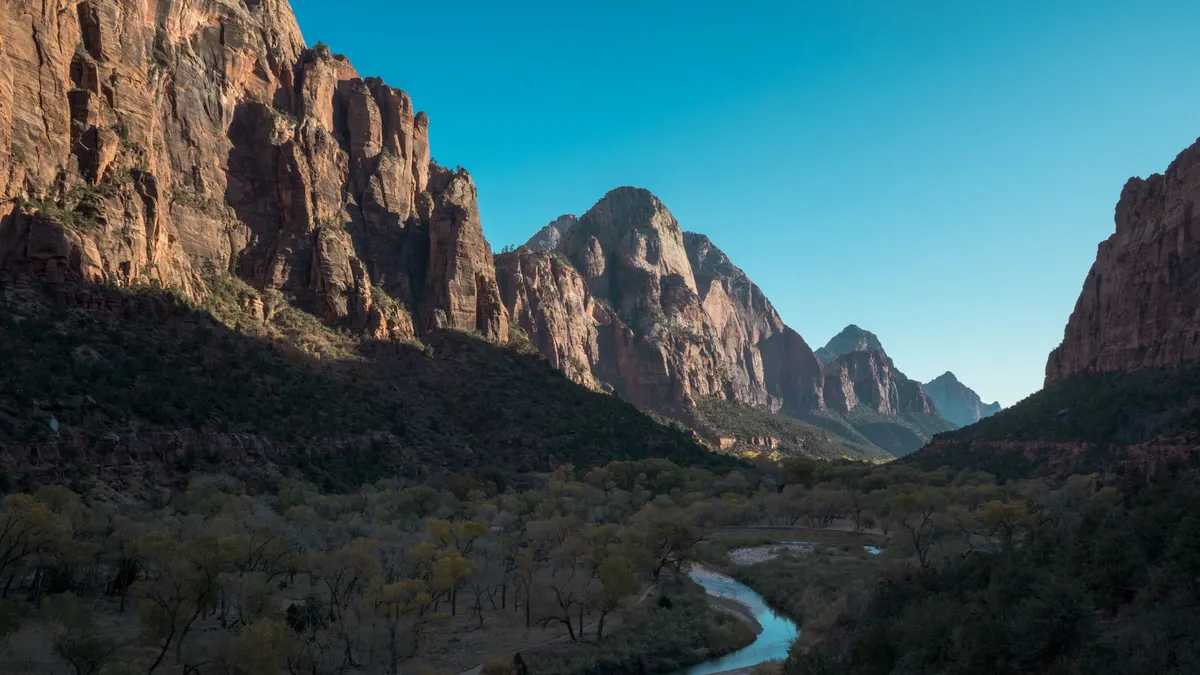
South Campground lies between the Zion Canyon Visitor Center and the Zion Nature Center, half a mile from the South Entrance. It lists 124 sites at $35 a night, with no electric hookups and a seasonal dump station. The key difference is the booking window: the NPS says South Campground reservations are available only up to 14 days in advance. It is open seasonally, typically from mid-March through October 31; NPS data lists a winter closure from late October 2026 to mid-March 2027.
The short window cuts both ways. On the one hand, you cannot lock in a site months ahead. On the other hand, if Watchman is booked, South gives you a second chance close to your trip.
Lava Point Campground
Lava Point is a small, high-elevation campground at 7,890 feet, reached by the Kolob Terrace Road about 25 miles north of Virgin. It has six tent-only sites at $25. The NPS says RVs, campers and trailers are not allowed, and vehicles over 19 feet are not allowed either. It is open as weather allows, typically May through September, and reservations are required up to 14 days ahead. RVers can still visit by tow vehicle for a cooler, quieter side of the park.
Large-vehicle rules on the Zion-Mt. Carmel Highway
This is the most important section for anyone driving a large RV. The NPS enforces size and weight limits on the Zion-Mt. Carmel Highway, and these apply to the entire section between Canyon Junction and the East Entrance, not just the tunnel. The park says vehicles that exceed any limit will not be permitted to drive that section.
Single vehicles
- Length: 35 feet 9 inches.
- Width: 7 feet 10 inches.
- Height: 11 feet 4 inches.
- Weight: 50,000 pounds.
Combined vehicles, such as a truck and trailer
- Total length: 50 feet.
- Trailer length: no more than 26 feet from hitch to rear axle.
- Width: 7 feet 10 inches.
- Height: 11 feet 4 inches.
- Weight: 50,000 pounds.
The NPS notes that measurements include mirrors, tires and attachments, such as air conditioners, bike racks and satellite dishes. Many RVs exceed the width or height limits because of mirrors and roof units, so measure carefully. If your rig exceeds the limits and you arrive at the South or East Entrance, the park says you will be given instructions for turning around safely.
There are exceptions for large vehicles entering through the South Entrance, including camping at Watchman or South Campground, parking in the large-vehicle lot at the visitor center when space allows, visiting Zion Lodge with a reservation, and driving the Zion Canyon Scenic Drive in the shuttle off-season. In other words, a large RV can still camp in Zion, but it should arrive and leave through the South Entrance and plan an alternative route if heading east.
Booking strategy for Zion campgrounds
Because Zion campgrounds fill nearly every night, booking is a strategy game. First, try Watchman as soon as your six-month window opens, especially if you need electricity. Next, if Watchman is full, set a reminder to try South Campground 14 days before your dates. Finally, keep checking both for cancellations, which do appear. In addition, consider shoulder seasons, when demand is a little lower and temperatures are kinder.
Hookups, water and dump stations at Zion campgrounds
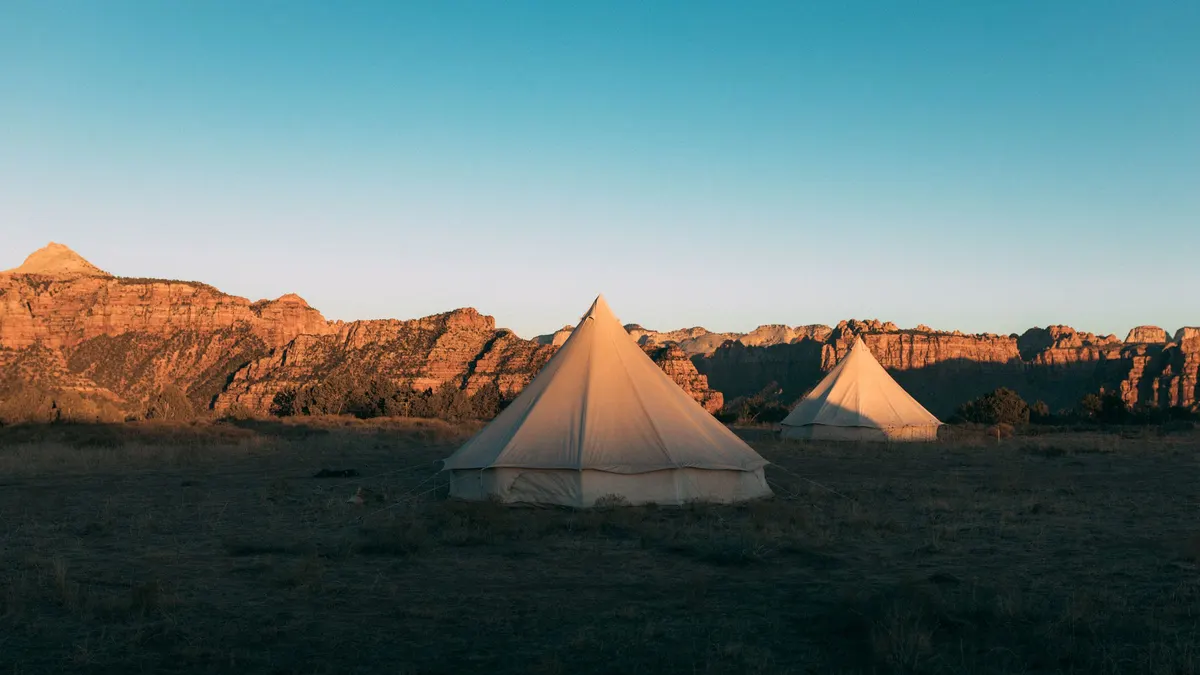
Only Watchman offers electricity, and neither campground lists water or sewer hookups at sites. NPS data lists a year-round dump station at Watchman and a seasonal one at South. So arrive with fresh water and plan to dump before you leave. If you stay at South without power, desert sun makes solar a strong option; our guide to RV solar panels explains sizing.
Desert heat and fire rules
Zion summers are hot, and shade at campsites is limited. Plan for high daytime temperatures, keep pets out of hot vehicles, and carry plenty of water on hikes. Electric sites at Watchman make air conditioning possible; without them, you will rely on shade, fans and timing. Fire rules are strict: the NPS says fires are permitted only in the furnished fire grates and that seasonal fire restrictions are common, so check with a ranger or camp host when you arrive.
Shuttles and parking
For much of the year, the Zion Canyon Scenic Drive is served by park shuttles rather than private vehicles. Camping at Watchman or South puts you within walking distance of the visitor center and shuttle stop, which is a major advantage. As a result, you can leave the RV parked for your whole stay and explore the canyon by shuttle and on foot.
If Zion campgrounds are full
If you cannot get a site, look at private campgrounds in Springdale and nearby towns, which often have full hookups, and at public land nearby. Use our RV Campground Finder to list federal campgrounds in Utah by rig length, and see our free camping guide for rules on dispersed camping on BLM land. Many travelers combine Zion with Bryce Canyon and the Grand Canyon; our guide to Grand Canyon campgrounds covers the next stop.
Zion camping by season
Zion camping changes a great deal through the year, so timing shapes your whole trip. Spring brings mild temperatures, flowing water and wildflowers, which makes it one of the most popular seasons. Summer, by contrast, brings intense heat in the canyon, so many campers hike at dawn and rest in the afternoon. Fall is a favorite for cooler days and changing cottonwoods, although demand stays high. Winter is the quietest season; however, only Watchman stays open, and nights can be cold. Therefore, if you want easier booking and comfortable temperatures, aim for the shoulder weeks in late fall or early spring.
How much does Zion camping cost?
Zion’s listed campground fees are straightforward. For example, a non-electric site at Watchman or South lists $35 a night, while an electric site at Watchman lists $45. So four nights at an electric Watchman site comes to $180 before reservation fees, compared with $140 for four nights at a non-electric site. In addition, budget for a park entrance pass, fuel and supplies. Our RV Trip Cost Calculator brings these together, and the Campground Comparison Tool helps you compare park sites with private campgrounds nearby.
Electric or non-electric: which Zion site should you book?
Choosing between an electric and a non-electric site is one of the most important Zion camping decisions. On the one hand, an electric site lets you run air conditioning during hot afternoons and keeps devices charged without a generator. On the other hand, non-electric sites cost less and are more numerous across both campgrounds. As a rule, if you travel in summer, need power for medical equipment, or work online, an electric site at Watchman is worth the extra cost. Otherwise, solar panels or a portable power station can cover lights, fans and phones. Our guides to the portable power station for camping and RV lithium battery explain the sizing.
Measuring your RV for the Zion large-vehicle limits
Because the park’s limits include mirrors and attachments, measure carefully before you travel. First, measure total length from bumper to bumper, including bike racks and spare tires. Next, measure width across the mirrors at their widest setting, and include any awning or slide hardware that sticks out. Then measure height from the ground to the top of the highest roof item, such as an air conditioner or satellite dish. Finally, for a trailer, measure the trailer from the hitch to the rear axle as well as the combined length. If any number exceeds the limits, plan to enter and leave through the South Entrance only.
Common Zion camping mistakes
- Missing the booking window. Watchman opens six months ahead, and South only 14 days ahead.
- Measuring without mirrors. Mirror width often pushes RVs over the 7-foot-10-inch limit.
- Planning to drive east through the tunnel. Large vehicles must use another route.
- Underestimating summer heat. Plan shade, water and power for hot afternoons.
- Driving the canyon in shuttle season. Leave the RV parked and ride the shuttle.
Zion campgrounds vs private campgrounds nearby
When Zion campgrounds are full, private campgrounds in Springdale and the surrounding towns are the usual alternative. Each option has advantages. Zion campgrounds put you inside the park, steps from the visitor center and shuttle, at the listed park fees. In contrast, private campgrounds often offer full hookups, showers, laundry and sometimes Wi-Fi, but they usually cost more and may require a drive or a town shuttle to reach the park. Therefore, many RVers book Zion campgrounds when they can and treat private parks as a backup, or split a stay between the two to dump tanks and do laundry midway.
Amenities at Zion campgrounds
NPS data describes each site at Watchman and South with a parking space, a picnic table and a fire ring, and lists dump stations at both campgrounds. Neither lists showers. Watchman lists year-round cell reception, which is unusual for a national park campground and helpful for travelers who need to stay in touch. However, neither campground offers water or sewer at individual sites, so plan your tanks around the dump station. In addition, both Zion campgrounds sit close to stores and services in Springdale, which makes restocking easy.
Combining Zion campgrounds with nearby parks
Zion is part of a remarkable cluster of parks in southern Utah and northern Arizona. As a result, many RVers plan a loop that includes Bryce Canyon, Capitol Reef and the Grand Canyon. Because large vehicles cannot use the Zion-Mt. Carmel Highway to the east, check your route carefully if your rig exceeds the limits; the alternative routes are longer. Our guide to Grand Canyon campgrounds covers the South Rim, and our national park RV length limits guide helps you check other parks.
What to pack for Zion camping
- Plenty of drinking water and refillable bottles for hikes.
- Sun protection: hats, sunscreen and a shade canopy for the campsite.
- Warm layers for cool desert nights, especially in spring, fall and winter.
- Water shoes or sturdy footwear if you plan river hikes, and check conditions first.
- A way to keep the RV cool, such as fans, reflective window covers or an electric site.
- Printed reservations and your measured rig dimensions for the entrance station.
In addition, keep a headlamp handy. Trails and campground loops are dark at night, and early starts are the best way to beat the heat and the crowds. With good preparation, Zion camping becomes much more comfortable in every season.
Zion campgrounds checklist
- Measure your rig, including mirrors, roof units and racks.
- Compare it with the Zion-Mt. Carmel Highway limits, and plan routes accordingly.
- Reserve Watchman at six months, or South at 14 days.
- Decide whether you need an electric site.
- Arrive with fresh water and plan to dump on the way out.
- Prepare for heat and check fire restrictions.
- Plan to use the park shuttle rather than driving the canyon.
With a reservation and a rig that fits the rules, Zion camping is one of the great experiences of the Southwest. Plan short driving days with our RV Travel-Day Planner, and explore more parks in our Campgrounds & Routes hub.
Frequently asked questions about Zion campgrounds
Can I take my RV through the Zion tunnel?
Only if it is within the park’s size limits. The NPS says vehicles exceeding the limits will not be permitted between Canyon Junction and the East Entrance. Single vehicles are limited to 35 feet 9 inches long, 7 feet 10 inches wide and 11 feet 4 inches high, and combined vehicles to 50 feet total.
How far in advance can you book Watchman Campground?
The NPS says reservations at Watchman Campground can be made up to six months before your arrival date, online at Recreation.gov or by calling 877-444-6777.
Does Zion have RV hookups?
Watchman Campground lists 92 sites with electrical hookups out of 184. South Campground lists no electrical hookups.
Which Zion campground is open in winter?
Watchman Campground is described as typically open year-round, with some loops closing seasonally. South Campground closes in winter, and Lava Point closes for snow.
Can large RVs still camp at Zion?
Yes, at Watchman or South Campground. The NPS lists camping at these campgrounds as an exception for large vehicles entering through the South Entrance, but large vehicles cannot drive the Zion-Mt. Carmel Highway to the East Entrance.
Sources and how we researched this guide
This guide is built from official National Park Service sources: the NPS campground API and Zion’s large-vehicle and campground pages, retrieved on September 30, 2026. We did not visit these campgrounds. Rules and fees can change, so confirm on the park website and Recreation.gov before you travel. Found something out of date? Tell us and we will check it against the source.
- National Park Service: Zion large vehicles (Zion-Mt. Carmel Highway)
- National Park Service: Watchman Campground
- National Park Service API: campground data
- Recreation.gov: reserve federal campsites
Keep planning
- Grand Canyon Campgrounds for RVs: Mather, Desert View, and Current Water Restrictions
- Hoh Rainforest Campground and Olympic National Park Camping for RVs
- Camping in the Smoky Mountains: Every Park Campground for RVs and Tents
- Yellowstone Campgrounds for RVs: Length Limits, Hookups, Fees, and Reservations
Go deeper: Campgrounds & Routes hub · RV Campground Finder and Length Checker · RV Trip Cost Calculator

Written by Jeremy Jarvis
Jeremy Jarvis is the founder and editor of Freedom Road Living, where he builds research-based guides and free planning tools for people who live, work and travel in an RV. He sets the site's editorial standards, checks every guide against official sources such as the National Park Service and manufacturer documentation, and is responsible for corrections. Jeremy also founded Eco Nomad Travel, Mind Clarity Hub, SilkHarborTravel and WanderOza Travel, and he is the author of books on clarity, focus and practical AI, including The Power of Clarity and Digital Clarity.