
RV Tire Pressure Monitoring System Guide: How RV TPMS Works and How to Set It Up
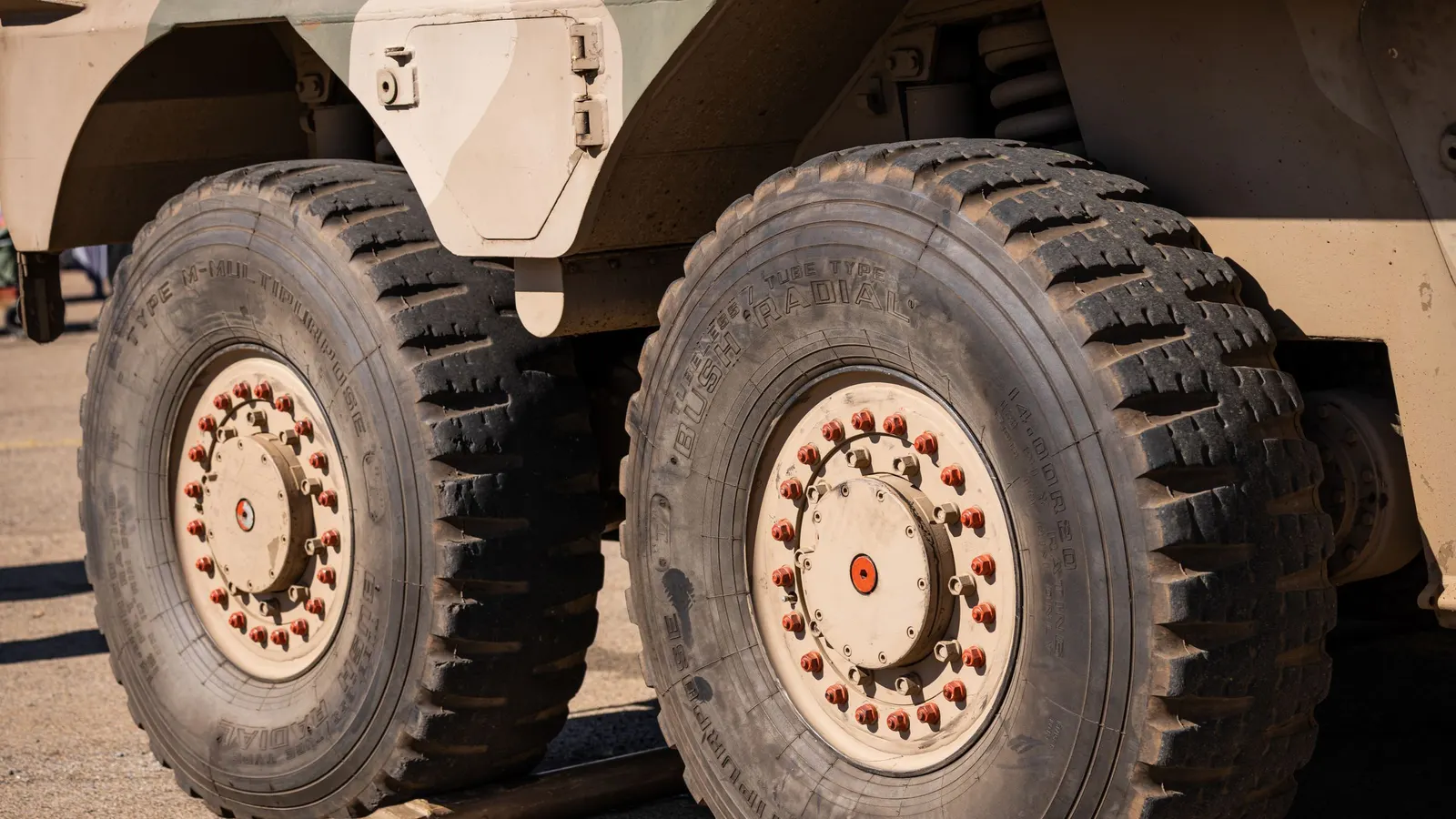
A tire failure on an RV is more than an inconvenience. On a heavy motorhome or a loaded travel trailer, a blowout can damage the body, the wheel well, plumbing and wiring, and it can make the rig hard to control. An RV tire pressure monitoring system is one of the simplest ways to reduce that risk. RV TPMS sensors watch the pressure and temperature of every tire while you drive and alert you the moment something changes. This guide explains how these systems work, which sensors suit your rig, how to set alert thresholds correctly, and why a TPMS still does not replace a good tire gauge.
Last reviewed and updated: September 30, 2026. Written by Jeremy Jarvis.
Key takeaways
- An RV tire pressure monitoring system watches pressure and temperature on every tire while you drive and warns you early.
- Set your baseline from cold tire pressure: tires parked for at least three hours, per the U.S. Tire Manufacturers Association.
- Use the pressure on your vehicle placard or from load and inflation tables, not the maximum printed on the sidewall.
- RV TPMS does not replace monthly checks with a gauge; use both.
Unlike most cars, many RVs and nearly all towable trailers do not come with factory tire monitoring. As a result, many owners add an aftermarket system, often after hearing a blowout story from a fellow camper. Ideally, you install one before you need it.
Why RV tires fail
Most tire failures start with low pressure. According to the U.S. Tire Manufacturers Association, under-inflated tires generate excessive heat build-up and stress, causing irregular wear and internal damage. Michelin similarly explains that under-inflation increases tire flexing and heat buildup, which may lead to internal damage. That damage can build over many miles before the tire finally fails.
Overloading makes the problem worse. Michelin’s safety tips warn never to exceed the load capacity molded on the tire sidewall or listed on the vehicle’s placard, whichever is lower, because overloading increases internal stress and heat. RVs are heavy, and owners often add more gear than they realize, so tires can end up overloaded and under-inflated at the same time. Our RV Weight and Payload Worksheet helps you see how close you are to your limits.
Finally, trailer tires face extra challenges. On tandem axles, trailer tires scrub sideways in tight turns, and a failing tire on a trailer is hard to feel from the driver’s seat. Consequently, a trailer tire can run flat for miles before the driver notices. A TPMS for RV trailers is especially valuable for this reason.

Free download: The Full-Time RV Launch Checklist
Our 16-page planner: a 12-month countdown, inspection checklist, budget and weights worksheets and a maintenance calendar. Free and printable.
How an RV tire pressure monitoring system works
An RV tire pressure monitoring system has two main parts. First, a sensor on each tire measures pressure and, on most systems, temperature. Second, a display in the cab, or an app on your phone or tablet, receives the readings by radio and shows them in real time. When a reading crosses a threshold you set, the system sounds an alarm and shows which tire has the problem.
RV.com’s buyer’s guide puts the value simply: by constantly keeping tabs on all the tires as you travel, a TPMS can let you know the instant a tire starts to lose pressure, so you can address the problem before it becomes catastrophic. In practice, that early warning often means the difference between a slow leak you can repair and a destroyed tire, wheel and fender.
Note that RV systems are different from the TPMS built into most modern cars. Many car systems are indirect, using wheel-speed sensors to infer low pressure. RV systems, in contrast, almost always use direct sensors on each tire, which report actual pressure and temperature values.
Types of RV TPMS sensors
| Sensor type | How it mounts | Strengths | Trade-offs |
|---|---|---|---|
| External (cap-style) | Screws onto the valve stem | Easy DIY install; move between vehicles | Exposed to theft and damage; can stress rubber valve stems |
| Flow-through external | Screws onto the stem with a port to add air | Air up without removing the sensor | Slightly larger; still exposed |
| Internal (banded or stem-mounted) | Inside the wheel, installed by a tire shop | Protected; cleaner look | Shop install; battery change requires dismounting the tire |
| Display unit | Dash-mounted monitor | Always visible; dedicated alarms | One more screen in the cab |
| App-based (Bluetooth) | Phone or tablet app | Uses a device you already have | Phone must stay powered and in range |
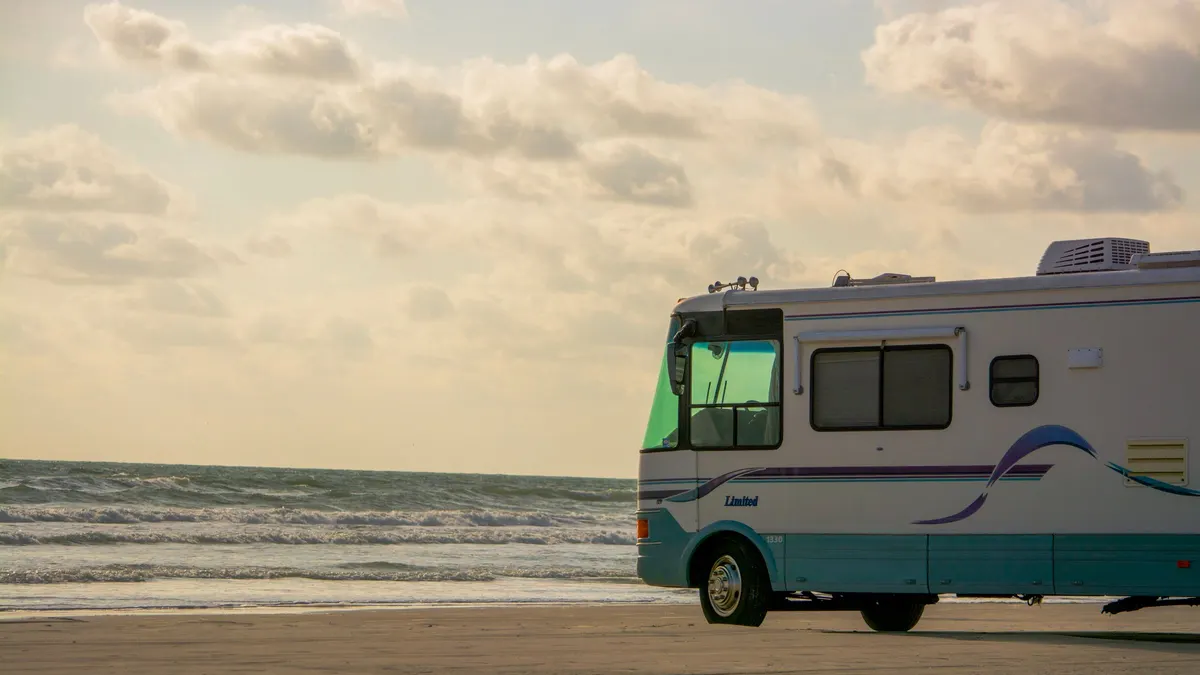
Most RV owners choose external sensors because they install in minutes. If you use them, consider metal valve stems, since a heavy sensor on a long rubber stem can flex at highway speed. Internal sensors are a good choice if you worry about theft or keep the RV for many years.
Finding the right RV tire pressure
Your TPMS is only as good as the baseline you give it. So before setting alarms, find the correct cold pressure. Michelin’s inflation guide is clear: do not look for the recommended pressure on the sidewall of your tires, because it is not there. The number on the sidewall is a maximum, not the recommended operating pressure.
Instead, start with the tire and loading placard on your motorhome, trailer or tow vehicle, or in the owner’s manual. For RVs, many owners go a step further. They weigh the rig at a truck scale, ideally wheel by wheel, and then look up the pressure for their actual load in the tire manufacturer’s load and inflation tables. This approach makes sure each tire has enough pressure for the weight it actually carries. However, never go below the pressure required for your heaviest axle end, and never exceed the wheel or tire maximum.
What “cold” means
Pressure changes with heat, so always set your baseline cold. The U.S. Tire Manufacturers Association says to check tires when they are cold, meaning parked for at least three hours. Michelin also treats tires driven less than two miles as cold. In addition, USTMA notes that inflation pressure rises or falls about one to two pounds for every 10 degrees of temperature change. Therefore, a morning check in the mountains and an afternoon check in the desert can give very different readings for the same tire.
Setting RV TPMS alert thresholds
Most systems let you set a low-pressure alarm, a high-pressure alarm and a high-temperature alarm for each axle. Follow your system’s manual, but the general approach looks like this:
- Enter your cold baseline pressure for each axle, from the placard or load tables.
- Choose a low-pressure alarm a modest amount below the baseline, as the system maker recommends.
- Add a high-pressure alarm high enough to allow for normal warming on the road, but below the tire and wheel maximum.
- Set the temperature alarm per the system maker’s guidance.
- Test the system by letting a little air out of one tire in the driveway and confirming the alarm.
Remember that pressure normally rises as tires warm up while driving. Michelin notes that driving raises internal tire pressure due to heat. Consequently, a reading several pounds above your cold baseline on the highway is usually normal. What matters more is a sudden change, or one tire behaving differently from the others on the same axle.
Installing an RV tire pressure monitor
For external sensors, installation is simple. First, check and adjust each tire to its cold pressure with a gauge. Next, register each sensor to its tire position in the display or app, following the manual. Then screw each sensor onto its valve stem, usually with an anti-theft lock nut. After that, confirm every sensor reports. Finally, take a short drive and watch the readings.
Label each sensor with its tire position before you install it, since swapping sensors between positions confuses the display. Also, check for leaks at each valve stem with soapy water after installation; a poorly seated sensor can cause the very leak you are trying to catch.
Repeaters and long rigs
Radio signals have limited range. On a long motorhome towing a car, or a truck pulling a long fifth wheel, the sensors at the back may struggle to reach the display in the cab. Many systems therefore include or offer a signal repeater, which you mount partway back and power from the RV’s 12-volt system. If your readings drop out intermittently, a repeater is the usual fix. In addition, keep the display or phone near the windshield rather than buried in a console.
Reading RV tire monitoring data on the road
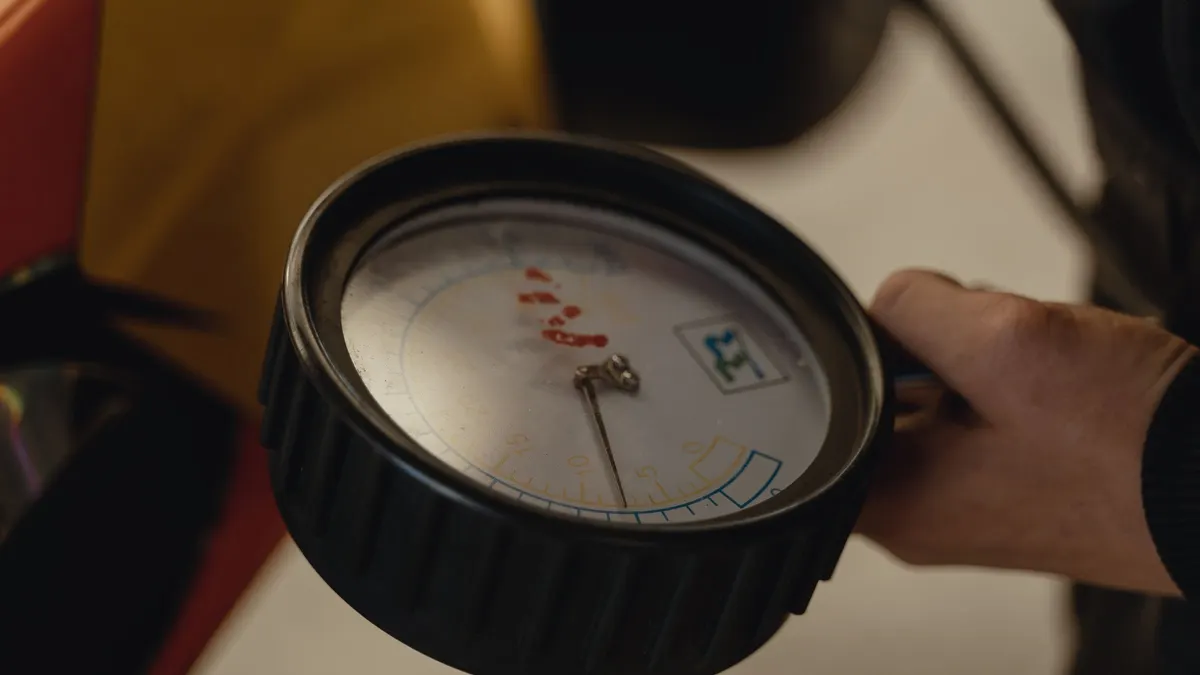
After a few trips, you will learn what normal looks like for your rig. Tires on the sunny side often run warmer. Likewise, tires on the drive axle and on heavier corners may run warmer than others. The useful signals are changes: one tire warmer than its axle mate, pressure slowly falling over an hour, or a sudden drop. When an alarm sounds, slow down, find a safe place to pull over well off the road, and inspect the tire. Michelin advises against releasing air from hot tires, since heat makes readings inaccurate.
Also, keep an eye on hub temperature trends. A tire that runs much hotter than the others can sometimes point to a dragging brake or a failing wheel bearing, not just a tire problem. The TPMS will not diagnose that for you, but it can give you a reason to look.
Your daily RV tire pressure monitoring system routine
A TPMS works best as part of a routine. The USTMA is direct on this point: TPMS are not a replacement for monthly tire pressure checks with a gauge. So use both:
- Before each travel day: check cold pressures with a quality gauge and adjust as needed.
- At every stop: glance at the TPMS readings and walk around the rig.
- Monthly: do a full cold check of every tire, including the spare, and inspect the tread and sidewalls.
- Before a long trip: Michelin recommends checking pressure before long trips as well as monthly.
Our Travel Day Planner includes time for pre-trip checks, so tire inspection becomes part of your routine rather than an afterthought.
Tire age and condition
Correct pressure cannot save a tire that is too old or damaged. RV tires often age out before they wear out, because many RVs sit for long periods. Michelin explains that rubber degrades from UV exposure, heat cycling and ozone in ways that aren’t visible on the surface. To check age, read the DOT code on the sidewall; Michelin notes that the last four digits give the week and year of manufacture. In addition, Michelin warns that damage in the sidewall or shoulder cannot be safely repaired, so those tires need replacing. During storage, tire covers help protect against sun damage.
Monitoring the tow vehicle and towed car
An RV tire pressure monitor does not have to stop at the RV itself. Many systems accept extra sensors, so you can watch every tire in the whole combination from one screen. For trailer owners, that means adding sensors to the tow vehicle as well, unless it already has a factory system you trust. For motorhome owners who flat-tow a car, the towed vehicle is even more important. Because nobody is inside the car, a flat tire there can go unnoticed for many miles, and a dragging tire can cause serious damage.
When you add sensors, set separate baselines for each vehicle, since a passenger car tire uses a very different pressure from a heavy RV tire. Also, check that the system can show all the positions clearly. Some displays group tires by axle, which makes it easier to spot one tire that differs from its partner.
Caring for RV TPMS sensors
Every RV tire pressure monitoring system relies on small sensors, and while they are tough, they still need some care. First, battery life varies by model and use. Many external sensors use small coin-cell batteries that you can replace yourself, while internal sensors may need a tire shop visit. Keep a few spare batteries in your tool kit and replace them before a long trip if readings start dropping out.
Next, inspect valve stems whenever you check pressures. A cracked or bent stem can leak slowly, and the extra weight of an external sensor makes rubber stems more vulnerable. Many RV owners switch to metal stems for this reason. In addition, clean dirt and road grime off the sensors now and then, and check that each one still seals well with soapy water. Finally, when you rotate or replace tires, update the sensor positions in the display; otherwise, an alarm may point you to the wrong wheel.
During long storage, some owners remove external sensors to save the batteries and reduce theft risk. If you do, store them labeled by position, and remember to reinstall and re-check them before the next trip. With this simple care, an RV TPMS will keep watching your tires for many seasons.
RV TPMS buying checklist
- Count every tire you want to monitor, including the tow vehicle or towed car.
- Choose external or internal sensors.
- Confirm the pressure range covers your highest tire pressure.
- Decide on a dedicated display or an app.
- Check whether you need a repeater for a long rig.
- Look for replaceable sensor batteries.
- Plan metal valve stems if you use external sensors.
To compare current options, you can browse RV tire pressure monitoring systems and RV tire pressure gauges on Amazon, then check each system’s pressure range and sensor count.
Common RV tire pressure mistakes
- Inflating to the sidewall number. It is a maximum, not the recommended pressure.
- Setting the baseline with warm tires. Michelin warns a tire inflated warm will be under-inflated once it cools.
- Trusting TPMS alone. Keep doing monthly gauge checks.
- Ignoring tire age. Check the DOT date code.
- Bleeding air from hot tires. Wait until they cool.
- Overloading. Weigh the rig and stay within the tire and placard limits.
An RV tire pressure monitoring system is an inexpensive layer of protection for one of the most expensive failures an RV can have. Pair RV TPMS with good habits, correct cold pressures and regular inspections, and you will travel with much more confidence. For more road-ready gear, explore our RV Gear hub, along with guides to the RV surge protector and RV leveling blocks.
Frequently asked questions about RV tire pressure monitoring systems
Is a TPMS worth it for an RV?
For most RV owners, yes. RV.com’s buyer’s guide explains that a TPMS can alert you the instant a tire starts to lose pressure, so you can address the problem before it becomes catastrophic, and a single saved tire can cover much of the cost.
Does a TPMS replace checking tire pressure with a gauge?
No. The U.S. Tire Manufacturers Association states that TPMS are not a replacement for monthly tire pressure checks with a gauge. Use the TPMS on the road and a gauge for cold checks.
What pressure should I set as my TPMS baseline?
Use the cold pressure from your vehicle or trailer placard, or from the tire maker’s load and inflation tables for your weighed axle loads. Michelin advises not to use the pressure on the sidewall, because it is not the recommended pressure.
When is a tire considered cold?
The U.S. Tire Manufacturers Association defines cold as parked for at least three hours. Michelin also counts tires driven less than two miles as cold.
Should I choose external or internal TPMS sensors?
External sensors screw onto the valve stems and are easy to install yourself. Internal sensors mount inside the wheel and are protected from theft and damage, but they need a tire shop to install.
Sources and how we researched this guide
This guide is research-based. We did not test the systems mentioned. Tire pressure guidance comes from the U.S. Tire Manufacturers Association and Michelin’s published tire care advice; the TPMS overview draws on RV.com’s buyer’s guide. Always follow your vehicle, trailer and tire manufacturers’ instructions. Found something out of date? Tell us and we will check it against the source.
- U.S. Tire Manufacturers Association: tire care essentials
- Michelin: how to properly inflate your tires
- Michelin: essential tire safety tips
- RV.com: TPMS systems buyer’s guide
- NHTSA: tire safety
Keep planning
- RV Propane Tank Guide: Sizes, How Long They Last and Safety
- RV Air Conditioner Guide: BTUs, Power, Soft Starts and Upkeep
- Portable Fridge for Camping: How to Choose, Power and Pack One
- RV Trailer Hitch Guide: Hitch Classes, Tongue Weight and Weight Distribution
Go deeper: Campgrounds & Routes hub · RV Trip Cost Calculator · RV Fuel Cost Calculator · RV Campground Finder and Length Checker

Written by Jeremy Jarvis
Jeremy Jarvis is the founder and editor of Freedom Road Living, where he builds research-based guides and free planning tools for people who live, work and travel in an RV. He sets the site's editorial standards, checks every guide against official sources such as the National Park Service and manufacturer documentation, and is responsible for corrections. Jeremy also founded Eco Nomad Travel, Mind Clarity Hub, SilkHarborTravel and WanderOza Travel, and he is the author of books on clarity, focus and practical AI, including The Power of Clarity and Digital Clarity.