
Yellowstone Campgrounds for RVs: Length Limits, Hookups, Fees, and Reservations
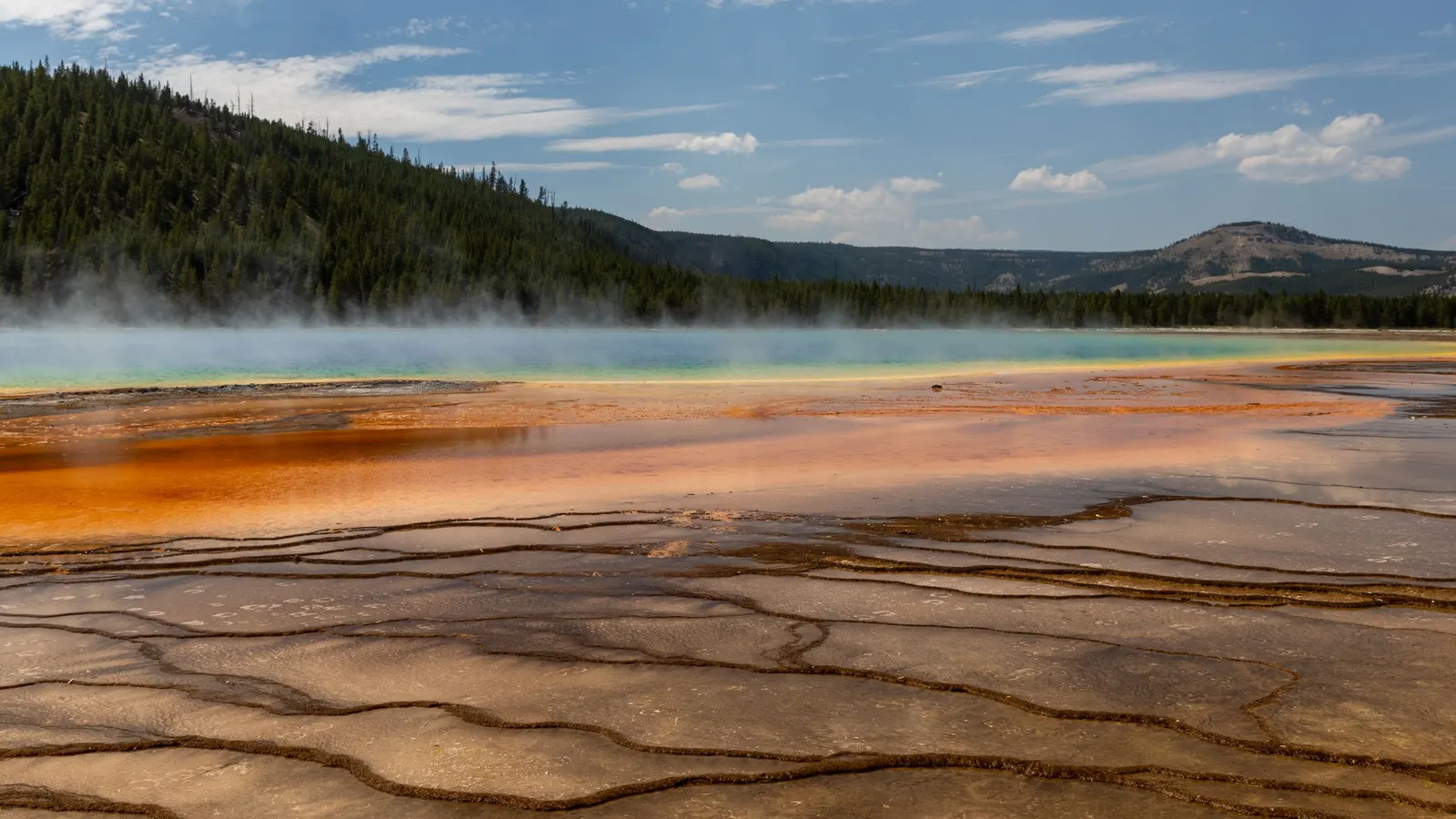
Yellowstone campgrounds put you inside the world’s first national park, close to geysers, wildlife and some of the most famous scenery in North America. They also come with real limits for RVs. Many sites are short, only one campground has full hookups, and reservations are split between two systems. This guide brings the official National Park Service details for every campground into one place, so you can plan Yellowstone camping with the right rig, the right campground and the right reservation.
Last reviewed and updated: September 30, 2026. Written by Jeremy Jarvis.
Key takeaways
- Yellowstone lists 12 campgrounds; Norris and Pebble Creek are listed as closed for the foreseeable future.
- Fishing Bridge RV Park is the only Yellowstone campground with water, sewer and electrical hookups, and campfires are prohibited there.
- The NPS says sites for combined lengths of 40 feet or more are limited, and several campgrounds cap total length at 25 to 30 feet.
- Five large campgrounds are booked through Yellowstone National Park Lodges; the rest are booked on Recreation.gov.
Yellowstone campgrounds at a glance
The table lists each campground as it appears in National Park Service data on September 30, 2026. Fees are the listed nightly prices for a standard site. RV notes summarize what the park says about length and access; individual sites vary, so always check site details before you book.
| Campground | Sites | Listed nightly fee | RV notes from the NPS | Booked through |
|---|---|---|---|---|
| Bridge Bay | 432 | $33 | Sites for 40 ft or more are limited | Yellowstone National Park Lodges |
| Grant Village | 430 | $39 | Sites for 40 ft or more are limited | Yellowstone National Park Lodges |
| Fishing Bridge RV Park | 310 | $89 | Only campground with water, sewer and electric hookups | Yellowstone National Park Lodges |
| Madison | 276 | $33 | Total vehicle length cannot exceed 30 ft | Yellowstone National Park Lodges |
| Canyon | 273 | $39 | Sites for 40 ft or more are limited | Yellowstone National Park Lodges |
| Mammoth | 85 | $25 | Some sites up to 75 ft combined; open year-round | Recreation.gov |
| Lewis Lake | 85 | $20 | Total length limit 25 ft | Recreation.gov |
| Indian Creek | 70 | $20 | 10 sites at 35 ft, 35 sites at 30 ft | Recreation.gov |
| Tower Fall | 31 | $20 | All sites 30 ft or less; hairpin curve | Recreation.gov |
| Slough Creek | 16 | $20 | 14 sites at 30 ft; two-mile dirt road | Recreation.gov |
| Norris | 112 | $25 | Listed as closed for the foreseeable future | Not currently reservable |
| Pebble Creek | 27 | $20 | Listed as closed for flood recovery | Not currently reservable |
As a result, Yellowstone camping for RVs revolves around a handful of large campgrounds, one full-hookup RV park, and several small campgrounds that suit only shorter rigs.
Which Yellowstone campgrounds are open right now?
Yellowstone’s campgrounds are mostly seasonal, and closing dates fall across September and October. Based on the closure dates in NPS data, here is how the season looks as of September 30, 2026.
- Already closed for 2026: Bridge Bay (from September 14), Indian Creek (from September 15), Canyon (from September 20), Grant Village (from September 27) and Tower Fall (from September 28).
- Still open into October: Lewis Lake (listed closed from October 12), Slough Creek (from October 13), Madison and Fishing Bridge RV Park (both from October 18).
- Open year-round: Mammoth, though part of the campground closes from mid-October through April.
- Closed indefinitely: Norris and Pebble Creek.
Therefore, if you are planning a late-season trip, Mammoth, Madison and Fishing Bridge are your main options. Always confirm current status before you drive, because weather can close roads and campgrounds early.

Free download: The Full-Time RV Launch Checklist
Our 16-page planner: a 12-month countdown, inspection checklist, budget and weights worksheets and a maintenance calendar. Free and printable.
RV length rules in Yellowstone campgrounds
Length is the biggest constraint for Yellowstone RV camping. In its campground notes, the NPS repeatedly warns that sites for a maximum combined length of 40 feet or more are limited, and that most campsites in Yellowstone will not accommodate oversized units. Several campgrounds set firm limits.
- Lewis Lake: total length limit of 25 feet.
- Madison: total vehicle length cannot exceed 30 feet, with limited width for slide-outs, and sites may not be level.
- Tower Fall: all sites 30 feet or less, and the loop has a hairpin curve.
- Slough Creek: 14 sites at 30 feet, at the end of a two-mile dirt road.
- Indian Creek: 10 sites at 35 feet and 35 sites at 30 feet.
- Mammoth: some sites accommodate up to 75 feet total combined length.
Note the word “combined.” For trailers and fifth wheels, the limit usually includes the tow vehicle. So measure your truck and trailer together, then compare. For a nationwide view, see our guide to national park RV length limits.
Hookups: Fishing Bridge RV Park
If you need hookups, there is only one choice inside the park. NPS data describes Fishing Bridge RV Park as the only campground in Yellowstone to offer water, sewer and electrical hookups, with 310 sites, all listed with electric service. The listed nightly fee is $89, much higher than the other Yellowstone campgrounds, and the park notes that campfires, including portable wood or propane fire pits, are prohibited there.
Every other Yellowstone campground is dry camping. That means you need full fresh water, empty tanks and enough battery power for your stay. Several campgrounds list seasonal dump stations, including Canyon, Bridge Bay, Grant Village and Madison. Our guides to the RV lithium battery and RV solar panels explain how to plan power for several days without hookups.
How Yellowstone campground reservations work
Yellowstone camping reservations are split between two systems, which confuses many first-time visitors.
- Yellowstone National Park Lodges: Canyon, Bridge Bay, Fishing Bridge RV Park, Grant Village and Madison. The NPS lists the phone number as 307-344-7311 (307-344-5395 for TDD service), and you can also book online through the concessioner’s reservation system.
- Recreation.gov: Indian Creek, Mammoth, Tower Fall, Lewis Lake and Slough Creek.
Some campgrounds have special booking windows. For example, the NPS says 80 percent of Lewis Lake sites are reservable six months in advance, while the remaining 20 percent open two weeks in advance. Mammoth is reservation-only from early April to mid-October and first-come, first-served from mid-October to late March, with individual sites reservable up to six months ahead. So set reminders for each window, and check both systems when you search.
Yellowstone campground profiles
Bridge Bay Campground
Bridge Bay is one of the largest Yellowstone campgrounds, with 432 sites near Yellowstone Lake at an elevation of 7,800 feet. The NPS describes views of the lake and the Absaroka Range. It lists a seasonal dump station but no showers, and sites for 40 feet or more are limited.
Grant Village Campground
Grant Village, with 430 sites at the south end of Yellowstone Lake, is another large campground and offers group and accessible sites. The NPS lists coin-operated showers in season. It is a practical base for the Old Faithful and West Thumb areas.
Fishing Bridge RV Park
Near the point where the Yellowstone River leaves Yellowstone Lake, Fishing Bridge is the park’s only full-hookup campground, listed with coin-operated showers in season. Because of the hookups and the higher fee, it suits RVers who need power or plan longer stays.
Madison Campground
Madison sits at 6,800 feet, about 14 miles east of West Yellowstone and 16 miles north of Old Faithful, where the Gibbon and Firehole rivers form the Madison River. It caps total vehicle length at 30 feet and lists no cell reception. Its location makes it a favorite for geyser basin days.
Canyon Campground
Canyon sits at 7,900 feet in a lodgepole pine forest near the Grand Canyon of the Yellowstone, with Canyon Village stores and restaurants nearby. The NPS lists hot showers in season.
Mammoth Campground
Mammoth is the only campground in the park described as open year-round, at 6,200 feet, five miles south of the North Entrance. It lists year-round cell reception and some sites for up to 75 feet total combined length, making it one of the better options for longer rigs.
Smaller campgrounds
Indian Creek, Lewis Lake, Tower Fall and Slough Creek are smaller and quieter, and each has tighter length limits. Slough Creek in particular sits at the end of a two-mile dirt road and is described as best suited for tents and small RVs, but it is close to some of the park’s best wildlife watching.
Elevation, weather and seasons
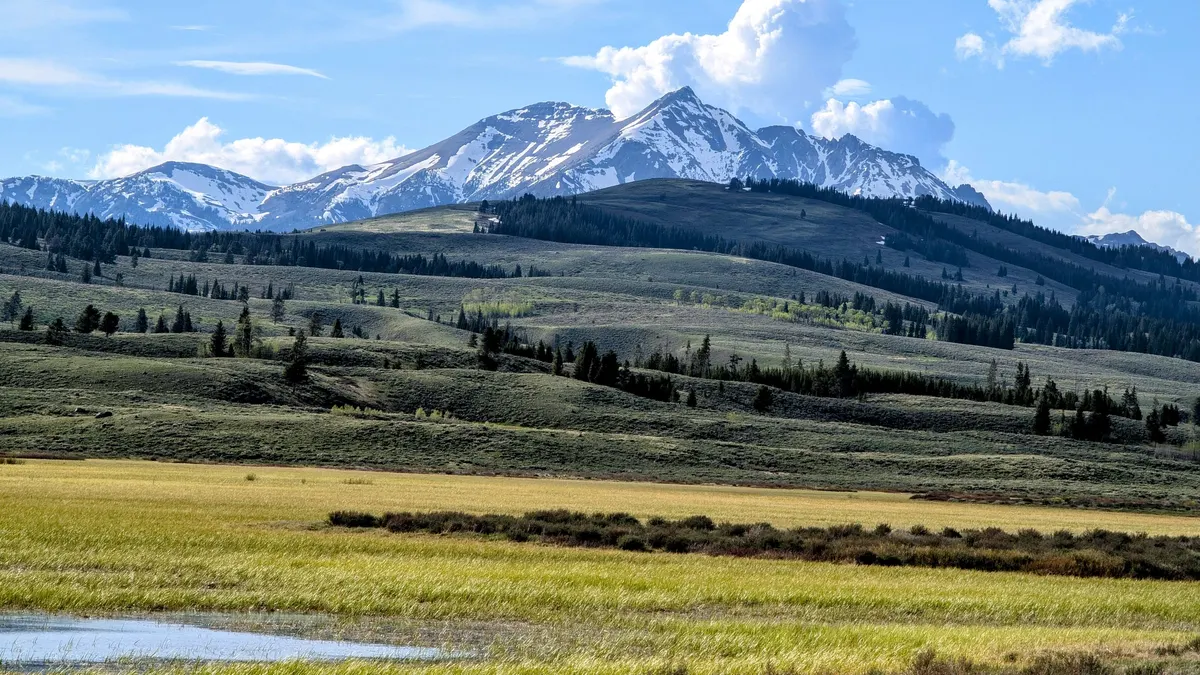
Most Yellowstone campgrounds sit between about 6,200 and 7,900 feet. As a result, nights are cold even in summer, and snow is possible early and late in the season. Pack warm bedding, plan for propane to run the furnace, and protect water lines on cold nights. In addition, many campgrounds open late in spring and close in September or October, so the window for Yellowstone camping is shorter than in lower-elevation parks.
Wildlife, food storage and campfires
Yellowstone is bear country, and wildlife regularly walks through campgrounds. Store all food, coolers and scented items inside a hard-sided vehicle or a provided storage box, and never leave food unattended. Campfire rules vary: the NPS says wood and charcoal fires are permitted at most campgrounds, though special restrictions are put in place when wildfire danger is high, while campfires are prohibited at Fishing Bridge RV Park. So check current fire restrictions when you arrive.
If Yellowstone campgrounds are full
Yellowstone camping fills quickly in summer. If you cannot get a site, look at the surrounding national forests and gateway towns. Federal campgrounds in Montana, Wyoming and Idaho near the park can be a good base, and private RV parks in gateway towns usually handle big rigs with full hookups. Use our RV Campground Finder to list federal campgrounds by state and rig length. For a combined trip, Grand Teton National Park lies just to the south; see our guide to Grand Teton campgrounds.
Driving an RV in Yellowstone
The Grand Loop Road connects most of the park’s highlights, but distances are long and traffic is slow in summer, partly because of wildlife jams. Plan short driving days, use pullouts, and allow extra time for road work. Some side roads are narrow or unpaved and better visited in a smaller vehicle. Our RV Travel-Day Planner helps you time arrivals so you set up in daylight.
Choosing a base: Yellowstone camping by region
Yellowstone is enormous, and driving between its main areas can take hours. Therefore, the smartest Yellowstone camping plans pick one or two bases and explore from there, rather than moving the RV every night. Here is how the campgrounds line up by region.
West side and the geyser basins
Madison is the natural base for Old Faithful and the geyser basins, because it sits about 16 miles north of Old Faithful. However, its 30-foot total length limit rules out larger rigs. In that case, consider staying in a gateway town to the west and driving in each day. Either way, start early, since parking near the most popular geysers fills quickly in summer.
Lake country in the south and east
Bridge Bay, Grant Village and Fishing Bridge RV Park cluster around Yellowstone Lake. As a result, this area offers the most RV sites in the park, including the only hookups at Fishing Bridge. It is also a convenient base for the southern entrance and for trips toward Grand Teton. Lewis Lake, farther south, suits only small rigs because of its 25-foot limit.
Canyon and the center of the park
Canyon Campground places you close to the Grand Canyon of the Yellowstone and roughly in the middle of the Grand Loop. Consequently, it works well for travelers who want to reach several regions without long drives every day. Canyon Village also has stores and restaurants.
North and the wildlife valleys
Mammoth, Indian Creek, Tower Fall and Slough Creek sit in the north. Mammoth is the only year-round option and has some long sites, while the smaller campgrounds put you close to the Lamar Valley, which is known for wildlife watching. In addition, the north side tends to be lower in elevation and a little milder than the lake country.
What does Yellowstone camping cost?
Campground fees are only part of a Yellowstone camping budget, but they are easy to estimate from the listed prices. For example, five nights at Bridge Bay at the listed $33 fee comes to $165 before any reservation fees, while five nights at Fishing Bridge RV Park at $89 comes to $445. In addition, you will need a park entrance pass, fuel for long driving days, and supplies. Our RV Trip Cost Calculator adds these together, and the Campground Comparison Tool helps you weigh a cheaper dry campground against hookups or a gateway-town RV park.
Accessibility at Yellowstone campgrounds
Several Yellowstone campgrounds offer accessible sites. For instance, the NPS notes that group and wheelchair-accessible sites are available at Grant Village. If you need an accessible site, mention it when you book and ask about restroom access, surfaces and distances, because conditions vary from one campground to the next.
Packing list for Yellowstone camping
- Warm sleeping bags or extra blankets, because nights at 7,000 to 8,000 feet are cold.
- Full propane tanks for the furnace and stove.
- Bear-safe food storage habits and containers that close tightly.
- Leveling blocks, since many sites are described as not level.
- Fresh water and a plan to dump, for dry campgrounds.
- Rain gear and layers for sudden mountain weather.
- Printed reservations and offline maps, because cell service is patchy.
Common Yellowstone camping mistakes
- Booking in the wrong system. Remember that five campgrounds use Yellowstone National Park Lodges and the others use Recreation.gov.
- Ignoring the combined length. Several limits apply to the total of tow vehicle and trailer.
- Planning too many miles. Wildlife jams and road work make travel slow, so plan fewer, longer stays.
- Arriving after dark. Tight loops and uneven sites are harder to manage at night.
- Underestimating the cold. Frost is possible in any month at high elevation.
Avoid these, and Yellowstone camping becomes far more relaxed. In short, the best trips combine an early reservation, a rig that fits, and a slower pace.
Yellowstone campgrounds checklist
- Measure your total combined length and shortlist campgrounds that fit.
- Check which reservation system each campground uses, and set reminders for booking windows.
- Decide whether you need Fishing Bridge hookups or can dry camp.
- Confirm the season dates for your campground.
- Plan food storage and check fire restrictions.
- Pack for cold nights at high elevation.
- Save a backup campground outside the park.
With the right campground and an early reservation, Yellowstone camping in an RV is unforgettable. For more park planning, browse our Campgrounds & Routes hub.
Frequently asked questions about Yellowstone campgrounds
Which Yellowstone campgrounds are best for big RVs?
The NPS says campground sites for a combined length of 40 feet or more are limited. Mammoth notes that some sites accommodate up to 75 feet total combined length, and Norris lists two 50-foot sites but is listed as closed. Call or check site details before booking a long rig.
Does Yellowstone have RV hookups?
Yes, at one campground. NPS data describes Fishing Bridge RV Park as the only campground in Yellowstone to offer water, sewer and electrical hookups, with 310 sites.
How do I reserve a campground in Yellowstone?
Canyon, Bridge Bay, Fishing Bridge RV Park, Grant Village and Madison are reserved through Yellowstone National Park Lodges at 307-344-7311 or online. Indian Creek, Mammoth, Tower Fall, Lewis Lake and Slough Creek are listed as reservable on Recreation.gov.
Is any Yellowstone campground open year-round?
Yes. NPS data describes Mammoth Campground as the only campground in the park open year-round, although part of it closes from mid-October through April.
How long can an RV be at Madison Campground?
The NPS listing for Madison says total vehicle length cannot exceed 30 feet, and that RV sites may have limited width for slide-outs and may not be level.
Sources and how we researched this guide
This guide is built from official National Park Service data. Campground details, RV notes, listed fees, seasons and reservation methods come from the NPS campground API and Yellowstone’s campground pages, retrieved on September 30, 2026. We did not visit these campgrounds. Dates and fees change each year, so confirm with the park, Recreation.gov or Yellowstone National Park Lodges before you go. Found something out of date? Tell us and we will check it against the source.
- National Park Service: Yellowstone campgrounds
- National Park Service API: campground data
- Recreation.gov: reserve federal campsites
- National Park Service: camping
Keep planning
- Grand Canyon Campgrounds for RVs: Mather, Desert View, and Current Water Restrictions
- Zion Campgrounds for RVs: Watchman, South, and the Large-Vehicle Rules
- Hoh Rainforest Campground and Olympic National Park Camping for RVs
- Camping in the Smoky Mountains: Every Park Campground for RVs and Tents
Go deeper: Campgrounds & Routes hub · RV Campground Finder and Length Checker · RV Trip Cost Calculator

Written by Jeremy Jarvis
Jeremy Jarvis is the founder and editor of Freedom Road Living, where he builds research-based guides and free planning tools for people who live, work and travel in an RV. He sets the site's editorial standards, checks every guide against official sources such as the National Park Service and manufacturer documentation, and is responsible for corrections. Jeremy also founded Eco Nomad Travel, Mind Clarity Hub, SilkHarborTravel and WanderOza Travel, and he is the author of books on clarity, focus and practical AI, including The Power of Clarity and Digital Clarity.